
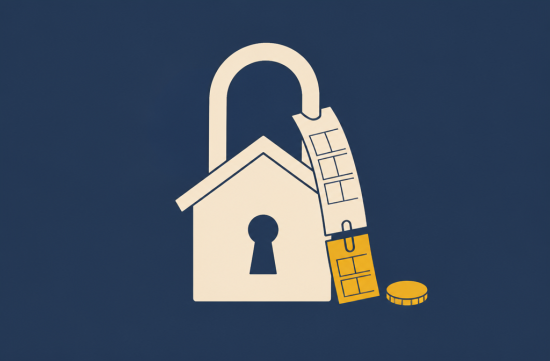
Let's say there's a buyer who signed a contract and locked in a rate for 45 days. However, due to delays in the appraisal schedule and late documents from the condo management company, the closing has been pushed back about ten days past the lock expiration date.
At this point, the communication from the loan officer is usually similar. It typically states that there will be costs to extend the lock.
This can be surprising if it's your first time experiencing it. However, this cost is often negotiable and can be reduced more than you might think.
First, let's look at how extension costs are calculated. Most often, they are calculated as a percentage of the loan amount, referred to in industry terms as points.
Industry guides often indicate that a 15-day extension costs between 0.125% and 0.375% of the loan amount. This means that different lenders may have different rates.
Some lenders charge on a daily basis. One wholesale lender's public policy states that they charge 0.025% of the loan amount per day, which would be $125 for a $500,000 loan.
If you apply a 0.25% charge for a 15-day extension on the same $500,000, it would amount to $1,250. That's not a small amount when you look at the numbers.
So, the first tip is to extend only as much as necessary. Extensions are usually granted in short increments, like 7 or 15 days.
If the closing is only delayed by 5 days, but you habitually request a 15-day extension, you end up paying more than necessary. It's best to check with the title company to confirm the new closing date before deciding on the duration.
The second tip is to determine who is responsible for the delay. There are no federal regulations that specify who should pay for extension costs; it varies based on the lender's policies and the contract terms.
If the buyer's documents were late, it's typical for the buyer to cover the costs. Conversely, if the underwriting was delayed, lenders often waive the fees.
This is worth investigating further, as there have been past cases. Wells Fargo had an internal policy that waived fees if the closing was delayed due to their fault, yet they charged some customers extension fees, which became a point of contention in 2018 with the CFPB and OCC.
So, keep a timeline via email from the day the delay starts. Just having a record of when you received and submitted document requests can make it much easier to request a waiver.
If the delay was due to the seller, you might also be able to cover the extension costs with seller credits. Including this in the contract addendum when changing the closing date makes it more seamless.
The third tip is to compare the option of simply letting the lock expire. Re-locking after expiration, known as a relock, often comes with less favorable terms.
Many lenders apply the less favorable of the original price or current market rates to the buyer when relocking. This means you might not fully benefit from lower market rates.
If rates have risen in the meantime, the decision becomes easier. The extension cost is a one-time payment, but a higher rate will follow you throughout the loan term.
There are also timing issues to consider. If the rate changes and the APR on the closing disclosure increases by more than 0.125 percentage points, you'll need to receive new documents and wait an additional 3 business days.
Closing disclosures must be received at least 3 business days before closing. Keep in mind that the few hundred dollars saved from a relock could come back as another scheduling delay.
Additionally, the lock is tied to specific loan conditions. If the loan amount, down payment, or credit score changes during the extension period, the lock price may be recalculated.
If you're planning to buy a home in the future, it's best to set the lock period generously from the start. Many recommend allowing an extra 5 to 7 days beyond the expected closing date.
Of course, the longer the lock period, the higher the rate or points may be. However, for properties like condos that have many document stages, starting with a buffer is usually less costly overall.
When locking in a rate, it's also good to prepare questions in advance. Ask how many extensions are allowed, how many days each can be, and whether costs are calculated daily or by the period.
If the delay is due to the lender, check if the fees will be waived at that time, and make sure to get the answers in writing via email. The loan estimate typically does not specify extension fee conditions.
As a side note, after locking in a rate, you will usually receive a revised loan estimate reflecting the lock conditions within 3 business days. When you receive that document, double-check the exact expiration date of the lock.
Returning to the initial scenario, I would first organize the reasons for the delay and request a waiver from the lender. If that doesn't work, I would extend only for the minimum period that aligns with the new closing date, and if there are seller-related issues, I would negotiate for credits.
Since policies vary significantly among lenders, be sure to confirm the numbers in writing with your loan officer. I've seen multiple instances where the way you ask a question can change the bill, even for the same extension.
 NoPayBeauty








 moo moo |
 ultron78 |
 garlic bread |
 Sugar Cream Door Bulletproof Noodles |
 urbanmint |
 nivex85 |
 yentra |
 U.S. Weather Bureau News |
 Virginia Butterfly Mom |
 Kim Do Sun |
  Make My Day |
  Victory 1988 |
  Tonky |
  viroma |
  cookie |
  Live and that's it |
  Alright Twain |
  eatontown blog |
  HAWAII Korean Church News |
  Amore |
  linex |
  Balancework |
  laro90 |
  MEDBIO American Doctor Blog |
  SWAT TEAM BLK |
  DREAM BIG |
  frostbite |
  330 Forever My Love |