
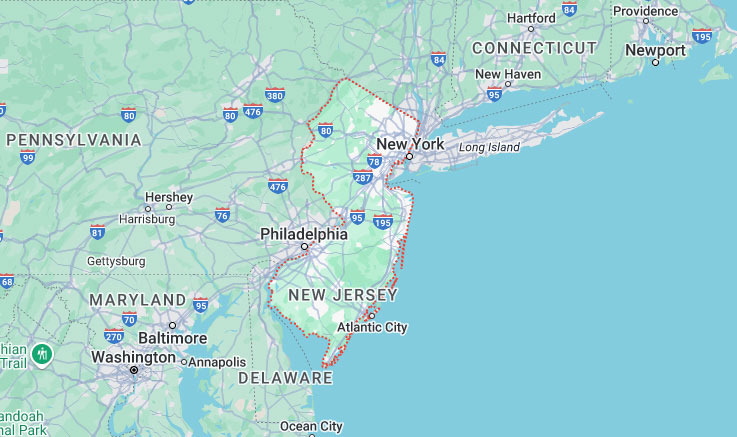
New Jersey is a state located on the East Coast of the United States, serving as a transportation hub due to its proximity to New York and Philadelphia. The freeway system in New Jersey efficiently connects major cities and regions, providing important infrastructure for both commuters and travelers. Below, I will summarize key highway information and useful traffic tips for the state of New Jersey.
Major Highways
1. I-95 (Interstate 95)
- Description: A major highway that runs north-south through the eastern United States, passing through New Jersey and connecting New York and Philadelphia.
- Main Route: It travels north from Philadelphia into New York City.
- Features:
- Marsh Tunnel: An important tunnel segment connecting to New York City, which can experience heavy traffic during peak commuting hours.
- Toll Gates: Tolls are collected at various points within New Jersey, and using E-ZPass is convenient.
2. I-80 (Interstate 80)
- Description: A highway that runs east-west across the central United States, connecting New York and Pennsylvania through New Jersey.
- Main Route: It passes through the skyline area of New Jersey and enters New York State.
- Features:
- Skyway: A major bridge connecting New Jersey and New York, which has tolls.
- Commercial Vehicles: Plays an important role in the logistics and transportation industry, with frequent use by freight trucks.
3. Garden State Parkway
- Description: The main highway within New Jersey, extending east-west along the coastline.
- Main Route: It connects Cape May to Bergen County, linking coastal towns.
- Features:
- Multiple Toll: Tolls are collected on most segments, and E-ZPass usage is recommended.
- Rest Areas and Service Areas: Various rest stops and service facilities are available throughout the state, making it suitable for long-distance driving.
- Summer Congestion: Traffic can become heavy in the summer due to tourists heading to the beach.
4. I-78 (Interstate 78)
- Description: An east-west highway that crosses New Jersey, connecting New York City to Pennsylvania.
- Main Route: It crosses the Hudson River in New York City, passes through New Jersey, and enters Pennsylvania.
- Features:
- Burke Township: A segment where traffic congestion frequently occurs, requiring caution during peak commuting hours.
- Santa Parkway: A part of I-78, serving as an important route for local residents.
5. I-287 (Interstate 287)
- Description: A highway connecting northern and central New Jersey, serving as a link between I-80 and I-95.
- Main Route: It runs from Parsippany to the New York state border.
- Features:
- Surrounding Area: Passes through business centers and residential areas, densely populated with various commercial facilities and housing complexes.
- Tolls: Tolls are collected on some segments, and E-ZPass is convenient to use.
Traffic and Driving Tips
1. Using Tolls (E-ZPass)
- Tolls are often charged on major highways in New Jersey. Using E-ZPass allows for automatic toll payment, saving time at rest areas or toll gates.
- E-ZPass can be applied for online and is easy to recharge, making it economical in the long run.
2. Avoiding Traffic Congestion
- Commuting Hours: Traffic congestion typically peaks on weekdays between 7 AM and 9 AM, and 4 PM and 6 PM. It is advisable to avoid driving during these times if possible.
- Holidays and Weekends: Major highways can become congested due to tourists heading to the beach, especially during summer or holidays. Consider this when planning your trip.
3. Using Rest Areas
- It is important to frequently use rest areas during long drives to take breaks and replenish food and drinks.
- Major highways like the Garden State Parkway have well-equipped rest areas for convenient use.
4. Checking Weather and Road Conditions
- New Jersey experiences distinct seasons, and winter can lead to poor road conditions due to snow or ice. Check the weather and road conditions before departure, and prepare chains if necessary.
- In summer, heavy rain can make roads slippery, so caution is needed.
5. Utilizing Navigation and Real-Time Traffic Information
- Use navigation apps like Google Maps or Waze to check real-time traffic information and choose the optimal route.
- Selecting detours based on traffic conditions can save time.
Major Interchanges and Connecting Roads
1. Newark Interchange
- Description: An important interchange where I-95 and I-78 cross, providing excellent access to downtown Newark and Newark Liberty International Airport.
- Features: A segment where traffic congestion frequently occurs, requiring special caution during commuting hours.
2. Mustang Interchange
- Description: The point where I-287 and I-80 meet, connecting northern and central New Jersey.
- Features: Passes through various commercial facilities and residential areas, serving as an important connection point for commuters.
3. Pierpont Interchange
- Description: The point where I-95 and Garden State Parkway intersect, playing an important role when traveling along the New Jersey coastline.
- Features: A major route to coastal towns, which can become congested in summer due to tourists.
The freeway system in New Jersey efficiently connects major cities within the state and neighboring states, enhancing transportation convenience. By familiarizing yourself with the features of major highways and traffic tips, traveling within New Jersey will become smoother. Especially through managing tolls, avoiding traffic congestion, and utilizing rest areas, you can enjoy safer and more convenient driving.
For more detailed information, please visit the official website of the New Jersey Department of Transportation (NJDOT) or refer to apps that provide real-time local traffic information.




 Living in New Jersey blog |

 hoosierdaddy |
 DOCTOR MED |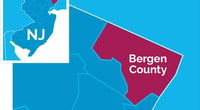
 silverpath |
  Komet Park |
  reliable |
  vexo90 |
  As Always Today |
  veltar87 |
  United States National Administrative Organization Stories |
  springwaltz |
  dense |
  Tiger Milk Foam Research Institute |
  Oreore Mushroom |
  optimistic |
  Good Good |
  berion88 |
  bravo777 |
  skyblue |
  Project Tomorrow |
  apricotla |
  Soy Angelino |
  nati8 |