

Just before signing a contract in Washington DC, one buyer hurriedly signed without properly reading the loan terms. Upon review, it turned out there were adjustable-rate conditions mixed in, which differed from what they believed was a fixed rate, necessitating a renegotiation.
There are many buyers comparing DC with nearby Virginia and Maryland. The median sale price in DC recently reached $675,000, which is a 3.1% increase from a year ago, and the median time for properties to go under contract is 47 days. Compared to the neighboring areas, DC is noted for its higher prices but shorter commuting distances.
Failing to thoroughly review the contract can lead to mistakes in property tax matters as well. The effective property tax rate in DC is around 0.58%, meaning that for homes priced around $720,000, annual taxes often exceed $4,000. While this is lower than the national average of 0.91%, the high home prices mean the actual burden is not insignificant. Tax rates can vary by jurisdiction, so it's advisable to double-check before signing.
When budgeting, it's still common to overlook property taxes, insurance, and, if applicable, condo fees, focusing only on principal and interest. Since DC has a high proportion of condos and townhouses, missing out on management fees can lead to unexpectedly high monthly expenses. It's safer to leave some emergency funds instead of depleting all savings for the down payment. Unexpected repair costs or increases in management fees can arise, making it difficult to respond without a reserve.
When comparing DC with nearby counties, it's also important to consider commuting options. Areas with good metro access tend to have higher prices, so while commuting time may decrease, the budget should be adjusted accordingly.
Closing costs should also be factored in when comparing the two options. Typically, closing costs range from 2% to 5% of the sale price, which could mean over $33,000 for a home priced around $675,000. Additionally, DC may have separate real estate transfer taxes, which could result in higher closing costs compared to neighboring states.
Some buyers look at properties before obtaining mortgage pre-approval. Without pre-approval, it's easy to miss competitive offer opportunities, and failing to compare rates from multiple lenders can lead to disappointing outcomes. It's beneficial to compare at least three lenders. In competitive markets, buyers sometimes waive home inspection contingencies, but in areas with many older townhouses, plumbing or electrical issues may only be revealed during inspections, making it safer to negotiate with contingencies in place.
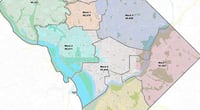
Korean families looking for homes in DC should also consider school districts. School ratings can vary significantly by ward, so while referencing GreatSchools ratings is helpful, school boundaries change frequently, so it's best to verify the assigned school based on the property address.
Just as rushing to sign a contract can lead to issues, neglecting credit score and debt-to-income ratio management right before closing is also common. Making large purchases on credit cards or taking out new loans can increase debt ratios, potentially altering loan terms at the last minute, so it's safer to limit spending until after closing.
If you plan to work in DC for a long time or may move to another area in a few years, it's wise to clarify this before signing. If your residency will be short, comparing which option, condo or townhouse, is better for resale can be helpful in practice.
If moving from another state, it's safer not to carry over the tax sensibilities from your previous residence. This article is not investment or legal advice, and it's recommended to consult with lenders and real estate professionals before finalizing any contracts.
 Fruity Pebble
 SpringView







 |
| 
 Premium Gas Camp |
 CA Real Estate |
 cheesepup |
 breezem |
 Holey Moley |
 washington mom |
 Another Eden Channel BLOG |
 El Dorado |
 Cool Beach Freeway |
  newyorker 101 |
  coffeee |
  |
|  Christopher |
  sylven |
  Sammy Beach |
  Bliss O |
  blue ocean |
  greenlight |
  Watanaka Karametibaksa |
  castle |
  xelton52 |
  carefree |
  vrixen73 |
  AZ Road Master |
  Victory 1988 |
  summita |
  business lim |
  Colorado Lee |
  Make My Day |