

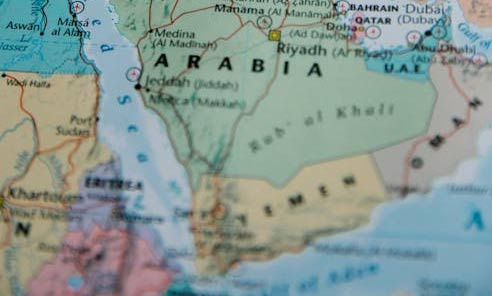
The Houthi rebels are the forces that have taken control of Yemen's capital, Sana'a, and have been deeply involved in armed conflict since late 2014, opposing the Arab Coalition led by Saudi Arabia. Their attacks are primarily known to involve clashes with the Yemeni government forces and local militias, as well as drone and missile strikes on Saudi territory and facilities.
Background of the Houthi Rebels (Ansar Allah)
-
Origins and Religious Background: The Houthi rebels, also known as 'Ansar Allah', are primarily a group based on the Zaydi Shia sect. They have been gaining power in the northern region of Yemen, Sa'dah, since the early 2000s and have had several clashes with the Yemeni government (then led by President Ali Abdullah Saleh).
-
Beginning of the Yemeni Civil War: From late 2014 to early 2015, as the Houthi forces took control of the capital Sana'a, the Yemeni government (President Abdrabbuh Mansur Hadi) fled abroad, leading to the intervention of the Arab coalition led by Saudi Arabia and escalating the Yemeni civil war.
Main Patterns of Attack
1) Attacks on Major Areas in Yemen
-
Control of Sana'a and Northern Yemen: The Houthi forces control most of northern Yemen, including the capital Sana'a. In this process, they have engaged in clashes with various armed groups, including Yemeni government forces, pro-government militias, and southern separatist forces.
-
Attack on Marib Region: Between 2020 and 2022, the Houthi rebels focused their attacks on Marib province, which is strategically important in the Yemeni civil war due to its rich oil and gas resources.
2) Attacks on Saudi Arabia and Neighboring Countries
-
Ballistic Missile and Drone Attacks: Over several years, the Houthi rebels have carried out ballistic missile and drone attacks targeting key infrastructure, including the southern border areas of Saudi Arabia and oil facilities (e.g., Aramco facilities).
-
Notable Incidents: The attack on the Abqaiq and Khurais oil facilities in eastern Saudi Arabia in September 2019 received significant attention, impacting international oil prices. The Houthi rebels claimed responsibility for the attack, while Saudi Arabia raised the possibility of Iranian involvement.
-
-
Attempts to Attack the UAE: There have also been attempts to carry out drone and missile attacks against the UAE, which intervened in the Yemeni conflict alongside Saudi Arabia. Threats against UAE-supported forces in southern Yemen and Abu Dhabi airport have also been reported.
3) Maritime Attacks
-
Maritime Threats along the Red Sea Coast: The Houthi forces have used missiles and unmanned vessels deployed along the Red Sea coast to attack or threaten vessels of the Saudi-led coalition and civilian ships.
-
Threats to International Trade Routes: The international trade route that connects through the Red Sea to the Suez Canal passes through waters near Yemen, leading to several threats against commercial ships and oil tankers transiting through these waters.
International Response and Humanitarian Crisis
1) Concerns of the International Community
-
Allegations of Arms Support: There have been ongoing allegations that the ballistic missiles and drones used by the Houthi rebels have received technical support from Iran. The United States and Saudi Arabia have claimed that Iran supplies weapons to the Houthi rebels, but Iran has officially denied this and has not clearly acknowledged any direct connection.
-
Increase in Civilian Casualties: The Houthi rebels have caused civilian areas to be hit during their attacks, and conversely, civilian casualties from coalition airstrikes have also increased, leading to many pointing out that Yemen is facing a severe humanitarian crisis.
2) Humanitarian Crisis
-
Majority of Yemen's Population in Need of Food and Medical Aid: The UN and international relief organizations have identified Yemen as one of the worst humanitarian crises in the world. The prolonged civil war has led to severe shortages of drinking water, food, and medicine, and diseases like cholera have spread.
-
Attempts at Negotiation and Ceasefire: Several ceasefire agreements have been attempted under UN mediation, but a comprehensive peace agreement has yet to be reached. There have been periods of ceasefire or prisoner exchanges, but a complete end to hostilities has not been achieved.
Recent Trends and Outlook
-
Intermittent Ceasefires
-
Since 2022, several ceasefire agreements mediated by the UN have been established, leading to periods of reduced conflict. However, this has not led to a complete declaration of peace, and tensions continue to persist.
-
-
Changes in Iran-Saudi Relations
-
In 2023, Iran and Saudi Arabia restored diplomatic relations, gradually changing the diplomatic environment for resolving the Yemeni conflict. While there are analyses predicting a potential easing of the overall conflict dynamics due to Iran's support for the Houthi rebels and Saudi airstrikes, it is widely expected that significant time will be needed to resolve the conflict.
-
-
Humanitarian Aid and Reconstruction
-
International organizations and humanitarian groups are providing aid supplies and medical support to residents and refugees in conflict areas, and if the conflict calms down to some extent, Yemen's reconstruction efforts are expected to become more active.
-
The Houthi-controlled areas, the Yemeni government, and separatist forces are solidifying their respective control zones, suggesting that future negotiations will unfold in a complex manner.
-
Conclusion
-
The Houthi rebels (Ansar Allah) are a Shia armed group based in northern Yemen, and since taking control of Sana'a in 2014-2015, they have engaged in fierce armed clashes with the Yemeni government and the Saudi-led coalition.
-
The main forms of attack include conflicts within Yemen (attacks on strategic areas like Marib), drone and missile strikes on Saudi military and oil facilities, and maritime threats in the Red Sea.
-
Yemen is facing a humanitarian crisis due to the prolonged civil war, and while the international community is mediating ceasefires and peace agreements, a complete end to the conflict has not yet been achieved.
-
As of 2023, changes in Middle Eastern dynamics, such as the restoration of Iran-Saudi relations, have raised some possibilities for resolving the Yemeni conflict, but the complex interplay of interests among internal factions and regional powers suggests that it will take considerable time.
This concludes the overview of the patterns of attacks by the Houthi rebels and the resulting situation in the Yemeni conflict.







 Moscow Kim |
 coloradoman |
 Montgomery Mom |
 GOGO SING |
 Hajiwon Blog Hair Salon |
 heartbreaker |
 Washington Monument |
 Eldorado 88 |

 forevergee |
  festival |
  manchester |
  constant |
  Leapfrog Move |
  vibranto |
  Tora Tora |
  yellowbutter |
  Dolly |
  US Embassy |
  NYC saladbar |
  Finding Superfoods |
  lightyear |
  song bang |
  vexomo |
  Indiana Jones |
  meloncat |
  novapixel |
  mortrix |
  Esther 1983 |