
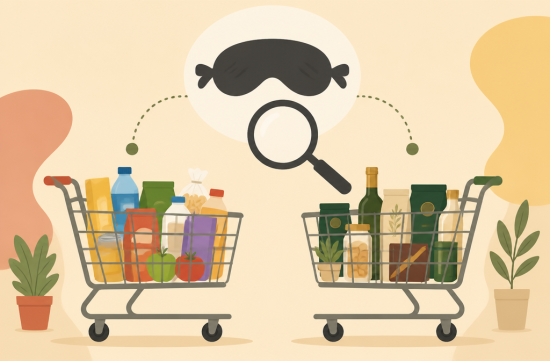
Last weekend, I invited some friends over to conduct a rather unusual experiment. I bought ketchup, cereal, and butter from both famous brands and store brands, removed the labels, and numbered them for a blind taste test.
To get straight to the results, it was quite interesting. Out of six people, three preferred the store brand ketchup, while opinions on the cereal were split exactly down the middle. The butter was slightly favored by the famous brand, but it was only by one vote. Everyone laughed at the fact that they couldn't identify the brands they had been buying for years.
Curious about the price difference, I took pictures of the price tags for comparison, and the difference was larger than expected. Store brand products typically cost about 15 to 30 percent less than famous brands. According to a Consumer Reports survey, choosing store brands can save an average of about 25 percent, and in some cases, like ice cream, the savings can reach up to 60 percent.
And this isn't just a coincidence among our group; it's somewhat backed by data. In a blind taste test conducted by Consumer Reports with ketchup and mayonnaise, over 40 percent of participants preferred the store brands. In another study testing 70 grocery items, 76 percent were rated as tasting just as good as the famous brands, and in a comparison of 19 items, ten ended in a tie, eight favored the famous brands, and one was won by the store brand. It's almost a perfect split.
Thinking about it another way, a significant portion of the money we pay for brands may actually be for marketing, packaging, and the comfort of familiarity rather than for taste or quality. The same goes for surfboards. Just because a famous brand logo is on it doesn't mean it rides the waves better; similarly, if the ratio of tomatoes to vinegar is similar, our taste buds might not distinguish much between ketchups.
Of course, not every category is the same. Some items, like frozen lasagna, have only about a 5 percent price difference, while others, like whole bean coffee or certain snacks, have noticeable taste differences due to variations in ingredients. So, our team established a principle: we decided to switch to store brands for basic ingredients that are heavily processed, like salt and spices, while keeping the existing brands for items where the flavor of the raw ingredients is more prominent.
Even making a few changes can have a significant impact. Experts have commented that adjusting shopping habits slightly can lead to noticeable savings over a year, with families consistently choosing sales and store brands potentially saving around five thousand dollars annually. Of course, individual situations vary, but the trend is hard to ignore.
A similar psychology seems to apply when buying music festival tickets. Even with the same stage and sound system, if a big name is on the lineup poster, the price tends to jump. Grocery store shelves are structured similarly, where the costs of packaging design and advertising are ultimately shared by us all.
Working in eco-friendly construction, I've noticed something similar. Just because a famous brand logo is attached doesn't mean the insulation performance suddenly improves; you really need to look at the specifications to see the reality. With groceries, comparing the ingredient list and origin can often provide clear answers.
They say habits are powerful, and just stopping to glance at the alternative products instead of automatically reaching for the usual brand is a good start. Try switching one brand in your cart this week and see for yourself if there's a real taste difference. It would be fun to hear if you have any items in your kitchen worth testing blindfolded, so feel free to share your results in the comments!


 Anna Life |
 JESIKYEOALBA BLOG |
 Dad's Tribute TC |
 Glow Yo |
 U.S. Retirement Pension Information |
 Hilo Cat |

 Hawaii Maui Kahului |


 Hawaii Tourist Information |
  ness 6 |
  Montgomery Mom |
  SteelOrbit |
  Puddle Puddle |
  Arizona Cowboy |
  macaronpop |
  marydock |
  peachpanda |
  U.S. College Admission Information |
  Fruitop |
  Exploring American Life Information |
  sing sing |
  ORAVEZIN Oppa |
  Lego My Ego |
  logger |
  Conflite Teacher |
  summita |
  Ari Songhan American Immigration Life |
  marketbox |