

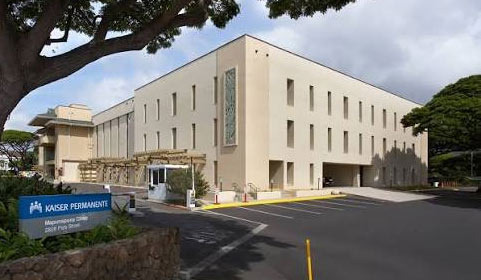
Before moving to Hawaii, I was unfamiliar with the name Kaiser Permanente.
It's a name you rarely hear in Korea, and even if you've lived in the U.S. for a long time, you might not know about Kaiser if you lived in an area without it.
However, after living in Honolulu, I found that there are actually a lot of people with Kaiser insurance.
The main hospital for Kaiser on Oahu is the Kaiser Permanente Moanalua Medical Center.
It's located in the Moanalua area, not far from Honolulu Airport, and is a comprehensive hospital that handles everything from the emergency room to internal medicine, surgery, obstetrics, pediatrics, and various surgeries.
Kaiser insurance operates differently than traditional insurance companies and hospitals; it connects insurance, doctors, hospitals, laboratories, and pharmacies within a single system.
When you get a blood test at the hospital, the results are uploaded to your medical record, and your primary doctor can check them immediately, with prescriptions linked directly to the Kaiser pharmacy.
Dealing with U.S. hospitals can be stressful with all the phone calls and faxes to send records, but this system seems to make things easier.
There are also many things you can handle online. You can schedule appointments, check test results, reorder prescriptions, or send messages to healthcare providers.
Simple consultations or follow-up care can also be done through telemedicine. It seems that this integrated system will feel quite convenient whenever you need to visit the hospital.
However, I had one question. What happens if cancer is discovered during a health check-up?
You can receive cancer diagnosis and treatment within Kaiser. For example, if abnormalities are found during a mammogram or colon cancer screening, additional tests and biopsies are conducted, and if diagnosed with cancer, you are referred to the necessary specialists such as oncology or surgery.
Depending on the type and stage of cancer, treatment plans will be developed, including surgery, chemotherapy, or radiation therapy.
If the necessary treatment is not available at Kaiser facilities, they may refer you to an external medical institution if deemed medically necessary. However, you must check your insurance plan and prior authorization for these cases.
When it comes to cancer, you might think, "I want to go to a well-known cancer center for treatment," right?
This is something important to consider when choosing Kaiser insurance. It differs from a PPO structure where you can freely choose hospitals and specialists. If you receive treatment at a hospital outside the Kaiser network, it may not be covered by insurance or could result in higher out-of-pocket costs.
So, when choosing Kaiser, it seems you shouldn't just look at the monthly premium.
You should also consider how much the copay is for hospital visits, whether there is a deductible, how much you would pay for hospitalization or surgery, and what the annual out-of-pocket maximum is. This annual maximum out-of-pocket amount becomes a very important figure, especially for diseases like cancer that require long-term treatment.
Still, the reason Kaiser is popular in Hawaii is that the doctors, hospitals, laboratories, and pharmacies are all connected within one system, making the process from preventive screenings to major illness treatment relatively straightforward.
However, Hawaii is an island.
It's not a place where you can drive two or three hours like on the mainland U.S. to reach another large cancer center.
So, if you're moving to Hawaii, don't just compare insurance premiums; check what hospitals and treatments you can access if a serious illness arises. It may seem trivial when you're healthy, but when you get sick, having more information about your health insurance is beneficial.
 JackpotElec
 SpiegelHat
 CannesFest






 Old English |
 nixxon |
 LIZ Legal Information Blog |
 Karina's Blog |
 Jimbeam 88 |
 Hawaii Tourist Information |
 TEX MEX STAR |

 Hawaiian Soft Tofu HASOON |
 Unknown Dog Walk blog |
  Doori Ark |
  Rainbow Bridge to the Sky |
  Sunny Fullerton |
  U.S. Weather Bureau News |
  GOGO SING |
  Gold Bar |
  Banana Style Life |
  Tesla X |
  urbanmint |
  forestcloud |
  forever young |
  Arlington house |
  liquid asset |
  Who's watching? |
  eclipse |
  quietwave |
  Hajiwon Blog Hair Salon |
  hoosierdaddy |