
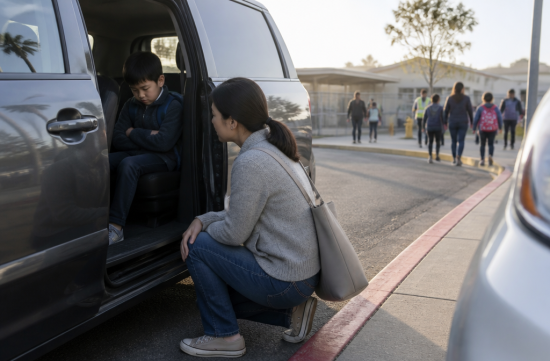
There is a child who complains of a stomach ache every Monday morning. There is no fever, and if they are allowed to stay home from school, by lunchtime they are perfectly fine playing games.
At first, it's easy to dismiss it as just a ploy. But when this pattern repeats for several weeks, the situation changes.
In California, this is quantified. If a student misses more than 10% of the registered school days, they are classified as chronically absent.
The reasons for absence are not questioned. Whether it's due to illness, unexcused absences, or suspensions, all are counted together.
For a 180-day school year, that means 18 days. Missing just two days a month can lead to reaching this threshold by the end of the school year.
The threshold is lower than you might think. If the mindset is that missing a day or two is okay, it adds up quickly.
According to data from the California Department of Education (CDE), the statewide chronic absenteeism rate for the 2024-25 school year was 19.4%. This figure had soared to 30.0% in the 2021-22 school year but has been steadily declining since then.
The decline is good news. However, the fact that one in five students is still a significant number that should not be taken lightly.
The situation in the Pasadena Unified School District is somewhat better. The rate, which was nearly 26% in the 2021-22 school year, dropped to 10.5% for the 2024-25 school year.
However, TK and kindergarten students still show high absenteeism rates. The belief among parents that "they are young, so it's okay to take a break" is reflected in the numbers.
So, what signs might appear before chronic absenteeism sets in? There are common indicators noted in pediatric and child psychology literature.
First, changes on Sunday nights. Children may have trouble sleeping or start asking, "Can I stay home tomorrow?"
Second, headaches and stomachaches that only occur on school days. Symptoms typically disappear on weekends or in the afternoons.
The American Academy of Pediatrics (AAP) explains that these symptoms often peak on school mornings and tend to resolve when the child stays home.
Here's an important point: the child is not lying; anxiety often manifests as physical pain.
Third, an increase in visits to the school nurse or frequent calls home expressing a desire to leave early. This is something parents might overlook, so it's good to ask the teacher directly.
Fourth, a noticeable increase in the time it takes to get ready in the morning. They may drag out every step, from getting dressed to eating breakfast to getting into the car.
Fifth, an unusual clinginess to parents or crying right before school. This includes refusing to get out of the car in front of the school.
If two or three of these signs overlap, I recommend checking the data first. By pulling attendance and tardiness records from the school portal by semester, patterns will become clear. If absences cluster on certain days or coincide with specific subjects, it can provide significant clues to the underlying causes.
It's also important to be aware of the legal thresholds. California Education Code 48260 classifies a student as truant if they have three unexcused absences or three instances of being tardy or leaving early without a valid reason, each exceeding 30 minutes.
In this case, the school must send a written notice to the parents. If the problem persists, it may lead to a meeting with school officials and potentially to the Student Attendance Review Board (SARB).
On the other hand, days off for mental health reasons are recognized as excused absences. The passage of SB 14 in 2021 included mental or behavioral health as valid reasons under Education Code 48205.
So, if your child truly needs a day off, make sure to inform the school accurately. This way, they won't be marked as unexcused, and they can make up any missed assignments and tests.
However, even if it's processed as an excused absence, it still counts toward chronic absenteeism. Just because the reason is valid doesn't mean the accumulation of days off is resolved.
Therefore, finding the root cause is essential. Whether it's a problem with friends, difficulty keeping up with classwork, or simply a disrupted morning routine, identifying the issue will change how you respond.
If physical symptoms persist for several weeks, it's best to consult a pediatrician first. They can check for other conditions, and if anxiety is suspected, discussing it with a doctor or counseling professional is the next step.
I also encourage you to actively utilize school counselors. If English is a barrier, ask the school if they can provide an interpreter.
Personally, I believe the primary responsibility for this issue ultimately lies with the family. Schools or government programs cannot wake children up every morning.
That said, I'm not suggesting you should push them too hard. Short breaks, clear reasons, and a quick return to school are the most effective methods I know.
Take a look at your child's attendance records tonight. The numbers can tell you more than you might think.
 RubyNote







 Vacation on Hawaii |
 morvex37 |
 Ari Songhan American Immigration Life |
 Bearded Strawberry Smoothie |
 Heart Ticker |
 Various Knowledge and Information in the USA |
 Olivia's Blog |
 Cali M Law Group |

 U.S. Weather Bureau News |
 Sunny Fullerton |
  GOGO SING |
  Gold Bar |
  Banana Style Life |
  Tesla X |
  Old English |
  urbanmint |
  forestcloud |
  forever young |
  Arlington house |
  liquid asset |
  Who's watching? |
  eclipse |
  quietwave |
  Hajiwon Blog Hair Salon |
  hoosierdaddy |
  saffronroute |
  korvex93 |
  Mini Mee |