

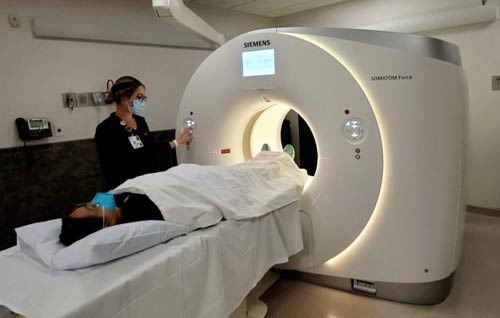
In the U.S., when a doctor says, "Let's get a CT scan," many people worry more about the cost than the actual procedure.
In Korea, you can just get the test done at a hospital and pay afterward, but in the U.S., having insurance doesn't mean the price is fixed, and not having insurance doesn't mean you'll pay the outrageous amounts hospitals quote. Even for the same CT scan, the price can vary from a few hundred to several thousand dollars depending on where you go.
First, just because you have insurance doesn't mean the CT scan is free.
CT scans are primarily diagnostic tests to confirm diseases, so deductibles, copays, and coinsurance may apply.
For example, let's say a hospital and an insurance company have agreed on a price of $800 for a CT scan.
If I haven't met my deductible yet, I might have to pay the full $800.
On the other hand, if I've already met my deductible and my insurance covers 80%, leaving me with 20%, then my out-of-pocket cost would be about $160.
So, when someone with insurance gets a CT scan, their actual cost might end up being between $100 and $300, but someone with a high remaining deductible could easily pay $500 or over $1,000.
Here's where the crucial difference between hospitals and independent imaging centers comes into play.
If you get a CT scan in an emergency room or a large hospital, a facility fee can significantly increase the price.
In contrast, if a doctor writes a prescription and you schedule the scan at an independent imaging center, it can be much cheaper.
Even for the same abdominal CT, just changing the location can lead to a difference of several hundred dollars in U.S. healthcare costs.
Looking at actual published price data, the regional differences are staggering. Comparing the negotiated prices for abdominal and pelvic CT scans in 2026 shows variations from a few hundred to several thousand dollars depending on the area. So, it's difficult to provide a single answer to the question, "How much does a CT scan cost?"
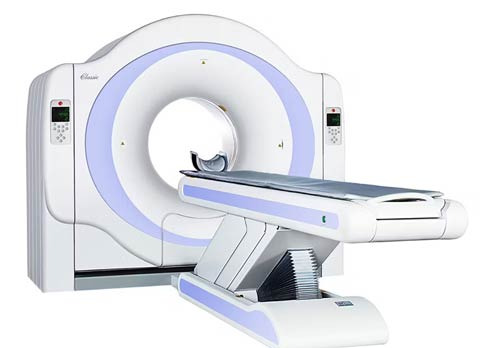
What about those without insurance? If you say you'll pay the hospital's list price, it can get very expensive.
CT scans performed at hospitals can be billed at over $1,000 to $3,000, and depending on the type of scan and the hospital, it can be even more.
However, you shouldn't give up here. If you don't have insurance, instead of just asking, "How much is it?" you should inquire about the self-pay or cash price.
At independent imaging centers or cash prepayment programs, prices can drop significantly. In 2026, the average cash price for a standard CT scan without contrast is about $355, while a CT scan with contrast is around $457. A contrast CT scan for both the abdomen and pelvis averages about $618. The cheapest options can start around $200.
This means that getting a CT scan without insurance doesn't automatically mean you'll pay $2,000. By comparing cash prices before booking, you might find scans available for around $300 to $700. Conversely, if you don't do any research and get a scan at a large hospital outpatient or emergency room, you could receive a bill for several thousand dollars.
The use of contrast also affects the price. There are scans that do not use contrast, those that do, and scans that capture images both before and after contrast is administered. Generally, the more complex the imaging process, the higher the cost.
You should also check whether there are separate charges for the interpretation by a radiologist. Sometimes, you might think the $700 quoted by the hospital covers all costs, only to later receive a separate bill from the radiologist.
Those using Medicare should also be aware. If a CT scan is medically necessary, Medicare Part B may cover it, and typically, after meeting the Part B deductible, the patient pays 20% of the approved amount. However, if the scan is done in a hospital outpatient setting, there may be an additional hospital copayment.
Also, just because you have insurance doesn't mean using it is the cheapest option. For example, if using my insurance means I have to pay $700 due to my deductible, but the self-pay price at a nearby imaging center is $350, then from a cash perspective, the self-pay price could be cheaper.
However, the amount paid without using insurance may not count toward your deductible or annual out-of-pocket maximum, so this should be considered as well.
Before scheduling a CT scan, you should ask three key questions: What is the exact CPT code for the scan? What is the expected out-of-pocket cost if I use my insurance? And what is the self-pay cash price if I don't use insurance?
In the U.S., even if you lie on the same CT machine and undergo the same 10-minute scan, some people may pay $250 while others may pay over $2,000. It's a confusing system, but that's the reality.
If you can schedule a CT scan, instead of immediately booking a date as instructed by the hospital, it's more practical to first ask two or three nearby imaging centers for their prices to reduce healthcare costs.
 CaliWaveRider
 CrystalRiver98
 LunaFriend





 Diana Blues |

 Dragon Lee |
 Churros Train Conductor |

 Tora Tora |

 neroyo |

 Way to easy |

 seouljung |


 Florida Gario |

 hot chocolate |
 SODA MAKER |
 james kim |
 All About Cars |
 lomira98 |
 calmbridge |
 oneonly |
 Brighto |
 racuse |
 Total Beauty |
 crystal |
 Good Hotels |
 raspberry7 |
 Que que |
 Well Done Sir |
 dance dance |
 sweetpepe |
 vegas mom |
 Olivia's Blog |
 cathywhite |