

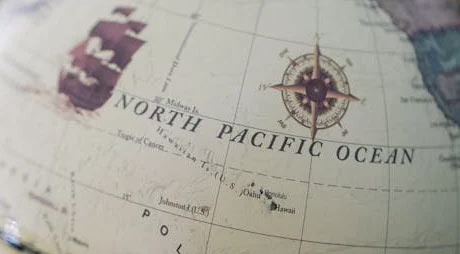
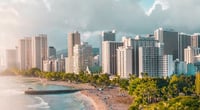
Honolulu is the capital and largest city of the Hawaiian Islands, with a history that includes its role as an important political center of the Kingdom of Hawaii and its development into a modern global tourist destination.
Honolulu was originally the home of the Native Hawaiians, whose ancestors have lived in the area for a long time. In 1795, King Kamehameha I conquered Honolulu, increasing its significance as the center of the Kingdom of Hawaii.The capital of the Kingdom of Hawaii changed several times, with Kamehameha I ultimately establishing the capital in Lahaina, and after Kamehameha III moved it to Honolulu, the capital remained there. Today, Honolulu is home to the royal palace, Iolani Palace.
As mentioned above, in the early 19th century, as Western influence began to take hold, the kings of the Kingdom of Hawaii developed Honolulu as a political and commercial center. In particular, Kamehameha III officially designated Honolulu as the capital of the Kingdom of Hawaii in 1845, further increasing its importance.
By the mid-19th century, Honolulu began to thrive as a trading port. Hawaii produced goods such as sugar, coffee, and oil, exporting them worldwide and achieving economic development. During this time, many people from various ethnic backgrounds, including Americans, Japanese, and Chinese, migrated to Honolulu, forming the city's multicultural character.
In 1893, the Kingdom of Hawaii was overthrown by the United States, and Hawaii became a territory of the United States. As a result, Honolulu developed into a military center for the United States. During this time, military facilities such as Pearl Harbor (USS Arizona Memorial) were established around Honolulu.
The attack on Pearl Harbor in 1941 was a very significant event in Honolulu's history, as it led to the United States entering World War II.
In 1959, Hawaii was officially admitted as the 50th state of the United States. From this point on, Honolulu continued to grow as the political, economic, and cultural center of Hawaii, and the tourism industry developed significantly, establishing it as a global travel destination.
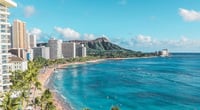
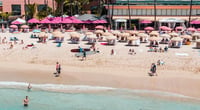
Today, Honolulu is the largest city in Hawaii and is known as a global tourist destination. Millions of tourists visit various attractions, including Waikiki Beach, every year.
Thus, the history of Honolulu has evolved from the era of the Kingdom of Hawaii to a city of military significance for the United States, and now to a center of tourism and culture.



 Magic Cabbage School of Martial Arts |
 Vacation on Hawaii |
 morvex37 |
 Ari Songhan American Immigration Life |
 Bearded Strawberry Smoothie |
 victoria 68 |
 Hawaii Tourist Information |

 TEX MEX STAR |
  DREAM BIG |
  frostbite |
  330 Forever My Love |
  El Dorado |
  dralix58 |
  Gorama Round |
  Skydiving |
  dreamport |
  Yellow Snowman |
  Toaster Pizza Magic Show |
  velvetnom |
  Anytime Journey |
  Mrs. Duluth |
  jaxter |
  Atlanta Mama |
  Baguette Blog |
  Tan Sol |
  US Embassy |
  Korean Mom |
  My NYC |