
These days, I often get asked by friends, "Is it true that there are so many cyber jobs in Augusta?" It's understandable to be curious since a place known only as a golf tournament city has now earned the nickname of cyber city.
So, I decided to look into it properly this time. To cut to the chase, the rumors are not exaggerated.
First, let's clarify the name. While searching, you might still come across the name Fort Eisenhower, but the official name is now Fort Gordon again.
The base that was originally Fort Gordon changed its name to Fort Eisenhower on October 27, 2023. However, in June 2025, the Trump administration announced a name reversal, and on September 26 of that year, it became Fort Gordon once more.
Interestingly, even though the name is the same, the person it honors is different. This Gordon is Sergeant Major Gary Gordon, who was killed in the Battle of Mogadishu in Somalia in 1993 and received the Medal of Honor.
This naming issue can lead to differing opinions among people. Personally, I think that from a job seeker's perspective, it's enough to know that both names might appear on resumes and job postings.
So, why is this place specifically a cyber city? The key is that the Army Cyber Command, or ARCYBER headquarters, is located on this base.
ARCYBER was originally spread across three states but moved here from Fort Belvoir in Virginia in 2020. A dedication ceremony for the new headquarters building, Fortitude Hall, was also held on September 3 of that year.
There is also the Army Cyber Center of Excellence here. This is where the Army conducts training for cyber operations and electronic warfare, essentially serving as a military academy for cyber soldiers.
The NSA Georgia Cryptologic Center is also on the same base, where at least 4,300 people are said to work. That's like an entire neighborhood dedicated to security work.
Overall, the base employs over 30,000 people, making it the largest employer in the Augusta area. According to the Augusta Economic Development Authority, the annual economic impact is estimated at $2.4 billion.
Of that, civilian salaries account for $329 million, and local contracts total $426 million. I took another sip of coffee while looking at these numbers.
The area outside the base is also significant. The Georgia Cyber Center opened on July 10, 2018, along the downtown riverfront.
This facility, which cost the state government $100 million, consists of two buildings totaling 332,000 square feet. Inside, there's a state-owned cyber range, a startup incubator, and an auditorium with 340 seats.
This building also houses the Augusta University College of Computer and Cyber Sciences. Established in 2017, the school has instructors from the Army Cyber School and NSA Georgia, so students might meet their future bosses while attending classes.
Now, what actual job opportunities are available? Broadly speaking, they fall into federal civilian positions, defense contractors, and general IT companies.
Federal civilian positions are posted on USAJOBS. Among the listings I found, a position for CAC/PKI registration was offered with a salary range of $73,965 to $100,050.
In the contractor sector, there are many positions such as security analyst, network engineer, and RMF assessment support. The names alone can be daunting, but the job descriptions are quite specific.
There are two important things to know here. One is security clearance, and the other is the Department of Defense qualification standards.
Many positions require clearance, which means U.S. citizenship is a basic requirement, so green card holders may find their options limited. Be sure to check if the posting states "clearance required" first.
The qualification standards have changed from the previous DoD 8570 to DoD 8140 as of February 15, 2023. The approach has broadened from just looking at certifications to considering education, training, and practical experience as well.
Still, the most commonly mentioned entry-level certification remains CompTIA Security+. It's a solid starting point as it's recognized for many roles under 8140.
We should also talk about the reality of the situation. Federal hiring can vary greatly in speed depending on budget and policy circumstances, and clearance reviews can often take months.
So, submitting one application and waiting idly is not advisable. It's better to apply simultaneously to contractors and private IT companies to save time.
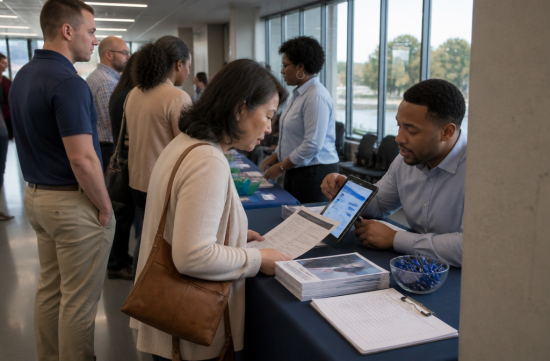
The Employment Readiness Program on the base is also worth utilizing. Military families can receive guidance on employment, education, and transitioning.
If I were in your shoes, I would first obtain Security+, set alerts on USAJOBS and contractor hiring pages, and make an appearance at Georgia Cyber Center events.
In the cyber field, it often comes down to networking. Even tidying up your LinkedIn profile can be a surprisingly powerful tool.
Who would have thought that packets would be flying around in a town known only for golf balls? I believe that for those interested in this field, Augusta is definitely worth considering as a serious option.
 CoffeeHunter




 crystalo |
 Investment Beginner Company Information Encyclopedia |
 Always Dreaming of Big Success |
 happy 9 |
 coloradoman |
 Augusta Univ |
 Augusta 90 |
 Watanaka Karametibaksa |
 Real Estate Investment Korean American |
 Golado |
  Gold Bar |
  Banana Style Life |
  Tesla X |
  Old English |
  urbanmint |
  forestcloud |
  forever young |
  Arlington house |
  liquid asset |
  Who's watching? |
  eclipse |
  quietwave |
  Hajiwon Blog Hair Salon |
  hoosierdaddy |
  saffronroute |
  korvex93 |
  Mini Mee |
  Darnignac |
  vanilla |
  selvon |