

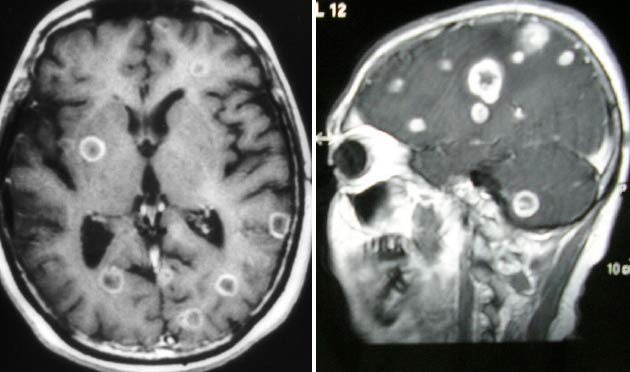
Recently, someone I know through a friend passed away from brain cancer at the age of fifty-five.
Now that I'm fifty, hearing such news feels completely different than it did in the past.
In my twenties and thirties, when I heard someone had cancer, my first thought was one of sympathy.
But now, when I hear about someone my age being sick, I immediately think:
Am I okay? Especially when I hear the term brain cancer, it's even scarier. I know that stomach cancer or colon cancer can be detected through endoscopy, and lung cancer can be found with a CT scan.
But brain cancer isn't something that's typically discovered through blood tests during health check-ups, so I became curious about how it can be detected early.
What I found was a bit surprising.
Currently, there are no recommended regular screenings for brain cancer for the general public.
There are no guidelines suggesting that a person without any symptoms should get a brain MRI every few years.
Most brain tumors are discovered after symptoms appear and a test is conducted.
When symptoms like worsening headaches, unexplained vision changes, balance issues, vomiting, or changes in personality or behavior occur, an MRI may be performed if necessary.
The most important imaging test for confirming a brain tumor is an MRI.
An MRI does not use radiation and can provide a detailed view of the brain's structure.
If a doctor has a reason to suspect a brain tumor, they may perform an MRI with a contrast agent.
So, what should someone like me, who has no specific symptoms but feels anxious and wants to get an MRI, do?
This is where insurance issues come into play.
In the U.S., health insurance typically covers tests deemed medically necessary.
If someone has new, severe headaches, seizures, vision problems, or weakness in their limbs, and a doctor prescribes a brain MRI, there's a high chance it will be covered by insurance.
On the other hand, if someone has no symptoms and simply says, "I want to check if I have brain cancer," the MRI may not be treated as a standard preventive screening.
Depending on the insurance company, prior authorization may be required, and if medical necessity is not recognized, the individual may have to pay out of pocket.
Therefore, it's more practical to talk to your primary care physician first rather than just going to an MRI center.
Especially if there are multiple family members with brain tumors or specific genetic conditions, the situation may be different.
In such high-risk groups, a doctor may recommend regular check-ups or MRI scans.
After experiencing this situation, I initially thought, "Now that I'm fifty, should I just get an MRI from head to toe?"
However, it turns out that testing everyone without symptoms or specific risk factors is not currently recommended as part of standard health check-ups.
Finding even minor issues that are not problematic could lead to unnecessary worry and costs due to follow-up tests and biopsies.
That said, it doesn't mean we should ignore the warning signs our bodies send us.
If you have persistent headaches that feel different than before, increasingly severe headaches, sudden seizures, weakness in one arm or leg, or changes in speech or vision, it's important not to dismiss these as just aging and to seek medical attention.
While there's no need to get an MRI every year out of fear of brain cancer, now that I'm fifty, I should establish a primary care physician and have regular check-ups to monitor changes in my health.
As I age, I'm beginning to understand the importance of health check-ups a little better.
It's not just about finding diseases but also about being aware of my usual health status and quickly noticing when something changes.
 GoldenTrail88







 Karina's Blog |
 Jimbeam 88 |
 Taco Bell Candy Note Blog |
 Splendid Mission |
 Florida Gario |
 Your Curiosity Resolved |
 Jean Claude Bundang Blog |
 Panorama Kstar |

 Golf Club News and Information |
  butter 90 |
  Lando Mao |
  Washington Denzel DJ |
  LIZ Legal Information Blog |
  vegas mom |
  Sandiego Auntie |
  Premium Gas Camp |
  Things to know |
  TEXAS Fishing Boat |
  AUTO OK |
  aaoaa |
  Florida King |
  Encyclopedia of New York and Surrounding Areas |
  Study Abroad Life Know-How Tips |
  Conflite Teacher |
  Silent Sea |
  Montgomery Mom |
  Franco Family |
  coloradoman |
  lumora |