
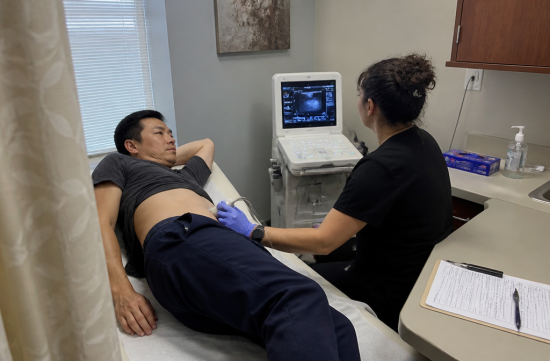
When the word fatty liver appears on a health check report, most people react similarly: "But I hardly drink!" I said the same thing a few years ago.
However, doctors no longer refer to this as non-alcoholic fatty liver disease. The name has changed to MASLD.
MASLD stands for metabolic dysfunction-associated steatotic liver disease. This name was established in 2023 through a multi-society consensus (Delphi consensus) involving American and European liver associations.
The previous term NAFLD was essentially a diagnosis of exclusion, indicating "not caused by alcohol." The new name directly addresses the cause: metabolic dysfunction is key.
As a result, the diagnostic criteria have changed. If there is fat in the liver and one or more of five cardiovascular metabolic risk factors are present, it is classified as MASLD.
The five factors are abdominal obesity, abnormal blood sugar or type 2 diabetes, high blood pressure, low HDL cholesterol, and high triglycerides. It is actually rare for someone over 40 to have none of these factors marked in red on their screening report.
The term NASH has also changed to MASH. This refers to the stage where fat is accompanied by inflammation and liver cell damage.
A new category called MetALD has been created for those who drink alcohol to some extent. This applies to individuals with metabolic risk factors who consume alcohol weekly: 140-350g for women and 210-420g for men.
Does the change in name mean the patient population remains the same? Almost. In a European cohort study, about 98% of existing NAFLD patients were classified as MASLD under the new criteria.
In numerical terms, the scale is quite large. One study analyzing NHANES data estimated the prevalence of MASLD among American adults to be 31.3%. Another study reported it as high as 37.9% depending on the measurement criteria.
There is one point that Korean individuals must be aware of: lean MASLD.
Research has repeatedly confirmed that Asians tend to develop metabolic dysfunction and fatty liver even with a relatively low BMI. Therefore, the latest screening recommendations have lowered the BMI threshold for Asians from 25 to 23.
A recent international study published in JAMA at the end of September addressed this issue directly. It analyzed 18,326 patients with biopsy-confirmed diagnoses from 41 countries, of which 6.7% were of normal weight.
The conclusion was striking. Lean patients generally had milder histological findings, but their weight itself did not reduce the risk of death or liver-related events.
What determined the prognosis was not weight but fibrosis. Within the lean group, those with advanced fibrosis had more than four times the risk of liver-related events.
Thus, the assumption that "I'm slim, so I must be fine" is a weak one. The data clearly points in the opposite direction.
So, what should you check? The starting point is the FIB-4 score. It is a simple indicator calculated using age, AST, ALT, and platelet count.
The commonly used thresholds are 1.3 for those under 65 and 2.0 for those over 65. Exceeding these values often leads to recommendations for liver stiffness tests like FibroScan.
However, FIB-4 is not perfect. The aforementioned JAMA study found that its accuracy was somewhat lower in lean patients, while liver stiffness tests showed better results.
The foundation of management remains lifestyle changes. The update from the American Association for the Study of Liver Diseases (AASLD) in November 2025 reaffirmed that lifestyle modification is the cornerstone of treatment.
The effects of weight loss vary slightly across guidelines. Generally, a reduction of 3-5% leads to decreased liver fat, while a loss of over 10% significantly increases the chances of improving inflammation and fibrosis.
For lean fatty liver, it is more practical to monitor metabolic indicators like waist circumference, blood sugar, and triglycerides rather than just weight. Reducing refined carbohydrates and sugary drinks, along with incorporating strength training, is often recommended.
In terms of medication, the landscape has changed significantly in the past two years. In March 2024, the FDA accelerated the approval of Rezdiffra (resmetirom) as the first treatment for MASH.
In August 2025, Wegovy (semaglutide 2.4mg) received accelerated approval for the same indication. Both are intended for adults with MASH who have no cirrhosis and moderate to severe fibrosis.
It's important not to misunderstand this. Not everyone with fatty liver can use these medications. Assessment of fibrosis stage comes first, and insurance coverage varies by plan.
Personally, I find the name change quite reasonable. It reveals the essence of the issue as a metabolic problem, rather than the old name suggesting that not drinking alcohol was a free pass.
If I were in your shoes, I would check liver enzyme levels and platelet counts at the next screening, calculate the FIB-4 myself, and if it exceeds the threshold, request a stiffness test.
Interpreting test results or deciding on medication use will vary completely based on individual medical history. Always consult with your primary care physician or pharmacist before making decisions.
 BeginnerGame








 fruitflash |

 Anjollinya Blog |
 United States Army |

 premium |

 The Emperor Must Grow |

 Yellow Snowman |

 rissa |


 Alpha and Omega World |

 Diamond King |
 Epoca News |
 Samttugi Grasshopper Noodle |
 kansan55 |
 Skyline |
 Investment Information News Update |
 diamondo |
 Fairfax Fox |
 kuku 100 |
 US Embassy |
 Kims Spring |
 TOTO Together |
 Princess Park |
 Respect Rooftop Bro |
 Hani 1977 |
 Tilt Cicy |
 yorvik12 |
 lollipop |
 lioness |
 DREAM BIG |
 corner |