
Many people receive health check-up appointment texts and only check the date without much thought. However, if you are currently using Wegovy or Ozempic, there is an important action you must take regarding that text.
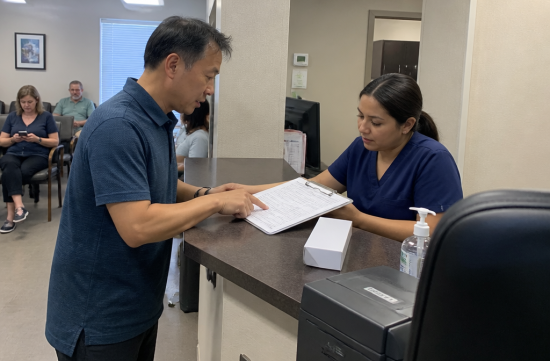
You need to inform the endoscopy or surgical team in advance that you are receiving "GLP-1 injections." Mentioning it at the reception desk on the morning of the procedure may be too late.
Why is this so emphasized? The mechanism of these medications for weight loss slows down the speed at which food leaves the stomach.
This is usually an advantage, as it keeps you feeling full longer and helps reduce food intake.
The problem arises during anesthesia or deep sedation. Even if you have fasted since the night before, there may still be food left in your stomach.
When a person is unconscious, if the stomach contents reflux into the lungs, it is called aspiration. This is one of the situations that anesthesiologists are most cautious about.
This is not meant to scare you. The FDA added this information to the labels of GLP-1 medications, including semaglutide, in November 2024.
The label states that aspiration into the lungs during general anesthesia or deep sedation has been rarely reported. These are cases where patients claimed to have followed fasting instructions, yet stomach contents remained.
The warning applies broadly. It includes not only Ozempic and Wegovy but also oral medications like Rybelsus, as well as other terzepatide medications like Mounjaro and Zepbound.
However, you must not overlook the word "rarely." This does not mean that patients using these medications will face serious issues during endoscopy; it means that the medical team needs to be aware and prepared.
So, should you stop taking the medication before the procedure? Guidelines have changed once on this matter.
In 2023, the American Society of Anesthesiologists recommended that patients on weekly injections pause their medication one week before the procedure, while those on daily medications should stop one day prior. I heard quite a few stories about people skipping a week of their injections during that time.
However, in 2024, new guidance released by five societies, including the anesthesiology and gastroenterology associations, took a different direction. Most patients can continue their medications.
Instead, they advised assessing the risk for each patient beforehand. Factors such as using high doses, increasing the dosage, being on a weekly regimen, and currently experiencing gastrointestinal symptoms like nausea or vomiting were identified as risk factors.
For those at higher risk, a method of consuming only clear liquids for 24 hours before the procedure was suggested. This is similar to the preparation for a colonoscopy.
Adjusting the anesthesia method or checking the stomach contents with an ultrasound just before the procedure were also mentioned. Delaying the procedure was considered rare.
Here's the key point. All these adjustments can only be made if the medical staff is informed in advance.
If you mention it at the booking stage, there will be time to receive instructions for clear liquids. If you wait until the day of the procedure, your options will be significantly reduced, and in the worst-case scenario, the procedure could be canceled.
There's another reason related to colonoscopy. It concerns inadequate bowel preparation.
A study published in 2024 by researchers at Cedars-Sinai found that the rate of inadequate bowel preparation in the GLP-1 user group was 21.3%, compared to 6.5% in the control group. Although it was a small retrospective study and should not be overinterpreted, it is not a number to ignore.
If the bowel is not adequately cleared, small polyps may be missed, and ultimately, you may need to reschedule the examination. Taking a day off work and going through that ordeal twice is something to avoid at all costs.
Conversely, a multicenter study analyzing 815 patients in 2025 found that the rate of stomach contents remaining was 8.7%. This suggests that previous concerns may have been somewhat exaggerated.
Ultimately, while the numbers vary from study to study, the conclusion remains the same. The risk is not zero, and if you inform the medical team, it can be managed effectively.
There are also practical aspects that can be easily overlooked. If you received your injections through a weight management clinic or online prescription, that medication may not even appear in the records of the hospital where you are having the endoscopy.
Therefore, it is essential to write down your medications in the medical history section of the questionnaire. Including the medication name, dosage, and the date of your last injection will make it much easier for the medical staff to assess your situation.
The same applies when receiving sedation for dental treatments or undergoing cosmetic procedures. If deep sedation is involved, whether for endoscopy or surgery, the principles are the same.
And whether or not to stop taking the medication should never be decided alone. It is best to consult with the prescribing physician, the team performing the procedure, and the pharmacist.
If you stop the medication on your own and then restart it, you may experience increased nausea like when you first started, and for those using it for diabetes, it can also affect blood sugar management.
I believe that it's best not to wait for others to take care of these matters. It's overly naive to expect that the hospital system will connect everything for you.
When making your appointment, just one sentence is enough. "I am using Wegovy; is there anything I need to prepare?" This one question can significantly reduce variables on the day of the procedure.
 SunJourney




 fruitflash |

 Anjollinya Blog |
 United States Army |

 premium |

 The Emperor Must Grow |

 Waiting for Godot |

 zentra95 |



 TOUCHE NEWS |
 yorvik12 |
 lollipop |
 lioness |
 DREAM BIG |
 corner |
 Shintongbangtong Shin Naerin James Park |
 primeleaf |
 forward |
 action blog 101 |
 athome blog |
 calvor |
 Haha and Bomi Blog |
 Lee Ton |
 viba viba |
 Olivia's Blog |
 208 Master |
 crumb |
 blanke |
 Burbank Lee |
 tervox95 |