

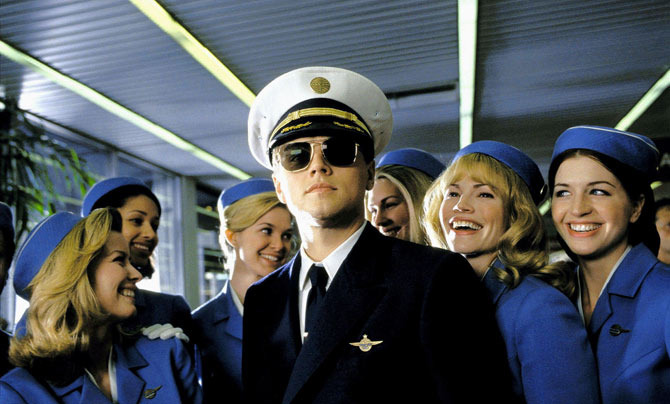
In the movie Catch Me If You Can, there is a scene where flight attendants from the 1960s walk in a straight line.
Their uniforms are perfectly pressed, and the angles of their hats are all aligned, making them look like fashion show models.
They were not just employees providing passenger service, but rather the very image of the airline at that time.
This is why the saying 'flight attendants had to be beautiful' emerged, and there was a time when appearance standards were boldly included in hiring criteria.
This was not merely an 'advertising bait' to entice male passengers, but rather a result of the atmosphere in the airline industry at that time.
Before flying became popular, airplane tickets were extremely expensive, and only the upper class used them, much like today's business class.
The inside of an airplane was like a 'hotel bar in the sky,' and the level of service customers expected was very extravagant and luxurious.
To maximize this high-end image, airlines naturally expected their flight attendants to have a 'visual appeal suitable for social parties.'
As a result, the posters used in airline advertisements were centered around flight attendants, conveying the message that 'the prestige varies depending on which airline you fly with' through the elegant appearance of the attendants.
Another reason was the social atmosphere of the time. In the 1950s to 70s, it was not a significant issue socially to require appearance standards for women in the workplace.
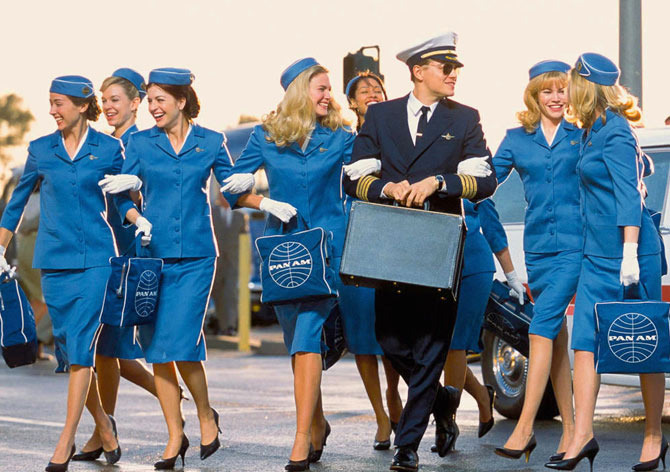
The range of jobs available to women was quite limited, and conforming to the atmosphere demanded by companies was seen as a condition for job selection.
Moreover, the perception of flight attendants as 'young and pretty women' was particularly strong, leading airlines to impose not only appearance standards but also age restrictions.
In fact, there were cases where one had to resign upon marriage, and receiving warnings for even slight weight gain was common. Looking back now, these standards seem extremely unreasonable and discriminatory, but at that time, they were considered 'rules that had to be followed to maintain a job' as society naturally imposed unfair standards on women.
Ultimately, the emphasis on appearance for flight attendants was a mix of marketing strategy to attract people, a means to highlight the luxurious image of airplanes, and the prevailing social atmosphere.
As time passed and air travel became more mainstream, the essence of service-oriented jobs shifted from appearance to safety, professionalism, experience, and language skills, leading to the gradual disappearance of these standards. Today, practical criteria such as communication skills, emergency response abilities, and physical condition take precedence over appearance.
In the past, it was enough to simply smile and serve, but now flight attendants are recognized as 'safety professionals' responsible for the lives of passengers in emergencies.
Thus, scenes from movies decades ago may appear glamorous and impressive, yet they also leave a somewhat uncomfortable feeling when viewed today.




 candytip |
 Gold Bar |
 Pirate Ship Popcorn Maker |
 Montgomery Mom |
 Anjollinya Blog |
 Alpha and Omega World |
 Yellow Snowman |

 Fairfax Fox |
 draxen |
  Korean Mom |
  My NYC |
  moo moo |
  Mr Oh |
  forevergee |
  festival |
  manchester |
  constant |
  Leapfrog Move |
  vibranto |
  Tora Tora |
  yellowbutter |
  Dolly |
  US Embassy |
  NYC saladbar |
  Finding Superfoods |
  lightyear |
  song bang |
  vexomo |
  Indiana Jones |