

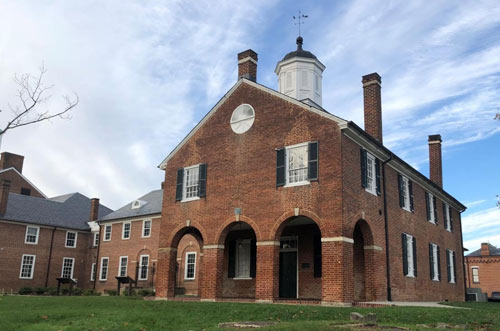
When you drive around the Fairfax area, you might only notice the newly built townhouses and wide roads, thinking it's just a "neat suburban city." However, old brick buildings unexpectedly appear throughout the city. You see a 19th-century style building standing next to a modern café, and a pre-war courthouse remains next to a high-rise office. These old buildings quietly tell us that Fairfax is not just a new city, but one that holds a long history.
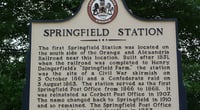
The most representative building is the Fairfax Courthouse. Completed in the early 1800s, this building is made of brick and simple classical style, and while it is not ornate, it has a solid presence.
It was also a place used alternately by both armies during the Civil War, holding the chaos and tension of that era. Standing here now, we pass through the entrance where soldiers once came and went, as if it were nothing. It may look like an ordinary building, but it feels like it has stored the memories of the entire city under its roof.
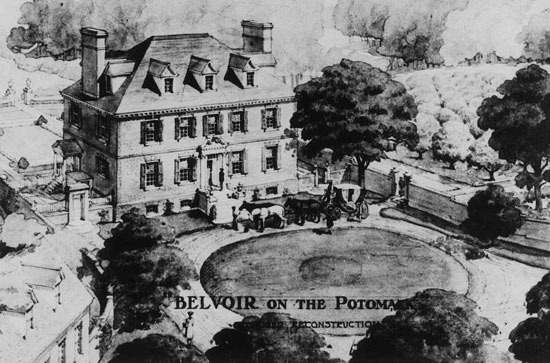
Another important remnant to remember is the Belvoir estate. Currently, only some walls and the foundation remain, but this was a mansion symbolizing the wealth and power of the 18th-century gentry.
This place holds traces of the time when British noble families owned land in Northern Virginia and lived a life of nobility. Now, trees and plants cover the ruins of the building, giving the impression that nature has swallowed history again. It is evidence that Fairfax, often thought of as a suburban city, is actually built on a very old world that existed first.
Walking through this city, you also notice old shop buildings, many of which have been converted into cafés or restaurants until recently.
While the exterior is made of old bricks, the interior is decorated with modern designs, creating a scene where the past and present awkwardly mix in one space. The time left between the bricks does not quickly disappear, and it is interesting to see how it naturally coexists in the daily life of the city. Every time I encounter such buildings, I am reminded that "this city was not completely newly created, but has been layered and built upon over time."
Fairfax's old church buildings also play an important role in the city's history. The churches built by early settlers around the community had meanings beyond just being places of worship. They were places where news was exchanged, where people gathered to share farming information, and served as community centers for local decisions. Today, vehicles and the internet have replaced the flow of information, but the old church buildings still quietly draw people together. Times have changed, but the community spirit that the buildings hold remains.
Interestingly, all these old buildings do not appear "elegantly preserved like monuments." Even as apartments and shopping malls have been built around them, the old buildings remain alongside them like neighbors.
New buildings have not pushed out the old ones; they often seem to have awkwardly made room for each other. Therefore, as you walk around Fairfax, you feel a completely different atmosphere than a city where historical buildings are preserved like a giant museum.
Ultimately, the old buildings of Fairfax are neither flashy nor significant tourist attractions, but they are like roots that create the identity of this city. Quietly standing next to a newly built café, they seem to say, "We were here first." This reveals that Fairfax, thought to be a suburban city, is actually a historical city that has lived with a long history.
 CheolYoungmi




 Alpha and Omega World |
 Yellow Snowman |

 Fairfax Fox |
 draxen |
  US Embassy |
  Korean Mom |
  My NYC |
  moo moo |
  Mr Oh |
  forevergee |
  festival |
  manchester |
  constant |
  Leapfrog Move |
  vibranto |
  Tora Tora |
  yellowbutter |
  Dolly |
  NYC saladbar |
  Finding Superfoods |
  lightyear |
  song bang |
  vexomo |
  Indiana Jones |