
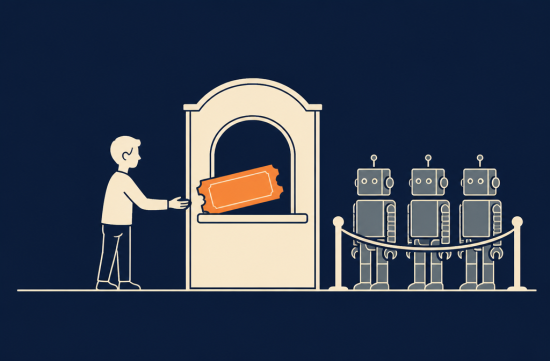
I logged in right at 10 AM when ticket sales opened, but my waiting number was in the 40,000s. After waiting an hour, I found that all the good seats were already gone.
However, that afternoon, resale sites had tickets for the same concert listed at several times the original price. If you've been to a few concerts, you might have experienced this at least once.
The usual culprit pointed out is the ticket bot. It's an automated program that bypasses the queue dozens of times faster than a human and scoops up tickets.
Illinois has taken action against this. On June 25, Governor Pritzker signed a bundle of consumer protection bills, which includes the ticket bot ban law.
The bill number is SB 318, and the name is straightforward. It's the law prohibiting ticket purchases using bots.
The core idea is simple. It aims to prevent the use or creation of bots to exceed the purchase limits set by sellers.
Methods that involve rotating multiple accounts or email addresses to evade limits are also prohibited. This was actually the most common tactic used by resellers, so it's a welcome aspect.
The law will take effect on January 1, 2027. So, for this year's end-of-year concerts or basketball season ticket sales, you can expect things to remain as they are. It's a bit disappointing.
If violated, the state attorney general's office can investigate and file lawsuits. Violating this law will be treated as an illegal act under Illinois' Consumer Fraud Act.
There's also another regulation in the same bundle. It's HB 4984, which bans the sale of so-called phantom tickets—tickets that are listed for sale without actually being in hand.
Resellers must actually possess the tickets or have them secured by contract before they can post sales listings. Reports vary on whether this provision will take effect immediately upon signing or starting next January, so keep that in mind.
There's one more thing. Starting in January 2027, there will also be a requirement to display the original price. This law targets so-called junk fees.
All essential fees, such as service fees, processing fees, and facility fees, must be included in the initial price shown. Taxes may be added separately, but suddenly increasing the price right before payment will no longer be allowed.
Honestly, this might have a more noticeable impact than the bot ban. Everyone knows the frustration of a $50 ticket suddenly changing to over $70 at checkout.
The bill reportedly passed unanimously in both the Senate and House. It's quite surprising to see both parties united in today's political climate.
Representative Nabila Syed, who led the bill in the House, said she first felt this issue during Taylor Swift's tour in 2022. That ticketing chaos made national news.
So, will getting tickets become easier now? My answer is that it will improve a bit, but there won't be a miracle.
There are always far more people wanting to see popular shows than there are seats available. Even if bots are eliminated, the fact that tens of thousands will still flock at the same time won't change.
In fact, at the federal level, the BOTS Act, which bans bots, was already established in 2016. The problem has been enforcement.
The Federal Trade Commission first filed a lawsuit under this law in 2021, and three brokers were fined over $3.7 million. Essentially, the law had been dormant for over four years.
It wasn't until a presidential executive order in March 2025 that federal enforcement noticeably increased. A law only has power when it is actively enforced.
The Illinois law is similar. We'll have to see how effectively the state attorney general's office can pursue bots operating on overseas servers.
Still, it clearly has significance. Moving from relying solely on federal agencies, state governments now have the basis to investigate and file lawsuits directly. For resellers, this means there's one more set of eyes to worry about.
As a ticket buyer, there are things you can do right now. Always use official sellers or venue websites first, and double-check sites that appear in search ads with similar names.
If there are fan club presales or artist verification systems, it's a good idea to register for those. Such pre-verification can be quite a hurdle for bots.
When buying resale tickets, check if the seat number is specifically listed. If only the section is mentioned and the seat is empty, it might be a ticket that hasn't been secured yet.
Whenever possible, pay with a credit card. This way, if issues arise, you still have a way to dispute with the card issuer, making it much safer than sending money directly through an app.
I've shifted my focus from large venues to smaller clubs or local outdoor festivals for quite some time now. Instead of getting caught up in the ticket wars, I find that sitting on the grass and enjoying the music lasts much longer.
However, if there's a stage you really want to see, starting next year, you'll have a fairer chance to compete. We should all keep a close eye on whether the law is implemented properly.
Music is meant to be for everyone. Don't give up that joy over a single ticket, and make sure to go where you want to go.
 ChocoExplorer




 Noodle Noodle |
 figtop |

 Toaster Pizza Magic Show |
 DO Main TODAY |

 Caribbean |

 Smile Face |


 golfmaster |


 Eastern Country James' Mom |
 Epoca News |
 Samttugi Grasshopper Noodle |
 kansan55 |
 Skyline |
 Investment Information News Update |
 diamondo |
 Fairfax Fox |
 kuku 100 |
 US Embassy |
 Kims Spring |
 TOTO Together |
 Princess Park |
 Respect Rooftop Bro |
 Hani 1977 |
 Tilt Cicy |
 yorvik12 |
 lollipop |
 lioness |
 DREAM BIG |
 corner |