
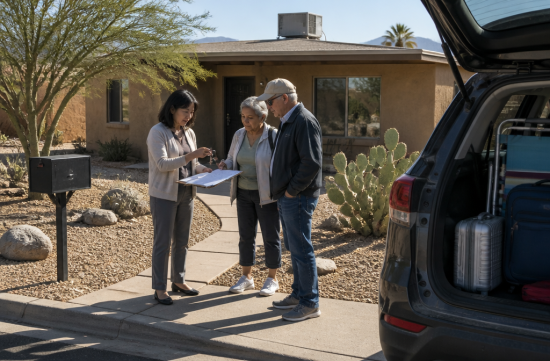
By mid-November, the nature of rental inquiries in Tucson changes significantly. This is the time when inquiries from snowbirds looking for homes to stay from "December to March only" increase.
Renting for a few months can be quite profitable. However, using a lease agreement like an Airbnb one-night stay or, conversely, using a one-year lease template can lead to problems later on.
From a landlord's perspective, I will outline the essential items that must be included in the lease agreement, organized by the most frequently asked questions.
The first thing to check is whether the rental period exceeds 30 days. This 30-day mark is crucial for tax purposes.
As of January 1, 2025, Arizona has prohibited the city or county from imposing rental taxes on residential rentals where the same tenant stays for more than 30 consecutive days. Conversely, stays of less than 30 days are still subject to the transient lodging transaction privilege tax (TPT).
If you're in downtown Tucson, there's one more thing to note. According to the Arizona Department of Revenue (ADOR), starting March 1, 2026, Tucson will classify vacation and short-term rentals separately, setting the city tax rate at 10%.
The additional fee of $4 per night that was charged on the same date has been eliminated. The state rate of 5.5% and the county portion are charged separately, so it's safest to verify the total tax rate directly with ADOR as it may vary in different documents.
Therefore, the lease agreement should clearly state the check-in and check-out dates, as well as who is responsible for paying the taxes. The tax treatment can vary significantly depending on whether it's a 29-night or 30-night stay.
When using a booking platform, the platform may collect taxes on your behalf. If it's a direct contract, make sure to check whether you have a TPT license registered.
The second point is the legal nature of the agreement. When renting for several months, questions often arise about whether this is a lodging arrangement or a lease.
The Arizona Residential Landlord and Tenant Act (ARLTA) excludes temporary lodging like hotels and motels from its scope. However, it's not entirely clear whether staying in a personal residence for three months falls under this exclusion.
If it's determined to be a lease, the eviction process and security deposit regulations will apply. This means that even if a guest exceeds their stay, you cannot simply lock them out and remove their belongings.
Therefore, it's advisable to include the daily rate for staying beyond the check-out date and the extension process in the lease agreement. This can vary based on individual circumstances, so it's recommended to consult a real estate attorney.
The third point is the security deposit. Under Arizona law, you cannot require a security deposit and prepaid rent that exceeds one and a half months' rent combined.
Any non-refundable fees, such as cleaning fees, must be clearly stated in writing and marked as non-refundable. Any significant amounts should be considered refundable.
Snowbirds often offer to pay three months' rent upfront. While tenants can voluntarily prepay, a landlord requesting this is a different matter.
It's also good to specify the timing for the return of the security deposit and any deductions. Since guests often return to another state in the spring, make sure to collect their return address and payment method to ensure a smooth process even if contact is lost.
The fourth point is utilities. Winter in Tucson can be mild during the day but chilly at night, so heating can be quite necessary.
Decide whether to include electricity, gas, water, and internet in the rent, and if so, set a monthly cap. You should also specify how to settle any amounts exceeding that cap to avoid misunderstandings later.
The fifth point is HOA regulations. Many neighborhoods around Tucson have HOAs, and it's common for management rules to include minimum rental periods or guest registration requirements.
Before signing a contract, read the original rules and include a clause stating that the tenant must adhere to the community rules and who will bear the penalties for violations. Also, include conditions for using facilities like pool access cards.
Some communities require landlords to report rental agreements to the HOA in advance. Missing this can lead to unexpected fines for landlords.
The sixth point is occupancy and pets. It's not uncommon for a couple to plan to stay, only to have grandchildren visit during the holidays.
Clearly state the maximum number of occupants and how long guests can stay, as well as how many pets are allowed. Remember that pet deposits also fall within the previously mentioned one and a half months' limit.
The seventh point is access and maintenance. If a gardener or pool maintenance service comes regularly, make sure to disclose that schedule in the lease agreement.
It's also wise to specify how many days in advance the landlord will notify tenants before entering for inspections. If considered a lease, ARLTA typically requires a two-day notice.
The eighth point is emergency contact information. Since landlords often reside out of state, designate a local person who can be contacted 24/7 and include their information in the lease agreement.
Finally, include cancellation and early termination conditions, a list of furnishings and appliances, and a record of photos taken before move-in. This is the best way to avoid disputes over missing items after a three-month stay.
Local regulations change frequently, so be sure to check the latest information on the Tucson city or Pima County, and ADOR websites. I would recommend ensuring that the 30-day threshold and security deposit limits are accurately reflected in the lease agreement.
 ColorPasta
 MacaronMet






 B.I.G. Victor |

 Amber H |
 uplifted |

 Dr. Kelso |

 silents |
 AZ Road Master |
 Project Tomorrow |

 Arizona Cowboy |

 Who's watching? |
 Epoca News |
 Samttugi Grasshopper Noodle |
 kansan55 |
 Skyline |
 Investment Information News Update |
 diamondo |
 Fairfax Fox |
 kuku 100 |
 US Embassy |
 Kims Spring |
 TOTO Together |
 Princess Park |
 Respect Rooftop Bro |
 Hani 1977 |
 Tilt Cicy |
 yorvik12 |
 lollipop |
 lioness |
 DREAM BIG |
 corner |