

These days, I often hear people around me asking, "Have you had a calcium score test?" This is especially common among those whose cholesterol levels came back borderline in their health check results.
At first, I thought it was just another trendy test. However, after looking into the guidelines, I found that it's actually a well-supported examination.
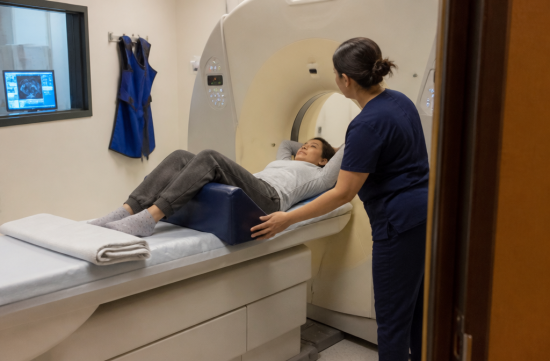
The coronary artery calcium score, referred to as the CAC score in English, is a test that uses CT to show how much calcium has accumulated in the walls of the heart's blood vessels.
Since it's a non-contrast CT that doesn't require an injection of contrast dye, the process is straightforward. You just lie down and hold your breath a few times, and it's done quickly.
So, what do you do with this number? The key is that it helps make the ambiguous decision of whether or not to start statin medication.
On March 13, 2026, the ACC and AHA simultaneously released new guidelines for abnormal lipid levels in JACC and Circulation. This document replaces the cholesterol guidelines from 2018.
The new guidelines recommend using a new calculator called PREVENT to assess 10-year risk. The results are categorized into four levels: low risk, borderline, intermediate, and high risk.
The criteria are: less than 3% is low risk, 3% to less than 5% is borderline, 5% to less than 10% is intermediate, and 10% or more is high risk.
The calcium score CT comes into play specifically for those in the borderline and intermediate ranges. According to summaries from major medical publications, the target group includes men over 40 and women over 45 who fall into these ranges and have ambiguous treatment decisions.
This means that for individuals already at high risk who need statins or those at very low risk, this test is not necessarily required. Many people overlook this aspect.
What happens if the score is 0? According to various summaries, it suggests delaying the start of statins and reassessing a few years later.
However, there were exceptions in the 2018 guidelines. Smokers, individuals with diabetes, and those with a strong family history of early heart disease should not feel reassured even if their score is 0.
Conversely, if the score is greater than 0, the inclination is to start statin therapy. If the score is 100 or higher, or if it falls within the top 25% for age and gender, stronger treatment options are considered.
Thus, the true value of this test lies in whether it can change decisions. If the treatment plan remains the same regardless of the results, the justification for getting the test weakens.
Of course, there are opposing views. The U.S. Preventive Services Task Force (USPSTF) assigned an I grade to the addition of this test for risk assessment in 2018, citing insufficient evidence.
The reason was a lack of evidence to weigh the benefits against the harms. They also noted that radiation exposure and false positives could lead to unnecessary additional testing.
How much radiation is involved? Well-set equipment typically delivers around 1 mSv, but one study reported variations from 0.8 to 10.5 mSv depending on the facility.
Therefore, it's not a test to be repeated habitually every year. Where you get it done is also quite important.
Now, let's talk about the practical question: the cost. Original Medicare usually does not cover calcium score tests for general screening purposes.
Some Medicare Advantage plans or employer insurance may cover it if the doctor documents that the patient is at intermediate risk. However, coverage varies significantly by plan.
According to consumer price guide sites, the cash price ranges from $100 to $400. It's often possible to resolve it in the $100 range if you ask about self-pay prices in advance and compare.
In areas like the Bay Area, where healthcare costs are high, some places may charge more for the same test. It's advisable to call two or three places before making an appointment.
If you have insurance, request a pre-service determination to check coverage under your plan. It's much better than being surprised by a bill later.
From a data-loving perspective, here's the summary: this test is not a one-size-fits-all health check but rather a tie-breaker for those in ambiguous risk categories.
If it were me, I would first check the PREVENT score with my primary care physician. If I fall into the borderline or intermediate risk category and there's hesitation about starting statins, then it makes sense to get the test.
On the other hand, if there are already symptoms like chest pain, the situation is entirely different. That's not a screening test; it's a situation that requires immediate medical attention.
This article is based on the guidelines released in the first half of 2026 and the publicly available summary materials. Detailed criteria may be refined in the future.
Decisions regarding testing or statins can vary greatly depending on personal medical history and medications, so be sure to discuss them with your doctor or pharmacist.
A single number can either increase or decrease anxiety. Knowing when to look at that number is the first step in proper prevention.
 StarlitStory
 SumiHouse







 squidogame |

 daddyyo |

 Top Beaches |

 Solo Yolo |

 Diana Blues |

 mykiwi blog |

 Nuchuhan Exploration BLOG |

 Sugar Cream Door Bulletproof Noodles |

 Moscow Kim |

 my town K blog |
 ssome |
 skykong |
 Shining Our Own World |
 gardener 007 |
 golfmaster |
 Nanana Nanana Nanana |
 Who's watching? |
 endone |
 RockStar |
 Casa Mia |
 You Only Live Once |
 Hardworking CPA |
 Joyce 77 |
 Runner Kim |
 My Town My Way Blog |
 My Miami Stories |
 Entip |
 Tony Park |
 DJ DC BLOG |