
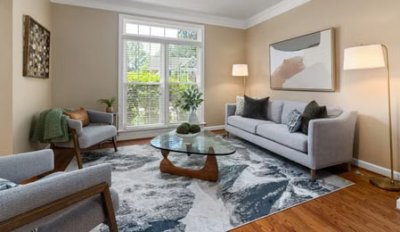
When consulting on investment properties in San Jose for a long time, you often see the same misunderstanding in cash flow calculations. Some people consider the money left over after deducting the mortgage from rent as profit. In the past, such simple calculations didn't pose significant issues, but now you must deduct property taxes, management fees, and maintenance costs to get an accurate picture.
Looking at rental levels, the average rent in San Jose as of August 2026 is $3,380 per month, which has increased by 10.2% over the past year (Zumper). Studios are around $2,200, one-bedroom apartments are $2,650, and two-bedroom units are about $3,570. Applying the 1% rule to see if you can rent for more than 1% of the purchase price shows that while rents are relatively high, the purchase prices are also high, making calculations not straightforward.
In the past, San Jose rents fluctuated significantly with the Silicon Valley economy, but the recent increase of 10.2% is relatively rapid. During such times, it is safer to check if cash flow is positive based on current rents rather than just following the purchase price based on expected rent increases.
San Jose has some of the oldest rental regulations in California. The Apartment Rent Ordinance (ARO), established in 1979, applies to buildings with three or more units built before September 7, 1979, affecting about one-third of the city's rental stock, approximately 44,300 units. AB 1482 allows rent increases tied to inflation, ranging from 5% to 10%, while ARO is fixed at 5% annually, regardless of inflation. This means that whether inflation rises by 6% or 2%, ARO-regulated buildings cannot exceed a 5% increase. Depending on which regulations the property you intend to purchase falls under, the rent increase plans can vary significantly. If the owner of an ARO-regulated building finds it difficult to cover operating costs with the 5% cap, they can apply for an above-guideline increase through the city's rent stabilization program. However, this process requires submitting financial documents and going through a hearing, which involves time and costs.
Loan conditions also differ from what you might expect based on previous owner-occupied experiences. Investment loans typically require a down payment of 15% to 25%, and while credit scores can be assessed starting at 620, a score above 740 is needed for favorable rates. Interest rates are generally 0.5 to 0.75 percentage points higher than those for owner-occupied loans (based on Fannie Mae and Freddie Mac). Banks only consider about 75% of rental income as qualifying income.
When summarizing annual expenses, the effective property tax rate in Santa Clara County is approximately 0.67%. Landlord insurance is priced higher than standard homeowners insurance, and if you hire management, it can take 8% to 12% of the rent. Maintenance typically requires setting aside about 1% of the asset value annually. Most ARO-regulated buildings were built before 1979, so maintenance costs for aging facilities like plumbing and electrical systems may be higher than for new constructions.
At the time of sale, considering a 1031 exchange can be worthwhile. This allows you to defer capital gains taxes by reinvesting in similar assets, provided you meet IRS requirements. Reflecting on past experiences where simple cash flow calculations led to disappointment, developing the habit of carefully reviewing each item makes the most significant difference.
Ultimately, cash flow is not just the number left after deducting the mortgage from rent; it is the money remaining after deducting property taxes, insurance, management fees, and maintenance costs. In areas like San Jose, where regulations are complex, meticulously performing this calculation is the best way to reduce future regrets. This article is not investment or legal advice, and you should consult with a professional to review your individual situation before making any contracts.
 GoldenTree
 SalmonSquats







 |
| 
 Premium Gas Camp |
 CA Real Estate |
 cheesepup |
 breezem |
 DOCTOR MED |
 Reggae Party |
 Time is GOLD |
 Breaking Bad Drama |
 good thinking |
  Cap Com |
  nixxon |
  kevin Kim |
  beerdreamer |
  Kims Spring |
  White bunny |
  Kansas City Representative Singer |
  shadow 007 |
  sun walker |
  Choco Choco Star |
  midnight blue |
  honeypot |
  summer |
  adventure77 |
  flexible |
  Shintongbangtong Shin Naerin James Park |
  truepixel |
  Kathy's Blog |
  Hae Naem |
  quatspace |