
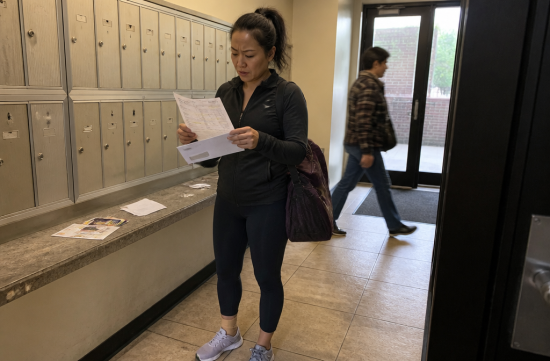
Have you ever opened your mailbox and felt your heart drop? I had that experience last week.
I twisted my ankle during a dance class, so I went to the emergency room, and thankfully, I was told my bones were fine.
However, the bill that arrived a few weeks later was anything but light. The hospital was definitely in my insurance network, but a separate bill from a doctor was charged at out-of-network rates.
At first, I thought I just had to pay it, and I sighed heavily. Then a friend told me to check the No Surprises Act, so I spent the night digging through official documents.
To cut to the chase, you don't have to pay every bill like this. Let me break down what I found out.
First, there's the federal No Surprises Act. It went into effect in January 2022 and protects private health insurance members from the most common types of surprise bills.
There are three main protections. Emergency room care, non-emergency care at in-network hospitals or outpatient surgical centers involving out-of-network providers, and air ambulances.
In these cases, patients only have to pay their in-network cost-sharing, which includes copays, coinsurance, and deductibles. Balance billing, which charges the patient for the remaining amount, is prohibited.
My ankle incident fell right into this category. The emergency room is the area most clearly protected by this law, so knowing this eased my frustration a bit.
However, there's an important caveat to know. For non-emergency care, out-of-network providers can give a notice and obtain patient consent to waive this protection.
This consent form usually needs to be obtained at least 72 hours before the appointment, or at least 3 hours prior for same-day bookings. So, if you're asked to sign something before a procedure, be sure to read it carefully.
Fortunately, there are exceptions. Emergency care, as well as ancillary services like anesthesia, radiology, pathology, and laboratory services, cannot waive this protection even with a consent form.
Now, let's talk about New York State. New York created its own surprise bill protection law before the federal law, and the state Department of Financial Services (DFS) currently oversees it.
According to the DFS, if you received care from an out-of-network provider at an in-network hospital or surgical center, and there was no in-network doctor available or you were unaware, it is considered a surprise bill.
This also applies if an in-network doctor referred you to an out-of-network provider without your written consent acknowledging that fact. In this case, you only have to pay your in-network cost-sharing.
New York has also established a surprise bill proof form. If the bill arose from a referral, you must submit this form to your insurance company and the provider, and while it's not mandatory, it's recommended for bills generated within the hospital.
In New York, disputes over amounts between insurers and providers are resolved through independent dispute resolution (IDR). The key point is that patients are kept out of that conflict.
Even those without insurance or who choose not to use it have protections. For scheduled care, providers must give a good faith estimate of expected costs in advance.
If the actual billed amount exceeds the estimate by more than $400 for a single provider, you can initiate a dispute process. The deadline is 120 days from the date you received the first bill, so be sure to mark your calendar.
So, what should you do when you receive a bill? Here's a step-by-step outline based on what I actually did.
First, compare the EOB sent by your insurer with the hospital bill side by side. Check who was processed out-of-network and how much I was charged.
Second, call the billing office and ask if this is subject to surprise bill protection. Be sure to note the date of the call and the name of the representative.
Third, contact your insurance company and request that they reprocess it based on in-network rates. I felt like I was halfway to a resolution at this stage.
If it still doesn't get resolved, you can file a complaint with the CMS help center at the federal level (1-800-985-3059). If you're on a plan regulated by New York State, contacting the DFS (800-342-3736) is also an option.
One thing to be cautious about is ground ambulances. The federal protections only cover air ambulances, so you'll need to check ground ambulance bills separately.
Also, depending on whether my insurance is a state-regulated plan or a self-funded plan, the contact points may differ. If you're confused, it's quickest to ask the number on the back of your insurance card.
Don't delay addressing health issues because of billing worries; always consult with a doctor or pharmacist. If I hadn't gone to the hospital because I was scared about my ankle, I could have ended up with a more serious injury.
Honestly, what I learned from this experience is that just because the bill amount is high doesn't mean you should hit the pay button right away. If you pause and think it through, you might find a way to get reimbursed.
In the future, when I receive a bill, I'll take a photo of it first and won't pay until the EOB arrives. So, don't crumble in front of your mailbox; take a moment to double-check with a clear mind!
 HedgehogToot

 LIZ Legal Information Blog |
 Karina's Blog |
 Jimbeam 88 |
 Taco Bell Candy Note Blog |
 Splendid Mission |
 Misstic M |

 molten |
 Yoyma |
 Elastico |
 honeypot |
  summer |
  adventure77 |
  flexible |
  Shintongbangtong Shin Naerin James Park |
  truepixel |
  Kathy's Blog |
  Hae Naem |
  quatspace |
  Marisol |
  Glassroom |
  Granola |
  joyfull yang |
  Olivia's Blog |
  Living in America and Writing Essays |
  Piano Teacher Blog |
  bearcup |
  explorer |
  dictionary |
  Mr Bull Jung |