
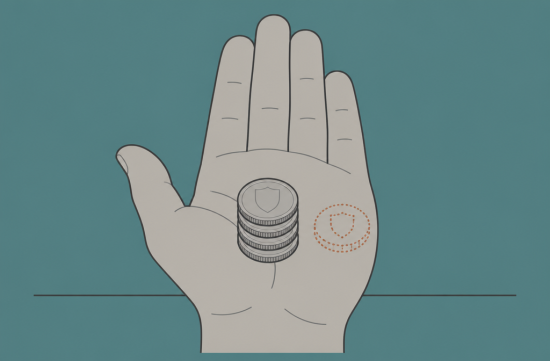
Last week, I went grocery shopping at a local mart and my total came to $12.43. While waiting for my change, the cashier paused for a moment and looked into the coin jar.
They were out of pennies. In the end, I received my change rounded to the nearest 5 cents, and no one in line seemed to mind. Everyone appeared to be accustomed to it.
It was a seemingly trivial moment, but it lingered in my mind after I got home. I realized that the 1 cent we have taken for granted our whole lives is quietly disappearing.
Let's clarify the facts. The U.S. Mint produced its last batch of circulating pennies on November 12, 2025, at the Philadelphia Mint.
Before that, the administration had ordered a halt to production, citing cost issues as the reason. Since the coin was first minted in 1793, this marks the end of over 230 years of history.
The numbers tell the story. According to the Mint's report for the 2024 fiscal year, it cost 3.69 cents to produce and distribute a single penny.
It was a situation where making a 1 cent coin cost nearly 4 cents. The Mint reported a loss of $85.3 million from penny production that year.
This is a fact supported by data. If the manufacturing cost has exceeded the face value for 19 consecutive years, it seems reasonable to phase it out.
However, stopping production and how to handle transactions are completely different issues. Without a legally defined rounding rule, stores had to respond in various ways.
This led to the introduction of the Common Cents Act. The House passed it first, and the Senate unanimously processed the amendment on September 28, leaving only the President's signature.
The key point is simple. When exact change cannot be given in cash transactions, it allows rounding up or down to the nearest 5 cent increment.
If the total ends in 1 or 2 cents or 6 or 7 cents, it rounds down; if it ends in 3 or 4 cents or 8 or 9 cents, it rounds up. So, my $12.43 becomes $12.45.
One important point is that rounding only applies when paying in cash.
Card, check, electronic payments, and gift cards will still be calculated accurately down to the cent. Therefore, prices ending in 99 cents will not disappear.
And the pennies you have at home are still legal tender. There's no need to throw away the coins you've saved in your piggy bank; you can still use them at banks or stores.
Canada has already taken a similar path. Canada stopped penny production in 2012 and ceased distribution from the Mint on February 4, 2013.
Canada also rounds cash transactions to the nearest 5 cents and applies it only to the final amount after taxes are added. The U.S. legislation is following a nearly identical structure.
From a cooking perspective, this is similar to changing the measurement units in a recipe. Rounding each ingredient can alter the taste, but adjusting based on the final dish doesn't significantly change the outcome.
Since rounding only applies to the total on the receipt, there will be a mix of rounding up and down, making it unlikely to skew heavily in one direction over time. Of course, this is my calculation, and it may vary based on actual shopping patterns.
Of course, there are concerns. Some worry that seniors or low-income individuals who primarily use cash may incur small losses.
I also believe this is not a trivial issue. If stores consistently round up, that would be a violation of the rules, and consumers have the right to question it.
That's why it's meaningful to establish clear standards in law. Without rules, the loudest voices tend to win.
This bill also includes some interesting provisions. In the future, when eliminating circulating coins, the Treasury must notify Congress 60 days in advance, and it has opened the door to changing materials to reduce nickel production costs.
The situation for nickels isn't great either. This indicates that it's not just a penny issue. The same report stated that it costs 13.78 cents to produce a single 5 cent coin.
Personally, I find this decision quite reasonable. Continuing to mint coins that lose value due to taxes is hard to justify from a financial stability perspective.
However, the process must be transparent. The rounding rules should be visibly communicated at the register, and customers should be allowed to pay exactly with pennies if they wish.
If you frequently use cash, it's a good habit to check the last digits on your receipt. It's not a big difference in cents, but it's worthwhile to see if it's calculated according to the rules.
The market will adjust itself. However, the basic rules must be followed. Watching the 1 cent disappear makes me think that the smaller the number, the more important the principle is.
 ShakyMidlife








 Anova US Beauty Information |
 anchor |
 Korea Tiger News |
 Alpha and Omega World |
 Florida King |
 Finding Superfoods |
 Automation Logic User |
  Hae Naem |
 Physical Laws and Science |
 truepixel |
  Kathy's Blog |
  quatspace |
  Marisol |
  Glassroom |
  Granola |
  joyfull yang |
  Olivia's Blog |
  Living in America and Writing Essays |
  Piano Teacher Blog |
  bearcup |
  explorer |
  dictionary |
  Mr Bull Jung |
  radiant |
  Georgia 88 |
  Great TOWN NEWS |
  Open Flex Mind |
  Hartford Blog |