

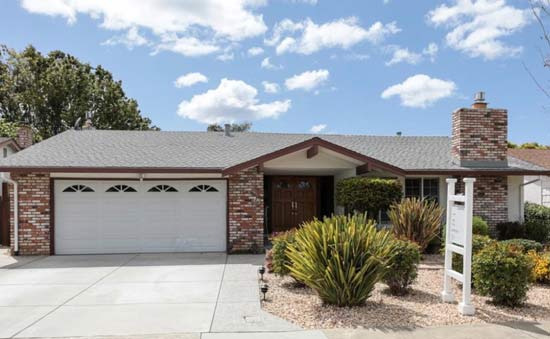
Seeing the housing prices in San Jose honestly shocked me. They are on a level that can't be compared to other cities in the U.S.
However, once you take a closer look at the area, you can somewhat understand why it's so expensive. San Jose is not just a large city in California.
It is located right in the heart of Silicon Valley, within the tech job belt that connects Santa Clara, Cupertino, Sunnyvale, Mountain View, Palo Alto, and Menlo Park.
Recently, with the resurgence of the AI boom, the real estate market shows no signs of cooling down. For a while, it seemed like the market was quiet due to high interest rates, but San Jose and Santa Clara County still have a different level of resilience.
According to Redfin, the median home sale price in San Jose as of March 2026 is about $1,489,000, while the overall median for Santa Clara County is around $1,680,000. Homes in San Jose are selling in an average of about 10 days, and Santa Clara County is also around the same average.
This indicates that it is not a "market where expensive homes don't sell," but rather a "market where there are still buyers for expensive homes." A word that cannot be overlooked when looking at San Jose real estate these days is AI. In the past, big tech companies like Apple, Google, Meta, and Netflix drove up Silicon Valley home prices, but now companies in AI semiconductors, data centers, machine learning, autonomous driving, robotics, and cloud infrastructure are reigniting the market.
Especially around Santa Clara, where NVIDIA is located, the ecosystem related to AI semiconductors is growing, leading to a continued demand for high-income workers in the surrounding areas. Colliers' Silicon Valley R&D market report also explains that tech companies benefiting from the recent AI boom are leading modern R&D space leasing activities.
Notably, North San Jose is attracting a lot of major leases and sales transactions. What's interesting about San Jose real estate is the significant temperature differences by area. Overall, the median price in San Jose is close to $1.5 million, but not every neighborhood is rising equally.
As of March 2026, the median sale price in North San Jose is about $1,130,000, which is a 10.2% increase from the previous year. This can be attributed to its proximity to Santa Clara, where AI and semiconductor companies and R&D firms are concentrated. Downtown San Jose also saw a median price of about $1,050,000 during the same period, reflecting a 6.1% increase from the previous year.
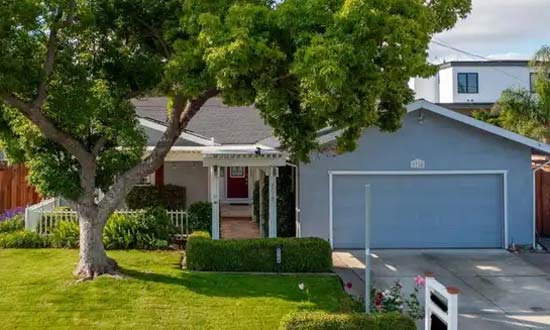
In contrast, South San Jose has seen a decline to about $986,000, down 5.2% from the previous year. So, saying that "San Jose is guaranteed to rise" is a bit of an exaggeration; the reality is that money is flowing more into areas with good access to AI and tech jobs, convenient commutes, and strong school districts and living infrastructure.
Areas like Cupertino, Saratoga, and Los Gatos are already in a different league. Cupertino, with the Apple headquarters and school district premium, has become a place that is hard to approach with an average middle-class mindset. Saratoga, with its large lots, quiet residential environment, and good school reputation, often sees homes priced over $3 million.
Los Gatos is similar. Here, buying a home feels more like purchasing a "top-tier Silicon Valley lifestyle" rather than just a house. Conversely, some areas in East San Jose or the southern parts have relatively lower entry prices. However, when we say "relatively lower," it doesn't mean $500,000 or $600,000. It means around $900,000 to $1,000,000, which is still considered accessible within San Jose.
Condos or townhomes can be a realistic path for first-time homebuyers. Since single-family homes are too expensive and competition is fierce, insisting on a house with a yard from the start can make it difficult to begin. In San Jose, condos in the $600,000 to $900,000 range and townhomes in the $900,000 to $1,200,000 range often serve as the entry point. Of course, one must consider HOA fees, building management conditions, parking, school assignments, and future rental potential. Just because they are cheaper than single-family homes doesn't mean they are automatically better. Especially with older condos, one must be cautious about repair costs and potential HOA increases.
The key factor driving San Jose housing prices is ultimately income. This area has many people who are not part of the typical salaryman market. Those with high salaries, stock options, RSUs, bonuses, and increases in company stock buy homes. As AI-related companies grow, and the value of companies like NVIDIA increases, and big tech stock prices rise, that money flows back into the housing market.
Thus, even with high interest rates, buyers with a large cash component emerge, and good homes receive multiple offers. In fact, the San Jose market maintains a price level much higher than the national average while also seeing properties sell quickly.
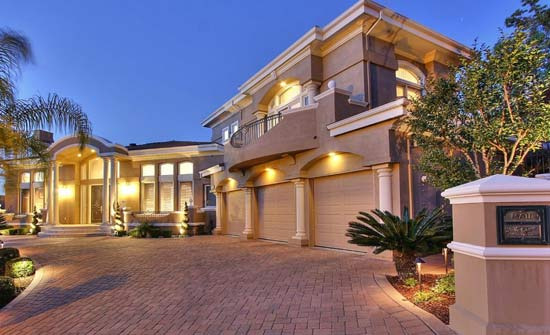
Recently, the Bay Area market has shown different movements between high-priced and low-priced areas. According to Redfin's analysis, the AI boom is pushing some high-income households and the luxury housing market higher, while lower-priced areas are relatively less benefited, leading to a K-shaped recovery narrative. Ultimately, those with money buy homes in better areas, while regular workers are pushed further away.
Buying a home in San Jose is not just about looking at the price. One must also consider commute times, school districts, safety, property taxes, insurance, HOA fees, repair costs, and job stability. Especially in the tech industry, while salaries are high, volatility is also significant. When company stock prices are good, everything seems easy, but when layoffs happen, the atmosphere changes drastically. Therefore, when buying a home in San Jose, it is more important to assess whether you can sustain yourself for 5 or 10 years with your income rather than thinking, "I should buy now because prices will go up."
Still, there are clear reasons why San Jose continues to attract attention. There are not many places in the U.S. where high-income jobs, the tech industry, startup ecosystems, educational environments, climate, and Asian communities are concentrated in one area. Especially for Koreans, there are well-established Korean markets, restaurants, academies, churches, hospitals, and professional networks in San Jose, Santa Clara, Cupertino, and Sunnyvale, enhancing the convenience of living. While the housing prices may make one sigh, when considering jobs, children's education, and long-term asset formation, there are still reasons why people continue to move in.
San Jose real estate is riding the wave of the AI tech boom again. However, it is not a market where all areas rise together as before; it is a market where locations with good positions, strong school districts, and access to tech jobs are moving more strongly. Those looking to buy a home in San Jose should not just look at the average price but also follow the trends in specific areas like North San Jose, Downtown, Willow Glen, Almaden, Evergreen, and East San Jose.
This city is expensive. Yet strangely, people keep moving in. That is the frightening aspect of San Jose real estate. It is not a market that ends because it is expensive, but rather a market where there is still demand with money despite the high prices. It seems that the current AI boom is adding fuel to that atmosphere.
 LimeJoy
 JellyFireman
 ChillVibeRider
 OceanFlower





 yentra |
 virex |
 vexon87 |
 seouljung |
 Well Done Sir |
 Western US Medical Student Association |
 Time is GOLD |
 DOCTOR MED |

 Tarzan's Joyful Imagination |
  Mr. Largo |
  breezem |
  Omelet Rice for Strength |
  Vermont Capt |
  Softy |
  solid90 |
  waltz |
  Ohio Ohayoung Hello |
  parlon |
  Shoot Me |
  Michigan Enthusiast |
  festive |
  You Turn Me On |
  Supplemental Security Income (SSI) Information |
  Sams Market |
  ansdal |
  VVV 80 |
  BIODOCTOR NEWS |
  Gold Bar |
  Tamfa Fan |