
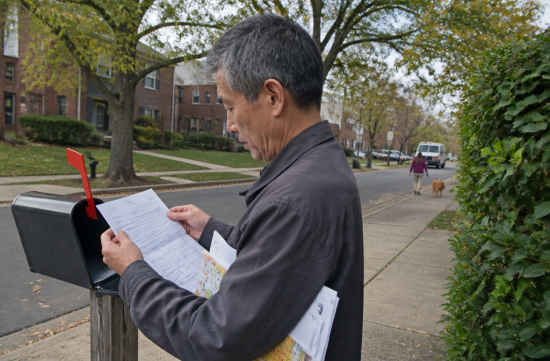
Last week, during an evening walk, a neighbor who was sharing a jar of honey brought up a letter with a worried expression. It was a notice from the Maryland Health Connection, stating that starting next year, one must work to maintain Medicaid coverage.
It seemed to surprise them more since they had wrapped up their job early and were relying on Medicaid due to reduced income. So, I looked up the federal regulations and state guidelines myself.
To put it simply, turning 60 does not automatically exempt you. The age criteria are set from 19 to 64 years old.
This regulation came from a law (Public Law 119-21) that passed through Congress last year. In June of this year, CMS announced the interim final rule detailing the regulations.
The affected group includes adults in states that expanded Medicaid under the Affordable Care Act. Maryland is one of those expanded states.
The implementation date is set for January 1, 2027. Unless the state receives federal approval to delay the schedule, it must start on this date.
The requirement is to work 80 hours a month. This can be fulfilled through employment, job training, volunteering, or half-time or more academic studies, and multiple activities can be combined.
There is also a way to prove this through income instead of hours. You need to earn at least $580 a month, which is the amount obtained by multiplying the federal minimum wage by 80 hours, based on 2026 figures.
Honestly, I think the threshold is relatively low since you can easily meet this amount with part-time work. However, you must check your notice to see if your pension or Social Security income counts toward this income requirement.
So, who will be exempt? Those who are pregnant or recently gave birth, individuals with disabilities, and those caring for children under 13 or disabled family members are exempt.
Veterans with a service-connected disability, individuals undergoing drug or alcohol treatment, and those already meeting SNAP or TANF work requirements are also exempt. Native Americans and youth from foster care are included as well.
The most important item for early retirees is the exemption for medically vulnerable individuals. However, this new rule interprets this criterion more narrowly than before.
Simply having a condition is not enough; it must significantly impair your ability to meet the requirements. This means that minor issues, like a little back pain, may not be recognized.
Another point to remember is Medicare. Those who are eligible for or enrolled in Medicare are excluded from this requirement, so once you turn 65, you will naturally be distanced from this requirement.
The issue lies in the intervening years. Even if you start receiving Social Security early at 62, you won't be on Medicare yet, so if you are relying on Medicaid, you will still face the work requirements.
The renewal period will also change. Those subject to the requirements will need to renew their Medicaid every six months instead of every twelve months, and they will need to provide proof of income and activities each time.
New applicants must show that they have met the requirements in the month prior to applying. Existing members will need to confirm whether they have met the requirements for at least the most recent month during the renewal period.
If you receive a notice stating that you did not meet the requirements, you will have 30 days to provide proof. Be careful not to let this period slip by if you just put the letter in a drawer.
If you are hospitalized, live in a county with high unemployment, or are in a disaster area, short-term exceptions are also recognized. This includes cases where you need to travel long distances for treatment.
The Maryland Department of Health has already informed that they will send letters in September to those who will be subject to the requirements during next year's renewal. You may have already received it, so I recommend checking your mailbox again.
If your address or email has changed, make sure to update it with the Maryland Health Connection right away. Missing documents due to lack of contact is the most frustrating situation.
Looking at the numbers, this is not something to take lightly. State legislative analysts estimate that out of 326,510 expanded adult enrollees as of January this year, about 115,000 may lose their eligibility.
CMS also predicts that due to this requirement, the national Medicaid enrollment will decrease by 2.3 million in the 2027 fiscal year. I suspect that many will lose their coverage not because they are not working, but because they fail to submit documents on time.
I can understand the rationale behind imposing conditions on working individuals. However, I worry that the combination of English paperwork and six-month renewals will be quite burdensome for Korean seniors.
If I were in that neighbor's position, I would first check if I qualify for any exemptions. It would also be wise to obtain diagnostic records from my doctor as a good preparation.
If exemptions are difficult, there are ways to fill the hours through volunteering at local libraries, churches, or food banks. Getting a verification letter from the volunteer organization can make the renewal process much easier.
Of course, the outcome can vary significantly depending on health status, income structure, and family circumstances. Since it varies by individual situation, I recommend checking with the county health department or a professional counselor.
The honey that neighbor gave me is still about half full. Just as we need to keep some sweetness for the long haul, we should also prepare our insurance in advance to make next year less burdensome.
 HotDogMove




 You Only Live Once |
 Texas Real Estate Blog |
 zentar |
 seouljung |
 AliAluAlo Blog |
 puffpanda |

 Potato House |
 creamcat |

 midnight blue |
  honeypot |
  summer |
  adventure77 |
  flexible |
  Shintongbangtong Shin Naerin James Park |
  truepixel |
  Kathy's Blog |
  Hae Naem |
  quatspace |
  Marisol |
  Glassroom |
  Granola |
  joyfull yang |
  Olivia's Blog |
  Living in America and Writing Essays |
  Piano Teacher Blog |
  bearcup |
  explorer |
  dictionary |