

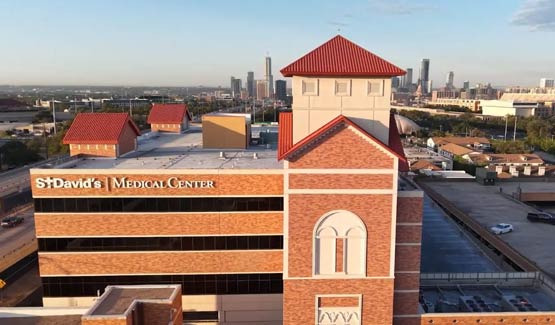
Austin, being the capital of Texas and a hub for advanced industries, has a well-established healthcare infrastructure.
The most well-known facility is St. David's Medical Center.
This hospital consistently receives high ratings in U.S. hospital evaluations and is often the first name mentioned as a leading hospital in the Austin area. It operates approximately 371 acute care beds and 64 rehabilitation beds, and has developed a treatment system centered around specialized centers rather than just being a general hospital.
In particular, the Texas Cardiac Arrhythmia Institute is highly regarded in the field of cardiac arrhythmia treatment, and the St. David's Neuroscience & Spine Institute treats many patients for stroke, spinal disorders, and neurosurgery. This is why many patients with heart or neurological conditions seek care at this hospital.
The emergency room and intensive care unit systems are also well-established, making it one of the most trusted hospitals among Austin residents.
St. David's South Austin Medical Center, located in South Austin, is another important medical institution.
In operation since 1999, it has over 2,000 medical staff and employees.
More than 600 specialists collaborate in patient care, and it is known to have one of the busiest emergency rooms in Central Texas.
In addition to emergency care, it offers a variety of specialties including women's health, a birthing center, surgery, orthopedics, and pediatrics. It is well-equipped with the latest imaging technology such as CT and MRI, allowing for quick diagnoses in emergency situations.
Residents in South Austin, Buda, and Kyle frequently utilize this hospital due to its accessibility.
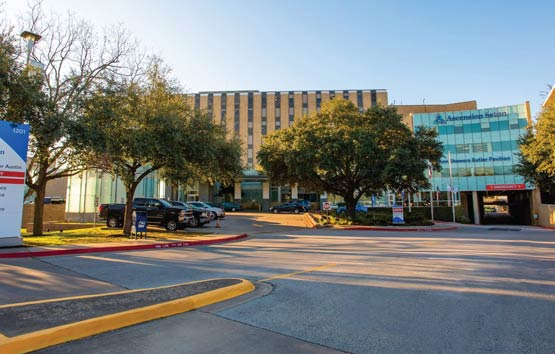
When discussing the scale and research capabilities in Austin, Ascension Seton Medical Center Austin cannot be overlooked.
This hospital is a central part of the Austin healthcare system and also serves as a teaching hospital for UT Austin's Dell Medical School. Because medical school professors, researchers, and residents work together, the latest treatment methods and clinical research are quickly implemented.
It is highly rated in complex medical fields such as cancer treatment, organ transplantation, high-risk pregnancies, neonatal intensive care (NICU), and cardiac surgery. The size of the medical staff is substantial, and various specialized centers operate, reducing the need for patients to travel to other cities for treatment of complex conditions.
Korean residents in Austin also frequently use these three hospitals.
While it is not yet a region with a large number of Korean doctors like Houston or Dallas, the steady influx of Korean engineer families from global companies such as Samsung, Apple, AMD, and Tesla is gradually increasing the number of Korean patients. Some specialists are Korean, and hospitals that offer translation services have reduced the language barriers that patients face compared to the past.
When choosing a hospital, it is important to check your health insurance network first rather than just looking at well-known places. In the U.S., out-of-pocket costs can vary significantly depending on whether you have insurance coverage for the same treatment. Just because a hospital is nearby does not mean it will be covered by your insurance, so after moving, it is advisable to establish a primary care physician and verify which hospitals are included in your insurance plan.
Another point to remember is that emergency room costs in the U.S. can be quite high. If it is not an emergency, using an urgent care center can often save both time and money. Conversely, if you suspect severe chest pain, difficulty breathing, or stroke symptoms, it is essential to call 911 or go to the nearest emergency room without delay.
Ultimately, Austin is a city with a highly competitive healthcare infrastructure. St. David's hospitals excel in cardiac and neurological care, while Ascension Seton offers outstanding specialized care based on education and research. Additionally, South Austin Medical Center is known for its emergency care and accessibility, making it a popular choice among residents. If you are planning to move or stay long-term, it is wise to check not only your home and school but also the nearest hospital and insurance coverage to ensure a more stable start to life in the U.S.
 CertGems
 WithTheWind


 Old English |
 nixxon |
 LIZ Legal Information Blog |
 Karina's Blog |
 Jimbeam 88 |
 |
| 
 Living with a Consistent Heart |
 U.S. Weather Bureau News |
 Dallas Fort Worth DFW |
 novent |
  Rhode Island Good People |
  Big North |
  Famous Attractions in the United States |
  Jin Soo V |
  Starbucks Reserve Roastery Closure |
  peppermint |
  Stable Co. |
  Purple Moons, |
  International Court |
  roma |
  horse |
  moodansa 77 |
  zymit |
  maplefox |
  Fun Flex Life |
  hopeful |
  Reeno |
  Coastal city |
  meonetoo |
  Winter bear |