
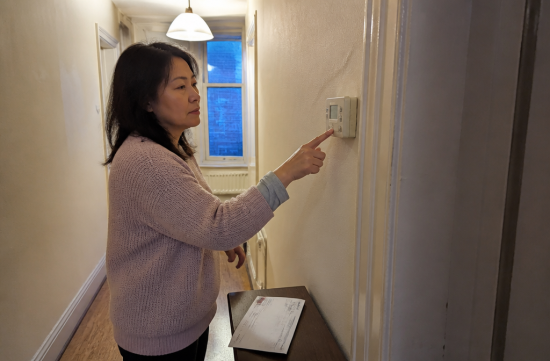
In October, the morning air has changed significantly. I found myself wondering when to turn on the boiler switch and decided to check how much gas rates have increased this year.
To get straight to the point, the Con Edison gas rate increase has already been confirmed. The New York State Public Service Commission (PSC) approved a three-year rate plan on January 22, and it is retroactive to January 1, 2026.
The figures provided by Con Edison are as follows: for residential customers using 100 therms of gas per month, the rate will increase by $10.67, which is a 4.4% rise.
However, there's something important to note here. The official summary from the state's Department of Public Service (DPS) shows that the increase for the first year is $5.73 based on the same 100 therms.
The discrepancy between the two numbers seems to stem from different calculation methods. Therefore, I recommend budgeting with a more generous estimate of "around $10 more per month."
What's even more concerning is next year. According to media reports, gas rates are expected to rise by 5.7% in 2027 and 5.6% in 2028.
According to the DPS table, the second-year increase is projected to be $19.32, which is higher than the first year. This indicates that next year will be a real challenge.
Fortunately, this is a significant reduction from the initial proposal. Con Edison originally planned to raise rates by $46.42 per month in 2026 alone.
It's important to hear both sides of the story. Con Edison and regulatory authorities cite aging gas line replacements, safety investments, and property tax burdens as reasons for the increase, explaining that about 22% of the increase is due to property taxes.
On the other hand, consumer groups and politicians argue that affordability should come first given the current cost of living. While I believe infrastructure investment is necessary, three consecutive years of increases are honestly burdensome for households.
Now, let's summarize what we can do. First, you need to check the structure of your home heating system.
In most Brooklyn apartments, heating is included in the rent. In this case, the gas reflected on your bill is primarily for cooking, so the impact of this increase may not be significant.
Conversely, for single-family homes or those using individual boilers, the situation is different. The usage of therms can spike during the winter months, leading to a larger increase.
If you're a tenant with heating included in your rent, be aware of the legal standards. The heating season in New York City runs from October 1 to May 31.
During this period, if the outside temperature is below 55 degrees during the day (6 AM to 10 PM), the indoor temperature must be maintained at 68 degrees or higher. At night (10 PM to 6 AM), it must be at least 62 degrees, regardless of the outside temperature.
If your home is cold and you use an electric heater, your electric bill will ultimately increase. In that case, don't hesitate to report it to 311, and the Department of Housing Preservation and Development (HPD) will investigate.
If you pay for heating directly, start by adjusting your thermostat. The U.S. Department of Energy advises that lowering the temperature by 7 to 10 degrees for 8 hours a day can save you up to 10% on heating and cooling costs annually.
Setting a programmable thermostat according to your sleeping and work hours means you won't have to worry about it every day. This is a cost-free method and should be the first thing you try.
The second option is the Level Payment Plan, which allows you to spread your estimated annual bill evenly throughout the year, helping you avoid a bill shock in January and February.
It's important to remember that this doesn't reduce the total amount you owe. Instead, it helps to lessen the financial impact of a large bill during the winter months, making household budgeting much easier.
The third option is the government assistance program HEAP. Applications for general heating assistance for the 2026-2027 season are expected to open on November 2.
The income limits are more generous than you might think. For the 2026-2027 season, a household of four can apply with a total monthly income of $6,852, while a single-person household can apply with an income of $3,563.
If you receive HEAP, you will be automatically enrolled in Con Edison's Energy Affordability Program (EAP). The discount tier for gas heating households is determined based on the amount of HEAP assistance received.
Those receiving SNAP, Medicaid, or SSI will need to apply directly, as they are not automatically enrolled. Many people miss out on this assistance because they are unaware of it.
This year, there is also an Enhanced EAP based on income criteria. Even if you don't receive government benefits, you may qualify if your household income is below the area median income, so check the Con Edison website for more information.
To summarize, the increase is confirmed, and next year will be even larger.
So, I would change my thermostat settings in October, apply for the Level Payment Plan, and mark November 2 on my calendar for HEAP applications. All three are actions you can start today.
While we can't stop the rate increase, we can prevent unnecessary expenses. Please prepare in advance to avoid being surprised by your bill this winter.
 RiceSoupSurf








 kuku 100 |
 novent |
 Silent Sea |
 Pointy |
 Idaho's Sumi's House |
 newyorker 101 |
 Franco Family |
 Round and Round Children's Song Kingdom |

 river9 |
  Jin Soo V |
  Starbucks Reserve Roastery Closure |
  peppermint |
  Stable Co. |
  Purple Moons, |
  International Court |
  roma |
  horse |
  moodansa 77 |
  zymit |
  maplefox |
  Fun Flex Life |
  hopeful |
  Reeno |
  Coastal city |
  meonetoo |
  Winter bear |
  Peach Jam Eating Laughter |
  Nando Raldo |
  American Man in a Mask |