
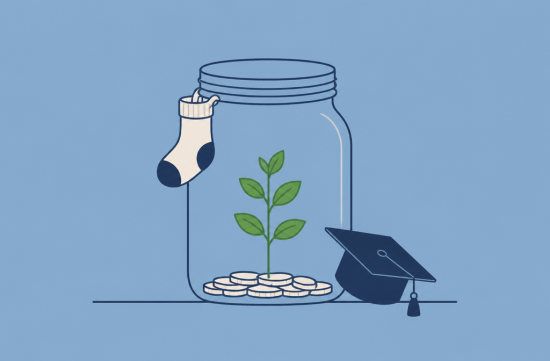
Hey Eunyoung, after our last call, I couldn't stop thinking about what you casually asked, so I picked up the keyboard instead of a pen. When I had my second child, I used HUSKY, and you asked if our baby would also receive that Baby Bond.
I had only heard the name before, so I read through the U.S. Treasury website and the FAQ line by line.
To get straight to the point, if you meet the criteria, you don't have to do anything. There's no application or registration process.
CT Baby Bonds is a program where the state of Connecticut invests $3,200 in the name of a baby. It started on July 1, 2023.
The eligibility is for babies born after July 1, 2023, who are covered by HUSKY Health, which is the state Medicaid program. These two points are key, and there's no separate review process for the Baby Bond.
There was an interesting point here. If HUSKY covered even part of the childbirth-related medical expenses, or if a claim was submitted to HUSKY, it counts.
It was noted that it doesn't matter whether the claim was approved or denied. The criteria are broader than I expected, right? I felt a bit relieved at this point.
The residency status of the parents does not affect the child's eligibility. If the birth occurred at home and HUSKY covered the costs, it is included.
So, since the second child was born after July 1, 2023, the date condition is met. The remaining task is to confirm whether HUSKY was applied during the birth.
You can check with the Department of Social Services or ask about HUSKY coverage at the time of birth through accesshealthct.com. The Treasury is also sending information to eligible families in order, but there's no set date for when they will receive it.
There was news that they started contacting families who became eligible in April of this year. Just because you haven't received a letter doesn't mean you're not eligible, so don't worry too much. The FAQ clearly states that if you qualify, the money has already been invested.
The money won't be handed directly to the child. The state government holds it in trust, and the child must claim it between the ages of 18 and 30.
There are specific places where it can be used. For college or vocational training costs, buying a home in Connecticut, starting or investing in a business in Connecticut, and retirement savings.
There are two more conditions. You must be a Connecticut resident at the time of claiming, and you must complete an approved financial education course first.
The residency requirement is only considered at the time of claiming. Even if you move to another state in between, you can claim it later when you return and become a resident again.
According to the Treasury's estimates, depending on when you claim, it could grow to between $11,000 and $24,000. Of course, this is an estimate based on investment returns, so it's not a guaranteed amount.
The FAQ also mentioned that there's no need to file taxes separately for this. I was honestly glad to hear that.
By the end of June 2025, over 33,000 children will automatically qualify. I was momentarily stunned by the number; it's much more than I expected.
There's one thing that can be confusing. The much-discussed Trump account is a federal program and is completely separate from this.
That account provides $1,000 from the federal Treasury for babies born between 2025 and 2028, and starting July 4 of this year, parents can contribute up to $5,000 per year. Check if your second child's birthday falls within that period.
Both programs allow money to accumulate for the child, but they start from different points. The Baby Bonds are a state program aimed at children from families that are not financially well-off, according to the Treasury's explanation.
Baby Bonds are not an account where families contribute money. It's money that the state puts in and manages, so all we can do is wait.
Reading about this program made me feel a bit conflicted. I've always thought it's better to help kids stand on their own rather than just giving them free money.
But looking at the uses, it's for education, housing, business, and retirement. You also have to take financial education first.
So, it feels more like a way to give a helping hand at the starting line rather than just giving away money. It reminds me of how our parents' generation in Korea used to set up savings accounts for their kids.
However, for that money to truly belong to the child, we ultimately need to teach them how to spend and save money at home. What's the point if they blow it all as soon as they turn 18?
If I were you, I would just confirm the HUSKY coverage and keep the birth records and insurance documents organized in one folder. Eighteen years is a long time, and documents can easily get lost. After a few moves, you might not even remember where you put them.
Every family has different circumstances, so for any unclear parts, it's best to ask the Treasury or the Department of Social Services directly. What I read is based on the official FAQ.
Lastly, I want to ask you and other moms reading this letter one thing. If the day comes when your child claims this money, what do you hope they will use it for: college, a home, a business, or retirement?
I'm leaning towards the home option. What about you? Just write a line in your reply.
 SkyStudio






 Magic Cabbage School of Martial Arts |
 Vacation on Hawaii |
 morvex37 |
 Ari Songhan American Immigration Life |
 Bearded Strawberry Smoothie |
 Buckwheat Muktudari Notebook |

 Hartford Blog |


 Lime Juice |
  Famous Attractions in the United States |
  Jin Soo V |
  Starbucks Reserve Roastery Closure |
  peppermint |
  Stable Co. |
  Purple Moons, |
  International Court |
  roma |
  horse |
  moodansa 77 |
  zymit |
  maplefox |
  Fun Flex Life |
  hopeful |
  Reeno |
  Coastal city |
  meonetoo |
  Winter bear |
  Peach Jam Eating Laughter |
  Nando Raldo |