
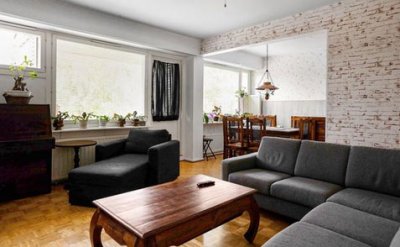
$1,389, $1,536, $1,765, $1,956. These are the average rental prices for studios to three-bedroom apartments in the city, listed in order. While the numbers seem to rise gradually, the actual gap felt between downtown and the outskirts is much larger. It's important to note that the situation varies depending on which side of the city you are on.
Studios average $1,389, with a size of around 500 square feet. They are mostly found in newly built buildings near downtown, primarily sought after by young singles or remote workers who have moved to the tech industry. Tenants who prioritize accessibility to the city center tend to choose studios more frequently.
One-bedroom apartments average $1,536, with a size of around 700 square feet. This is about $150 more than studios, and since the bedroom is separate, it is mainly chosen by professionals looking to secure a workspace at home or by early-stage couples. In areas slightly outside downtown, the same one-bedroom can often be found for $100 to $200 less.
Two-bedroom apartments average $1,765, with a size of around 950 square feet. This is a range where two roommates might share the space, or families with one child settle in. Many households moving to Boise start in these units, then learn about the school districts and neighborhoods before moving to three-bedrooms.
Three-bedroom apartments average $1,956, with a size of around 1,300 square feet. The gap between two and three bedrooms is less than $200, which is relatively mild compared to the differences between other units. This suggests that the burden of securing an additional room is not too great, making it reasonable for families with two or more children to consider three-bedrooms from the start rather than struggling in a two-bedroom.
- Studio: about $1,389, 500 sqft
- One-bedroom: about $1,536, 700 sqft
- Two-bedroom: about $1,765, 950 sqft
- Three-bedroom: about $1,956, 1,300 sqft
Looking at the recent supply of new constructions by neighborhood, the picture varies between downtown and the outer suburban areas like Eagle and Meridian. Downtown is seeing an increase in high-rise buildings focused on studios and one-bedrooms, while the outer suburban areas have a relatively thicker supply of two to three-bedroom townhomes. The perceived unit composition can change depending on which neighborhood you consider.
Returning to the rental gap, from studios to two-bedrooms, the price increases gradually by $150 to $230 per additional room, but the increase for three-bedrooms actually decreases. This can be interpreted as a sign that the tenant pool for three-bedrooms is not very large, resulting in relatively less price pressure.
For Korean households, it is common to start with a one-bedroom or two-bedroom near downtown to get a feel for the neighborhood, then move to an outer three-bedroom when deciding on school districts for their children. The rental figures were verified based on the 2026 market rates from rentcafe.com and apartments.com.
 BeautyEra
 CrystalLake93




 moo moo |
 ultron78 |
 garlic bread |
 Sugar Cream Door Bulletproof Noodles |
 urbanmint |
 festival |
 Korean Boo |
 A landlocked state |

 U.S. Weather Bureau News |
  treasure |
  strawberry |
  Augusta Univ |
  B.I.G. Victor |
  Victory 1988 |
  Swift Falcon |
  venture |
  SPAM 101 |
  choi family |
  zoryan |
  cloud0 |
  SKy Face |
  wonder |
  Dragon Lee |
  productionblog |
  What can make money? |
  Oklahoma Hoya OK |
  prixon74 |
  Roman Pan |
  USALATU BLOG |