

These days, I often get asked whether one should create a living trust. So today, I want to follow a family's situation from start to finish to see what happens when a house is left without a trust.
The family situation is as follows: a mother who lived in the High Desert passed away in the fall of 2025, her husband had passed away earlier, and she has two children.
In her name, there is one fully paid-off primary residence and one rental house purchased for retirement income. There was no will or trust.
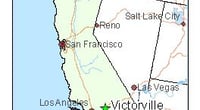
Let's estimate the house prices based on the Victorville market. Recent market trends show that the median transaction price in this area is hovering between $420,000 and $430,000, with little difference from a year ago.
So, let's assume the primary residence is worth $430,000 and the rental house is worth $380,000. This is a very common size in the area.
If there is no trust, the house does not automatically pass to the children. Since the registered owner has passed away, the court must determine who has the right to receive the house.
In the past, this situation would have become quite serious. Before April 2025, the threshold for simplified procedures was $184,500, so even having just a regular house would typically require formal probate.
However, things changed with the implementation of AB 2016 on April 1, 2025. If the deceased's primary residence is valued at $750,000 or less, a simplified procedure called a petition for succession can be used instead of formal probate.
The court form for this is DE-305. This family's $430,000 primary residence falls under this category.
However, this threshold only applies if the date of death is after April 1, 2025. If the person passed away before that, the old criteria must be followed, so the first thing to check is the date of death.
Just because it's a simplified procedure doesn't mean it ends with just one piece of paper. You must wait 40 days after death to file the petition, notify those who are eligible to inherit, and a judge's decision must be made before the title can be transferred.
Still, compared to formal probate, the time and cost burden is much lighter. Some real estate blogs state that you only need to submit a declaration, but that is not an accurate description.
The problem lies with the rental house. This simplified petition can only be used for the primary residence where the deceased actually lived.
The threshold for transferring non-residential property with a declaration is only $69,625. The $380,000 rental house will ultimately go through formal probate.
Looking at the cost structure of formal probate, you can see why everyone tries to avoid it. Attorney fees are calculated at 4% for the first $100,000, 3% for the next $100,000, and 2% for the next $800,000.
If we apply the $380,000 to this structure, it results in $4,000, $3,000, and $3,600, totaling $10,600. The estate executor can also receive the same amount based on the same criteria, so combined, it amounts to $21,200.
On top of that, there are separate court filing fees, appraisal costs, and publication costs. The costs involved in settling a single house are certainly not small.
Another point that is easy to overlook is that these fees are calculated based on the total amount, not the net assets. Even if there was a $200,000 loan remaining on the rental house, the fees would still be calculated based on the $380,000.
Time is also an issue. Formal probate often takes over a year due to court schedules, and during that time, someone must continue to manage tenants, property taxes, and insurance.
Since there is no will, the order of inheritance follows state law. In this case, since the spouse has passed away first, the two children will inherit equally.
If the siblings get along well, there are usually no issues. However, if one wants to sell and the other wants to keep renting, decisions can often be delayed even after joint ownership is established.
One thing to note is that having a trust does not exempt you from property tax reassessment.
Since Prop 19, even if children inherit their parents' home, they must move in and apply for the homeowner's exemption within one year to partially inherit the parent's lower tax basis. The additional deduction limit for the period between February 16, 2025, and February 15, 2027, is $1,044,586.
The rental house is not eligible for this benefit and will be reassessed at market value. This aspect remains the same whether there is a trust or not.
In summary, this family was able to transfer the primary residence relatively easily, but they had to deal with over $20,000 in fees and a long wait due to the rental house.
Thanks to AB 2016, the burden on those with only one house has certainly been reduced. However, if there is even one investment property or if the primary residence is valued over $750,000, the situation changes completely.
If I were in the same situation, I would create a living trust as soon as I had a rental house. The cost of creating it is a one-time expense, but the costs and time that children will incur later are much greater.
However, the right approach varies depending on the composition of the estate and family relationships, so I recommend consulting a California estate attorney before making any decisions. The figures in this article are based on the standards effective April 2025 and the market prices in the second half of 2026.
 Wave70







 moo moo |

 ultron78 |
 garlic bread |

 Sugar Cream Door Bulletproof Noodles |

 urbanmint |

 Mr Oh |

 Forever Young |

 B.I.G. Victor |

 U.S. Weather Bureau News |

 Augusta Univ |
 Victory 1988 |
 Swift Falcon |
 venture |
 SPAM 101 |
 choi family |
 zoryan |
 cloud0 |
 SKy Face |
 wonder |
 Dragon Lee |
 productionblog |
 What can make money? |
 Oklahoma Hoya OK |
 prixon74 |
 Roman Pan |
 USALATU BLOG |
 Sunshine Blog |
 Minnesota Small Business |