
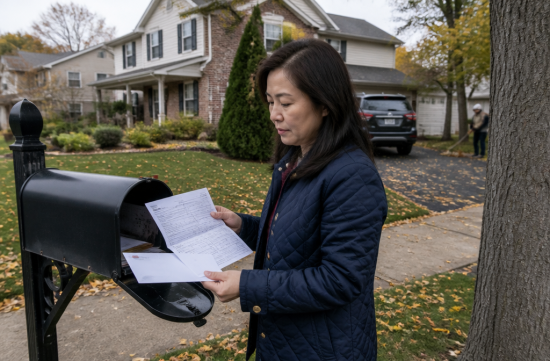
Many homeowners are double-checking the numbers on their second property tax bill received last month. This is the first bill issued after the reassessment in the northern suburbs of Cook County.
Let's break down why this year's bill has increased significantly and what you should check now.
The Cook County Assessor's Office reassesses one-third of the county each year. The northern suburbs are due for reassessment in 2025, marking the first time since 2022.
All or part of Glenview falls under the Northfield Township. Other areas in the same township include Northbrook, Wilmette, Deerfield, and Glencoe.
The reassessment notice for Northfield Township was issued on June 17, 2025, with the deadline for appeals set for July 31 of the same year.
According to the Assessor's announcement, the median sale price for single-family homes in this township for 2024 was $779,000. The estimated median market value by the Assessor was $784,000, closely aligning with actual sale prices.
Recent market trends show that home prices in the northern suburbs have steadily increased, and this rise has been reflected in the assessed values after three years.
The issue is that the assessed value, which translates into actual taxes, will not be realized until much later. The confirmed assessed value for 2025 will only appear in the second tax bill issued in 2026.
This year's second tax bill was delayed by two months compared to usual. This was due to the impact of a system upgrade from the previous year.
According to county announcements, the second tax bill for the 2025 tax year was mailed by September 1, and the payment deadline was October 1, 2026. It was available for preview online starting August 18.
Analysis from the office of Cook County Treasurer Maria Pappas clarifies the trend further. The total property tax levy for the county in 2025 is $19.9 billion, an increase of 3.9% from the previous year.
The overall residential tax bills in the county rose by 5.34%. However, homes in the reassessed northern suburbs saw an increase of nearly 10%, marking the largest rise.
There were significant regional variations. The unincorporated New Trier Township saw a median home tax bill increase of 27.8%, rising over $7,800, while Prospect Heights also experienced an increase of nearly 21%.
While the numbers may be shocking, reassessment is not the only reason. It's important to note that areas in the north and northwest approved tax rate increases through referendums for school, park, and library improvements.
So, what should you check first on your tax bill? The first step is to verify that the exemption items are correctly applied.
If it's your primary residence, the homeowner exemption should apply. This program deducts $10,000 from the assessed value, with the average savings estimated at $950 per year according to Assessor guidelines.
If you are 65 years or older, there is a separate senior exemption that deducts an additional $8,000 from the assessed value.
If the exemption is missing from your bill, you can submit a Certificate of Error to the Assessor's Office for correction. You can recover the omitted amounts for the tax years 2025, 2024, 2023, and 2022 based on 2026 assessments.
If you have already paid the original amount, a refund check will be mailed to you from the Treasurer's Office after processing. Therefore, it is also possible to pay first and correct later.
If you haven't made your payment yet, you should calculate any late fees. Cook County has reduced the late fee from 1.5% per month to 0.75% per month starting with the 2023 tax year.
The structure adds $7.50 for every $1,000 in arrears per month. While this is less than before, delaying payment will still accumulate charges.
If you pay through escrow, make sure your mortgage company has adjusted the amount accordingly. This could affect your monthly payment in the next year's escrow analysis.
If you feel the assessed value is too high, your next opportunity is to appeal to the Cook County Board of Review. You can apply every year, regardless of whether it's a reassessment year, but the application periods vary by township.
Before applying, it's essential to check your PIN on the Assessor's website and compare your assessed value with similar-sized and aged neighboring homes. Simply claiming it's high without evidence will make it difficult to expect favorable results.
For reference, the 2026 reassessment will cover the southern and western suburbs, while the city of Chicago will be reassessed in 2027. The northern suburbs will not see their next reassessment until 2028.
The results of appeals or exemption qualifications can vary by property, so if the amounts are significant, it's advisable to consult a tax professional or property tax appeal agent.
In my opinion, this tax bill is less of a surprise and more of a culmination of three years of delayed assessments arriving all at once. I would first check for any missing exemptions and mark the next Board of Review application period on my calendar.
In areas like Glenview, where demand remains steady due to school districts, it's unlikely that assessed values will decrease again. Therefore, if you are considering purchasing, it's wise to review both the home prices and the property tax bill before making a decision.
 FastCurious








 ultron78 |
 garlic bread |
 Sugar Cream Door Bulletproof Noodles |
 urbanmint |
 |
| 
 sun walker |
 moodansa 77 |
 moo moo |
 Trot King News |
  My NYC |
  Mr Oh |
  forevergee |
  festival |
  manchester |
  constant |
  Leapfrog Move |
  vibranto |
  Tora Tora |
  yellowbutter |
  Dolly |
  US Embassy |
  NYC saladbar |
  Finding Superfoods |
  lightyear |
  song bang |
  vexomo |
  Indiana Jones |
  meloncat |