
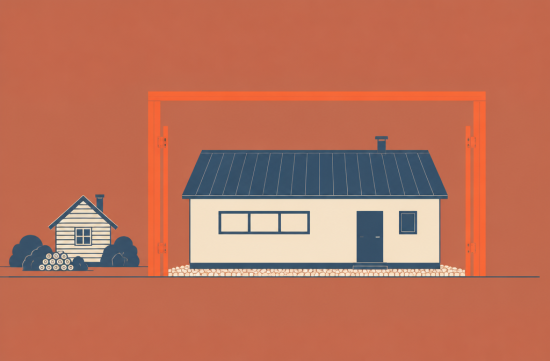
Since last month, we've seen a significant increase in customer inquiries. People are asking if our homes can get insurance now that State Farm is resuming new home insurance in California. To put it simply, the answer is no, not yet.
Let's clarify the situation. State Farm General has not accepted new home insurance applications in California since May 2023. The reasons cited by the company at that time included skyrocketing construction costs, increasing exposure to disasters, and a deteriorating reinsurance market.
Then, on September 16, 2026, the company submitted new underwriting criteria to the state insurance department. They stated that they would consider new applications only for homes that meet wildfire preparedness standards.
The key word here is "submitted." This does not mean it has been approved. According to reports, if the regulatory authorities approve it, reviews could begin as early as December.
There are conditions attached. Homes must have the Wildfire Prepared Home certification from the non-profit research organization IBHS. This is the gateway to the resumption.
The certification is divided into two tiers. Homes that receive the higher tier are eligible for applications statewide, regardless of wildfire risk. The basic tier applies only to areas with low or moderate risk.
However, neither tier guarantees coverage. Certification is merely a qualification threshold, and applicants must still pass State Farm's general underwriting review.
We should also consider the numbers. It is reported that new contracts will be capped at about 7,500 per year across the state. Given the number of homes in California, this is honestly a narrow opening.
They have stated that they are not requesting a separate rate increase in conjunction with this resumption. However, a 17% emergency rate increase for home insurance was already approved in 2025, so don't expect premiums to drop.
So, what does the basic tier require? First, you need to create a fire-resistant zone within 5 feet of your home. This area must be free of items like wood mulch, wooden fences, and firewood piles.
The roof must be Class A rated. Vents must be designed to prevent embers from entering, and a 1/8-inch metal mesh cover is also acceptable.
There must be non-combustible materials at least 6 inches high on the exterior walls and under the deck. This includes managing a defensible space of 30 feet around the home and cleaning leaves from gutters and decks.
The higher tier is much more stringent. It requires tempered double-glazed windows, non-combustible siding and doors, and enclosed eaves. There should be no accessory buildings like sheds within 30 feet.
Now, let's talk about costs. According to data from Headwaters Economics, a Class A asphalt shingle roof typically costs between $6,000 and $10,000 for an average home. Non-combustible roofs like metal or tile are estimated to cost between $15,000 and $20,000 or more.
From the same source, retrofitting existing homes ranges from $2,000 to $15,000, and full retrofitting can go up to $100,000. Since the assumptions vary by study, you should get local contractor estimates for actual costs.
Having observed this coastal area for a long time, I see a different picture. Homes on flat land by the beach and those in wooded areas on the mountains are assessed with completely different risk levels, even if they are in the same neighborhood.
If a flat-roofed home has recently replaced its roof, the basic tier may not be too far off. Conversely, an old wooden home surrounded by pine and oak trees will have a longer path to reach the higher tier.
So, I recommend this order of steps. First, check the CAL FIRE fire hazard area map to see what tier your address falls into.
Next, compare the certification requirements one by one on wildfireprepared.org. By listing what you already have and what will cost money, you can quickly get an estimate.
Third, start with the 5-foot zone around your home. This is the least expensive and is the most important aspect for both insurers and fire authorities.
Finally, ask your State Farm agent directly about approval status and when to apply. The notices that come from agents are more accurate than articles.
Many of you may still be tied to the FAIR Plan. Do not cancel your existing insurance based solely on this news. There should be no gaps until a new contract is confirmed.
This is also something to keep in mind for those planning to buy or sell a home. For buyers, the availability of insurance directly affects the price. A certified home can add an extra line to the property description.
There are reports that Allstate has also announced a similar conditional resumption plan. It seems that large companies are moving towards accepting "reinforced homes."
In my opinion, this is a half-hearted resumption. The door is open, but only certain people can enter.
Still, I think the direction is not bad. It means that homeowners can find a way to get insurance if they take action. It's better than the last three years when nothing could be done.
If I were you, I would start working on the 5-foot zone and vents while waiting for approval news. It's a worthwhile investment no matter which insurance company you go with.
This article is based on reports regarding the submission made in September 2026. Final conditions may change during the approval process, so please verify with the state insurance department's announcements and your assigned agent.
 KingsLockup








 moo moo |
 ultron78 |
 garlic bread |
 Sugar Cream Door Bulletproof Noodles |
 urbanmint |
 Experiences Living in America |
 UCLA Captain |
 Raymond K. |
 Until the Day It Gets Better |
 prixon74 |
  Roman Pan |
  USALATU BLOG |
  Sunshine Blog |
  Minnesota Small Business |
  Strawberry Pancake Warrior |
  amolayo |
  korvon |
  Que Buena |
  virexo |
  silverpath |
  Komet Park |
  reliable |
  vexo90 |
  As Always Today |
  veltar87 |
  United States National Administrative Organization Stories |
  springwaltz |
  dense |
  Tiger Milk Foam Research Institute |