

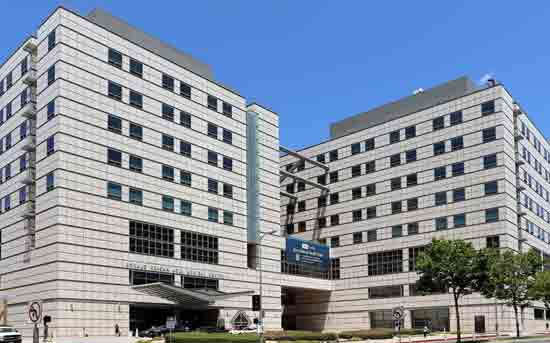
UCLA (University of California, Los Angeles), the top public university that has gained global attention beyond Los Angeles, California, is renowned not only for its academics and research. At the heart of UCLA lies the massive medical institution, the Ronald Reagan UCLA Medical Center, which boasts world-class medical capabilities.
Located on the UCLA Westwood campus, this facility is undoubtedly one of the best academic medical centers in LA. It consistently ranks as the top public hospital in California and among the best hospitals in the nation, showcasing the pinnacle of public healthcare and advanced medicine. For first-time immigrants, international students, or local residents, this hospital serves as a vital lifeline beyond just a treatment space.
1. Overwhelming Medical Achievements Maintaining National Top Status
The status of the UCLA Medical Center is clearly demonstrated through the metrics of prestigious evaluation organizations. Each year, in the rankings of hospitals across the United States by 'US News & World Report', the UCLA Medical Center has proudly claimed the title of California's top hospital.
Not only in the overall rankings but also in specific medical specialties, its capabilities are exceptional. It maintains a top-class national ranking in 14 adult specialty areas, including Oncology, Cardiology & Heart Surgery, Neurology & Neurosurgery, Urology, Ear, Nose & Throat, and Ophthalmology.
Additionally, this hospital is designated as a Level 1 Trauma Center, which means it is equipped with the highest level of emergency medical equipment and specialized personnel capable of performing surgeries and treating critically injured trauma patients 24/7 in the event of major accidents, gunshot wounds, or severe falls.
2. Innovation Created by Organic Integration with the Medical School
The driving force behind such world-class medical services is the strong synergy with the UCLA School of Medicine (David Geffen School of Medicine at UCLA). The Ronald Reagan Medical Center operates closely as a single organism with one of the top medical schools in the United States.
The hospital is not just a treatment space but also a training ground for future medical experts. Medical students and skilled residents participate deeply in actual clinical settings and patient care under the thorough supervision of faculty. The greatest advantage of this structure is that the latest medical knowledge and research findings are immediately applied to clinical treatment.
In fact, this is where leading cancer clinical trials, stem cell research, and phase 3 drug trials are actively conducted. It provides a valuable opportunity for terminal cancer patients or those with difficult-to-treat diseases to experience cutting-edge drugs or new surgical techniques that are hard to access in general hospitals.
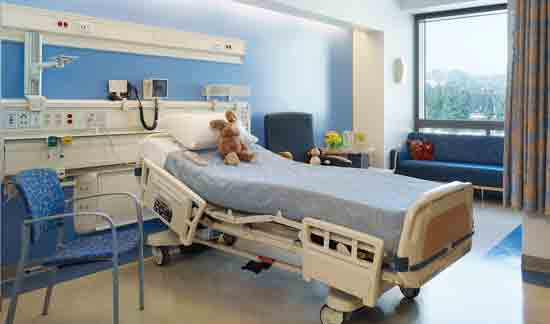
3. A Global Medical Hub Welcoming Patients from Across Borders
The UCLA Medical Center is not only a destination for local residents in the U.S. but also for patients with rare and difficult diseases from around the world who refuse to give up on treatment. When patients from Korea travel to LA for complex surgeries or accurate second opinions, the first specialists they consult are those affiliated with UCLA.
In particular, the center is home to world-class experts in precision cancer diagnosis and personalized targeted therapy, complex neurosurgeries dealing with brain tumors or spinal diseases, and organ transplants involving the heart, liver, and kidneys.
To assist foreign patients, the hospital operates a dedicated International Patient Services department. For patients who may feel apprehensive about the unfamiliar U.S. hospital system and language barriers, they can request official Korean interpretation services (Medical Interpreter), and receive one-stop support for appointment scheduling, document issuance, and insurance claims, significantly reducing the burden of language communication.
4. Essential Checklist and Tips for Local Users
If you wish to utilize the high-quality medical services of the UCLA Medical Center while living in LA, it is crucial to first understand the complex U.S. healthcare insurance system. Otherwise, you may face unexpectedly high medical bills later on.
Check Insurance Network (In-Network vs Out-of-Network): UCLA Health is part of numerous private and public insurance networks. However, depending on your insurance plan, UCLA may be classified as 'Out-of-Network', which could mean you won't receive benefits, so be sure to call your insurance company or the UCLA patient service center to confirm coverage before making an appointment.
Obtain a Referral from Your Primary Care Physician: For HMO plans or some PPO plans, a referral from your primary care physician (PCP) is required before seeing a specialist at the university hospital. Without a referral, you may be denied treatment or your insurance may not cover the visit.
Accessibility and Appointment Methods: Appointments can be made through the official website (UCLA Health) or by calling the main line. Fortunately, not all services require a visit to the Westwood main campus. UCLA Health has expanded numerous local clinics and specialty centers in key areas across LA, such as Santa Monica, Santa Clarita, and Torrance, enhancing accessibility for patients.
5. Comparison with Cedars-Sinai
When naming the top large hospitals in LA, Cedars-Sinai Medical Center is always compared alongside UCLA. Both hospitals possess world-class medical technology that is hard to distinguish between, but there are clear differences in their founding backgrounds and characteristics.
While Cedars-Sinai is known for its glamorous and private high-end facilities favored by Hollywood stars, the UCLA Medical Center, as a state university-affiliated hospital, strongly embodies the responsibility of public healthcare. It has a well-integrated system for patients under California's low-income healthcare support programs, such as Medicare and Medi-Cal, striving to distribute top-level medical benefits fairly regardless of economic status.
In conclusion, both institutions are first-class hospitals that can stand proudly anywhere in the world. It is wise to carefully compare where your insurance will be most effectively applied and which location offers better transportation accessibility based on your personal situation before making a decision.
 TunaDance
 FlipperSkate
 moonforesttraveler2017
 popdreamcreator1996
 SoulWalker







 Old English |
 nixxon |
 LIZ Legal Information Blog |
 Karina's Blog |
 Jimbeam 88 |
 Weekend Movie Blog |
 Victory 1988 |
 Superman Cat Blog |
 Anjollinya Blog |
 Coastal city |
  meonetoo |
  Winter bear |
  Peach Jam Eating Laughter |
  Nando Raldo |
  American Man in a Mask |
  wendra |
  silver |
  bada2002 |
  horizon |
  Nanana Nanana Nanana |
  victoria jung |
  Kkikki Ppappa Shout Out Loud |
  Lululala |
  Toaster Pizza Magic Show |
  Utah, the Most Livable State |
  nortrix |
  Mau Nui |
  novapixel |
  fixed |