
When asked what they want to do first after retirement, most people mention travel. This includes spending a few months in Korea, going on a European cruise, or living in Southeast Asia for a month.
However, before packing your bags, there's an important question to consider: Will Medicare cover hospital expenses if you get sick abroad?
To put it simply, Original Medicare generally does not cover medical services received outside the United States. Surprisingly, many people leave without knowing this one line.
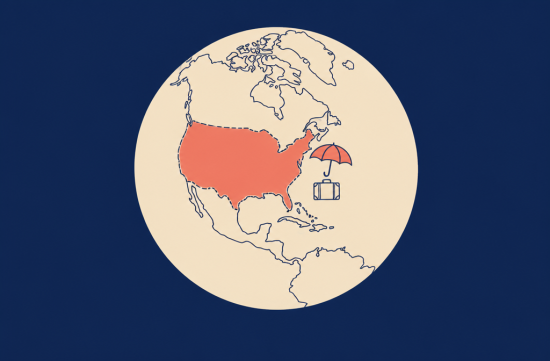
The United States, in this context, includes the 50 states, DC, Puerto Rico, Guam, the U.S. Virgin Islands, American Samoa, and the Northern Mariana Islands. This means that Guam and Saipan are within the Medicare coverage area.
Conversely, countries like Korea, Japan, Mexico, and those in Europe are all outside this coverage. If you are taken to the emergency room, Parts A and B will generally not pay a dime.
However, there are a few exceptions. Medicare officially recognizes about three exceptions.
First, if an emergency occurs within the U.S. and the nearest hospital is a foreign hospital just across the border.
Second, if an emergency occurs while traveling directly between Alaska and another state through Canada.
Third, if you live in the U.S. but the nearest hospital to your home is a foreign hospital. This is mostly relevant for border town residents and may not apply to most travelers.
Cruises need to be considered separately. Necessary medical services received while the ship is in a U.S. port or within six hours of a U.S. port may be covered.
If you are beyond six hours in international waters, the situation changes. Even in life-threatening emergencies, Original Medicare generally does not cover costs. Alaska cruises and Mediterranean cruises carry different risks.
So, what about Medicare Supplement (Medigap)? This is where it gets really important.
Medigap plans C, D, F, G, M, and N include foreign travel emergency benefits. Plans A, B, K, and L do not offer this benefit.
The structure is as follows: you pay a $250 annual deductible first, and then Medigap covers 80% of the medically necessary emergency care costs.
However, there is a lifetime limit of $50,000. It's important to note that this is a lifetime limit, not an annual limit, which surprised me when I first saw it.
There are also conditions. The emergency must occur within the first 60 days of your trip, and if it happened in the U.S., it must be a type of care that Medicare would have covered.
So, if you spend three months in Korea and then break your leg on the 70th day, the Medigap foreign emergency benefit would not apply. Those planning long stays need to recalculate based on this.
Also, this is strictly for emergencies. Routine check-ups or pre-scheduled treatments are not covered.
If you are using a Medicare Advantage (Part C) plan, coverage varies by plan. There are several plans that include foreign emergency or urgent care, but limits and claims processes differ.
Remember that if you stay abroad for more than six months, you may be dropped from your plan and revert to Original Medicare. It's best to call your plan before you leave.
Medications are also a key point. Part D only covers medications purchased in the 50 states, DC, and U.S. territories. Medications bought at foreign pharmacies are not covered.
Therefore, it's wise to bring more than enough of your medications for the duration of your trip. If refill dates are uncertain, consult your pharmacist to adjust them.
Let's break down the numbers. If your hospital bill abroad is $10,000, Medigap will cover 80% of the remaining $9,750 after the $250 deductible, which amounts to $7,800. Your out-of-pocket cost would be $2,200.
Up to this point, it's manageable. The problem arises with major accidents or medical evacuations. The cost of air ambulance transport back to the U.S. is typically not covered by Medigap foreign emergency benefits.
So, my conclusion is clear. Even with Medigap Plan G or N, if you're traveling long distances abroad, it's wise to purchase separate travel medical insurance.
Especially for stays longer than 60 days, cruises, or in areas with weak medical infrastructure, look for plans that include medical evacuation. Comparing a few days of insurance premiums to the risk of tens of thousands of dollars makes the answer clear.
And if you receive treatment abroad, be sure to keep receipts, diagnoses, and medical records. Medigap foreign emergency claims typically require you to pay upfront and then file for reimbursement, so without documentation, it's hard to get your money back.
However, the specific conditions may vary depending on the type of plan and when you enroll. It's advisable to check with an expert based on your personal situation. You can also directly ask about foreign emergency conditions using the number on the back of your insurance card.
Retirement travel is a reward you've been waiting years for. To avoid losing that reward to a single hospital bill, invest just 30 minutes before departure to check your coverage.
 TwinEggUSA







 saffronroute |
 You Only Live Once |
 Texas Real Estate Blog |
 zentar |
 seouljung |
 KGOMIO Blog |
 Utah, the Most Livable State |
 AliAluAlo Blog |
 bravik31 |
  Toaster Pizza Magic Show |
  nortrix |
  Mau Nui |
  novapixel |
  fixed |
  AL ALASKA |
  amola |
  History Repeats Itself |
  Doori Ark |
  Rainbow Bridge to the Sky |
  Sunny Fullerton |
  U.S. Weather Bureau News |
  GOGO SING |
  Gold Bar |
  Banana Style Life |
  Tesla X |
  Old English |
  urbanmint |