
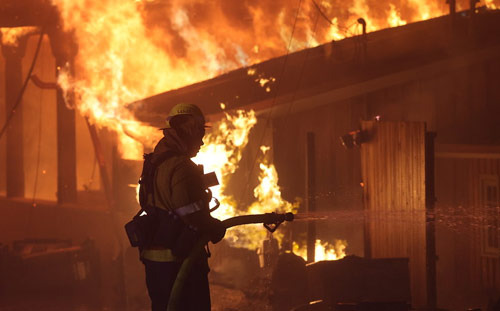
As astronomical damage is expected from the major wildfire that struck Los Angeles (LA), the largest city in the western United States, concerns are growing that recovery efforts will become even more difficult as it has been revealed that insurance companies have been reducing coverage in the area over the past few years. In California, even large insurers like State Farm and Allstate have stopped recruiting new policyholders due to fears of massive losses from wildfires and other major natural disasters. This move is interpreted as a measure to avoid the financial burden of unexpected large insurance claims.
According to Bloomberg, major private insurers have effectively been withdrawing from the California region due to the cost burden from the surge in fires in recent years, even before the occurrence of this wildfire. State Farm General, California's largest private insurer, announced last March that it would not renew insurance contracts for 72,000 homes and apartments across the state. This decision reportedly included many homes in the Pacific Palisades area, which has suffered the most damage from the recent LA wildfires.
Bloomberg reports that 69% of State Farm's insurance contracts in the Pacific Palisades area have been canceled. This withdrawal of insurers has been a continuing phenomenon in recent years, as the surge in wildfires due to climate anomalies has made it difficult for insurers to maintain profitability. The NYT reported that insurers had to pay costs equivalent to 25 years of profits due to fires in 2017 and 2018, and since then, they have begun to reduce homeowners' fire insurance contracts.
The California authorities have taken measures such as temporarily banning private insurers from canceling insurance contracts for homeowners in wildfire-affected areas, but this has proven ineffective in preventing the mass exodus of insurers. According to a report released by the state legislature last month, the rate of canceled homeowners' insurance contracts in California has been increasing annually since 2020, and many counties are currently recording the highest rates of insurance renewal refusals in the United States.
Homeowners who have been denied insurance contracts by private insurers are being covered by the 'FAIR Plan,' an insurance provided by the California state government as a 'last resort.' The FAIR Plan has higher premiums and limited coverage compared to private insurance, but as of September last year, the number of enrollments increased by 61% compared to the previous year. In particular, in the Pacific Palisades area, the number of FAIR Plan enrollments is expected to nearly double to 85% in 2024 compared to the previous year. However, Michael Wara, a senior research fellow in climate and energy at Stanford University, pointed out that the FAIR Plan lacks sufficient resources, systems, and personnel to compensate for the damage from the recent LA wildfires.
According to Bloomberg, the FAIR Plan's surplus cash is reported to be $200 million (approximately 291.2 billion won), and the reinsurance amount is $2.5 billion (approximately 3.641 trillion won), but experts are skeptical about whether these resources are sufficient to cover the latest wildfire damages. The FAIR Plan stated that "we can pay all guaranteed insurance amounts through payment mechanisms, including reinsurance."
The insurance market in California, already in crisis, is likely to suffer even greater damage due to this wildfire. The NYT reported that if the FAIR Plan lacks funds to pay insurance claims, it could collect funds from private insurers operating in California, which could place additional burdens on insurers that are already facing deteriorating financial health, leading to more insurers potentially withdrawing from California.
Los Angeles is suffering significant damage from the aftermath of this wildfire, and the withdrawal of insurers and the increased burden on the state insurance system are making recovery efforts more difficult for local residents. California and the insurance industry urgently need to establish sustainable solutions to address the wildfire threats posed by climate change.








 Weekend Movie Blog |
 Beauty, Health, Lifestyle Blog |
 coloradoman |
 Superman Cat Blog |
 Awesome Blog |
  forevergee |
  festival |
  manchester |
  constant |
  Leapfrog Move |
  vibranto |
  Tora Tora |
  yellowbutter |
  Dolly |
  US Embassy |
  NYC saladbar |
  Finding Superfoods |
  lightyear |
  song bang |
  vexomo |
  Indiana Jones |
  meloncat |
  novapixel |
  mortrix |
  Esther 1983 |