
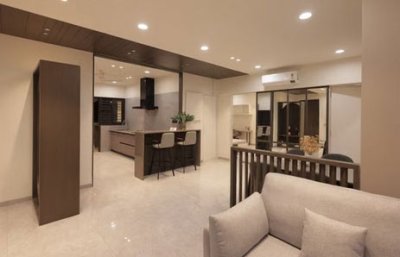
I once toured properties in downtown Dallas and North Dallas on the same day, and I was reminded of how different the unit configurations can be even within the same time frame. Downtown has many high-rise buildings focused on studios and one-bedroom units, while the trend shifts towards more two-bedroom and three-bedroom units as you head north. In this article, I will summarize the overall picture based on data from RentCafe.
Studios have an average rent of $1,253 and an average size of 546 square feet. In neighborhoods with strong walkability like downtown or uptown, studios tend to rent quickly even at this price, but conversely, it can be difficult to find studios in the northern suburbs.
One-bedrooms have an average rent of $1,416 and an average size of 721 square feet. This segment has the most abundant supply across Dallas, catering to a wide range of demand from single professionals to newlywed couples.
Two-bedrooms have an average rent of $1,854 and an average size of about 1,068 square feet. Families with young children or two roommates often fall into this category, and particularly in the northern areas adjacent to Richardson or Plano, the demand for two-bedrooms is notably strong due to school districts.
Three-bedrooms have an average rent of $2,224 and an average size of 1,328 square feet. Families with two or more children primarily seek these units, but even among three-bedrooms, there can be significant differences in layout and maintenance between those near downtown and suburban townhome complexes, so I recommend visiting in person before making a decision.
- Studio: about $1,253 / 546 square feet
- One-bedroom: about $1,416 / 721 square feet
- Two-bedroom: about $1,854 / 1,068 square feet
- Three-bedroom: about $2,224 / 1,328 square feet
Looking at new supply, Dallas has been increasing the number of one-bedroom and two-bedroom units the most in recent years. Studios are concentrated in specific urban neighborhoods, and three-bedrooms do not make up a large portion of the overall supply unless they are in low-rise suburban complexes. Therefore, if you want a three-bedroom, it's more efficient to focus on suburban complexes from the start rather than downtown.
When examining the rent gap, the increase in rent when moving from a two-bedroom to a three-bedroom is generally larger than the increase from a studio to a one-bedroom. This can be attributed to the fact that as you add a room, the accompanying shared spaces, parking spots, and storage areas also increase in size. For Korean households, if prioritizing school districts, I recommend looking for two-bedrooms or three-bedrooms in the north, while if commuting convenience is a priority, a one-bedroom near downtown would be a good benchmark. Even within Dallas, circumstances can vary by neighborhood, so be sure to check specific listings in the area before making a final decision.
 KimDelivery
 bluestylecreator1986





 moo moo |
 ultron78 |
 garlic bread |
 Sugar Cream Door Bulletproof Noodles |
 urbanmint |
 Gorama Round |
 There Are Such Things in the World |
 U.S. Weather Bureau News |
 Texas Lone Star Longhorn Spirit |
  treasure |
  strawberry |
  Augusta Univ |
  B.I.G. Victor |
  Victory 1988 |
  Swift Falcon |
  venture |
  SPAM 101 |
  choi family |
  zoryan |
  cloud0 |
  SKy Face |
  wonder |
  Dragon Lee |
  productionblog |
  What can make money? |
  Oklahoma Hoya OK |
  prixon74 |
  Roman Pan |
  USALATU BLOG |