

Where is the AI Industry Headed Under Trump?
This morning, while sipping my coffee and checking the stock market, I was a bit surprised.
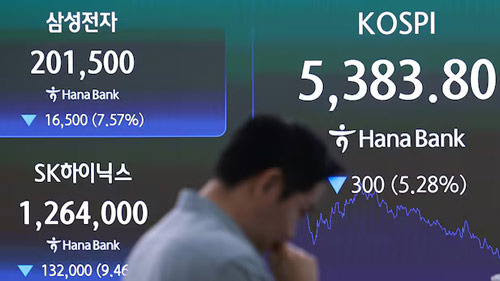
In Korea, I heard that Samsung Electronics dropped over 7% and SK Hynix fell nearly 9% yesterday.
Just a little while ago, there were talks about not being able to sell due to a lack of AI semiconductors, but the mood can change so suddenly.
However, looking at the U.S. stock market, the situation was even more serious.
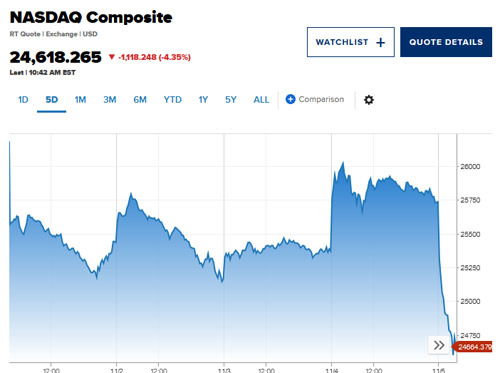
According to a CNBC report, the Nasdaq Composite Index plummeted 4.2% during trading on Thursday.
It has entered a correction phase, having fallen more than 10% from the record high it reached last month.
The S&P 500 index also dropped 2.6%, and the Dow Jones Industrial Average fell 780 points, about 1.5%.
What's particularly interesting is that the U.S. stock market had risen significantly the day before. Yet, the mood completely flipped in just one day.
The Dow gave back about half of its gains from the previous day.
There are analyses suggesting that investors are pulling money out of tech stocks and moving it to relatively stable sectors.
While companies like Chevron and Johnson & Johnson performed relatively well, it wasn't enough to stop the sell-off in tech stocks.
This seems to show that there is a flow to the events in the world.
Living in Austin, you can really feel how much money the U.S. is investing in the AI and semiconductor industries.
With Tesla's factory and Samsung Electronics operating or building large semiconductor facilities in Austin and nearby Taylor,
new industrial complexes and housing developments are continuously being established around.
President Trump has strongly pushed for the U.S. to maintain its position as the number one in the AI industry.
He aimed to ease regulations and expand energy production to promote investments in data centers and semiconductors.
Texas has been a prime beneficiary of such policies.
With vast land, abundant energy resources, and a business-friendly environment, it is an advantageous place to build large data centers.
However, the political environment has changed since the U.S. midterm elections, leading to shifts in perspectives on the future of the AI industry.
The Democratic Party does not oppose AI technology itself.
However, they may demand stricter oversight regarding the massive electricity and water consumption of data centers, environmental issues, and the electricity costs borne by local residents.
Building a single AI data center costs billions of dollars, but the benefits that return to local residents after completion are a matter to consider.
While jobs may be created during construction, the number of personnel needed for operations may not be as high as expected.
On the other hand, the costs of expanding the power grid and securing cooling water may remain a burden on the community.
So far, the stock market has invested a lot of money based on the expectation that the AI industry will continue to grow.
The logic was that if Nvidia grows, memory semiconductor companies will also grow, and as data centers increase, power companies and construction companies will profit as well.
However, at some point, investors began to ask questions.
With so much money invested, when exactly can profits be realized?
When political uncertainty is added to this, it may be natural for the market to shake.
Of course, it cannot be concluded that this semiconductor stock crash is entirely due to the midterm election results.
The prices of tech stocks had already risen significantly, and there were ongoing debates about overheating in AI investments.
What I find interesting is something else.
AI technology did not suddenly become worse overnight. Samsung Electronics and SK Hynix did not suddenly lose their production capabilities.
Yet, due to a change in investor expectations, enormous amounts of money disappear from the stock market.
Ultimately, the stock market moves based on expectations and fears about the future rather than the present.
Living in Austin, I feel that the U.S. economy is indeed dynamic.
Industries that were considered the best investment yesterday are evaluated as risky today, and in a few months, they may become new opportunities again.
Watching the Nasdaq drop over 4% in a day and the leading semiconductor companies in Korea fall by 7-9%, I reflected again.
There are no stocks that only rise forever.
And there is no politics that flows in only one direction forever.
I plan to watch how the AI investment boom created by Trump will change in the future, especially how it will impact the Texas economy.
 SesameSoup
 SunnyGarden86



 washington mom |

 Breaking Bad Drama |

 Baguette Blog |

 El Dorado |

 postcard |

 U.S. Weather Bureau News |

 Dallas Fort Worth DFW |

 Living with a Consistent Heart |

 quanta7 |

 Entering Art Directly |
 |
 Colorado Lee |
 kiwiii |
 foxtrot83 |
 stiff |
 namico |
 Caribbean |
 dynamico |
 Elastico |
 United States Army |
 Moving Waterfall |
 travelo |
 BOOM BOOM BOOM |
 blues town |
 glenview 89 |
 Mr Oh |
 skiny joe |
 envora21 |
 silverfox |
 nameone |