

In Pal Park, I often find myself discussing education with Korean parents and their children.
However, many times, we don't really know what kids are watching online and what they're thinking.
I was surprised when I recently read a study about American teenage boys.
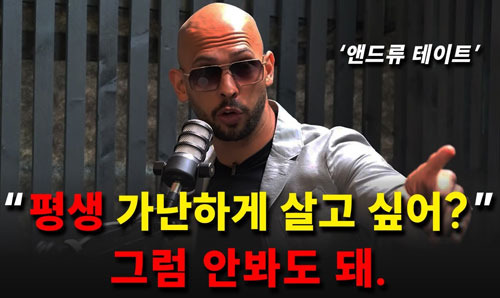
The study surveyed 601 boys aged 13 to 17, and about 33% reported following a figure named Andrew Tate.
Who is Andrew Tate, you ask?
He is an internet personality known for his blatant derogatory remarks about women and extreme claims of male superiority.
His messages suggest that men should be strong, wealthy, and superior to women, which has garnered attention.
This online culture is referred to as the Manosphere in the U.S.
Of course, discussing men's issues or rights isn't inherently problematic.
The issue arises when this anxiety is used to dismiss women or teach that gender relations are about dominance and submission.
However, what was even more surprising in this study was that the connection between children's beliefs and their home environment was stronger than that with the internet.
This made me reflect. There are careless remarks we make in our Korean households.
"How can a man cry over that?"
"A man should be strong and capable and earn well in society."
Adults may say these things without much thought, but children can learn about gender roles from such conversations.
In this survey, less than 10% of students included a Manosphere figure among their top three favorite influencers.
Additionally, students who consumed related content did not show significantly higher levels of depression or hostility compared to those who did not.
Still, as parents, there is much to consider. I believe the role of fathers is particularly important.How they treat mothers, how they resolve disagreements, and whether they share household responsibilities can all influence children.
It's also important for mothers not to demand that their sons hide their emotions or be strong simply because they are boys.
Taking away a child's phone just because they watched something strange online may not be the best solution.
Instead, wouldn't it be better to ask why they resonate with that person's words and what aspects they agree with?
Perhaps children aren't looking to hate women but are trying to find answers about what kind of man they should be.
Now that I'm in my forties, I've realized that being a good man doesn't necessarily mean being wealthy or stronger than others.
Being able to express one's feelings honestly, respecting others, and knowing how to apologize when wrong is much more trustworthy.
From this study, I felt that while it's important to know what children learn online, what they see and grow up with at home may be even more crucial.
Ultimately, what we should show our children is not the image of perfect parents but the example of adults living with mutual respect, right?
 CabbageWifi
 LeaveOnAvg
 MorningTrail79




 Breaking Bad Drama |

 Coastal city |

 novapixel |

 Victory 1988 |

 washington mom |

 Margarine Daebimama |

 eatontown blog |

 cloudyday |

 choi family |

 Dollydori, Lover of Movies |
 breaddough |
 Michigan Enthusiast |
 Only Dentalbay |
 postcard |
 Buckwheat Muktudari Notebook |
 Kitchen Ideas |
 Jellia Angel |
 Rice Shop Uncle BLOG |
 ASURA |
 hot chocolate |
 rapids |
 Softember |
 mykiwi blog |
 Maria Mom |
 Watch for possible danger |
 northpeak |
 Far East Movement |
 Light of the World |
 mariashin |