
A few days ago, a friend called me late at night. They said that a strange account was threatening to spread photos on their high school son's phone and demanding money. Their voice was trembling, and it woke me up.
Let's start with the name. In English, it's called sextortion, specifically financial sextortion aimed at making money. This method involves obtaining sexual photos and then using them as leverage to extort money.
The flow of the scam is almost formulaic. An account pretending to be a peer female student initiates contact. After a few friendly exchanges, they encourage sharing photos.
Once even one photo is shared, their attitude completely changes. They capture and show the friend list and family accounts, pressuring the victim to send money immediately. They often demand gift cards or use money transfer apps.
The numbers are alarming. The FBI reported receiving over 13,000 reports of sextortion targeting minors from October 2021 to March 2023. The number of victims was at least 12,600, with most being boys.
During the same period, there were at least 20 reported cases of extreme actions linked to this issue. This part truly took my breath away.
Data from the National Center for Missing & Exploited Children (NCMEC) shows a similar trend. Reports of financial sextortion jumped from 10,731 in 2022 to 26,718 in 2023. That's more than double in just one year.
NCMEC stated that at least 36 teenage boys have taken their lives due to sextortion since 2021, according to their findings. The phrase "according to their findings" carries a heavy weight.
Why are boys specifically targeted? A nonprofit organization, Thorn, analyzed NCMEC's report data and found that 90% of the victims were boys aged 14 to 17. If your teenage son falls into that age group, it's time to take this seriously.
The perpetrators know exactly how to exploit children's curiosity and shame. Their key strategy is to isolate the child by instilling a fear of being caught.
Therefore, conversations should happen before an incident occurs. Once it happens, the child is likely to avoid their parents first. Fire drills are conducted before a fire, not after it.
If I were to start this conversation, I would say something like this: "I've heard about scams like this lately, and if anything like this happens to you, I promise I won't get mad." This promise is the most important part.
Secondly, I would advise them not to send any money. Once money is sent, it often leads to even bigger demands, which is a common theme in many cases.
Thirdly, I would tell them not to delete any conversations. The FBI advises not to delete messages or accounts before law enforcement can verify them. While it's understandable to want to erase everything out of embarrassment, evidence comes first.
Fourth, they should block the account immediately and stop responding. The more anxious the child becomes, the more aggressive the perpetrator will be. Engaging further is a losing game.
It's also good to inform them about reporting channels. The FBI advises reporting at tips.fbi.gov or calling 1-800-CALL-FBI, and they also introduce NCMEC's CyberTipline. If there's immediate danger, call 911.
If you're worried that photos may have already been spread, NCMEC offers a service called Take It Down. This tool helps request the removal of images taken during a minor's years from online platforms.
The law has also changed a bit. The TAKE IT DOWN Act was signed into federal law on May 19, 2025. It specifies that posting or threatening to post sexual images without consent is punishable, including deepfakes created by AI.
Under this law, platforms must remove the image within 48 hours upon receiving a formal request from the victim. The platform's obligations began in May 2026, and enforcement will be handled by the FTC.
Of course, there are opposing voices. Some worry that the 48-hour deadline is too tight, leading smaller platforms to delete content excessively without verification. This concern comes from the perspective of free speech, and I see some validity in it.
However, if I had to weigh the options, I would lean towards supporting this law. While excessive deletions can be corrected later, a life lost cannot be brought back.
That said, we can't rely solely on the law. Many perpetrators are reported to be overseas, which is a common explanation from law enforcement, making it take time to catch them. Ultimately, the first line of defense is the conversation at home.
This doesn't mean suggesting phone inspections. Sneaking around a teenager's phone will only break trust and make them shut down in a real crisis. Trust lasts longer than surveillance.
Instead, it's good to know what apps your child is using. Discuss places like Instagram, Snapchat, and Discord, where strangers can easily reach out.
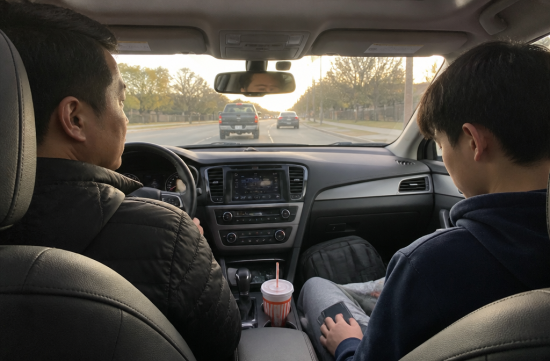
One more tip: don't bring this up seriously at the dinner table. It's better to talk while driving. Since you're not looking at each other, the child feels less embarrassed.
I initially thought my child would never get involved in such things. However, perpetrators do not discriminate between good kids and high achievers. In fact, children who fear disappointing their parents may be at greater risk.
Fortunately, my friend's son confided in his parents that night. He didn't send any money, blocked the account, and even reported it to the FBI. He said the fact that his dad didn't get mad was the biggest relief.
Tonight, try saying just one sentence to your child: "No matter what happens, I'm on your side." I believe this one phrase is worth more than thousands of dollars spent on security apps.
 RudolphPad







 Well Done Sir |

 butter 90 |

 MacMorningBlog |

 Texas Migration Story |

 seadoll |

 U.S. Weather Bureau News |

 Dallas Fort Worth DFW |

 Living with a Consistent Heart |

 |

 Entering Art Directly |
 Korea Forever |
 wavey |
 Valley Bang |
 Enjoying Samba at Home |
 Goroke Geureoke News |
 clarion |
 almondo |
 monkey |
 umbrellafruit |
 Porynix |
 San Gabriel Mountains |
 creamcat |
 victoria jung |
 Peter Pan Pet |
 Archaic Kim |
 Washington Denzel DJ |
 Fong Mr |
 vanillastorm |
 espressotop |
 raviont |