
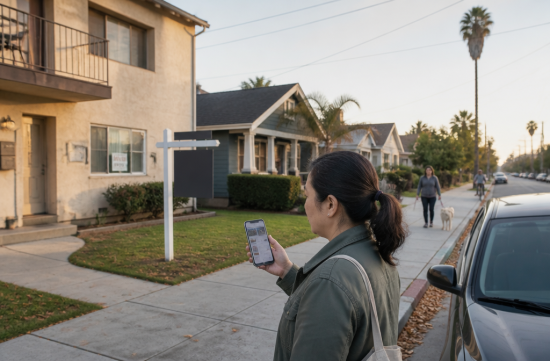
Recently, many people in Long Beach have received lease renewal notices. It's a time to consider whether to pay more rent and stay for another year or to look for a home.
I've gathered the numbers needed for that decision. The rental data for October is out, while the sales data is still the most recent from September.
First, let's look at the rent. According to the Apartment List November report, the median rent in Long Beach increased by 0.4% during October.
The current overall median is $1,797. The average for a one-bedroom is $1,606, and for a two-bedroom, it's $1,967.
Compared to a year ago, this is an increase of 1.6%. During the same period, the overall LA Metro area saw a decrease of -0.1%, so Long Beach has held up a bit better.
The median rent in the LA Metro area is $2,208. Long Beach is 18.6% lower than this, making it relatively more affordable within the metro area.
We should also look at other data. Zumper provides the average for the last 30 days as of November 2, showing that the average for a one-bedroom is $1,825, which is a 1% increase from the previous month.
The average for a two-bedroom remained the same at $2,350. However, compared to a year ago, the one-bedroom is down by 1%, and the two-bedroom is down by 2%.
It's the same city, but one side shows an increase while the other shows a decrease. I was a bit confused at first.
The reason lies in the calculation methods. Apartment List uses median values and its own sample, while Zumper uses the average asking prices of actual listings.
The sample sizes and reporting periods are also different. Apartment List reports monthly, while Zumper calculates based on the most recent 30-day listings.
Therefore, you shouldn't mix the amounts from the two sources for comparison. What can be commonly understood is that the October rent did not significantly rise or fall.
If the renewal notice shows a large increase, it also means there may be room for negotiation. Checking the asking prices of vacant units in the same complex can make discussions much easier.
Long Beach is subject to California state law (AB 1482), which means there is an annual cap on rent increases for applicable buildings. Check if your building is covered through the city's renter support page or your lease documents.
Now, let's look at the sales side. The October sales statistics have not yet been released, so we will refer to the CRMLS September data extracted on October 7.
The median sale price in Long Beach for September was $902,500. This is a 4.9% increase compared to a year ago, and it's the highest monthly figure tracked by a local agent over the past 33 months.
The speed at which homes are selling has also increased. The median time to contract is 19 days, shorter than the 27 days from a year ago.
However, the number of listings has actually decreased. There were 232 new listings in September, which is 11.5% fewer than the previous year.
As of October 7, there were 597 active listings, and 198 homes were in escrow. The inventory for the third quarter is at a level of four months, indicating a market that is not heavily skewed in one direction.
However, looking at the quarter as a whole, the picture varies. The median price for single-family homes in the third quarter rose to $1,042,500, an increase of 6.6%, while condos decreased by 0.3% to $521,000.
The price increase is essentially driven by single-family homes. The average time to contract for condos was 35 days, and 37% remained on the market for over 60 days.
The number of listings that did not sell and were taken off the market has also increased. In the third quarter, 303 listings expired, were canceled, or withdrawn, resulting in a higher failure rate compared to the 593 closed transactions during the same period last year.
The overall median sale price was 98.9% of the initial asking price. For condos, it was 97.5%, indicating more room for price adjustments.
Let's apply this to the initial situation. If a family living in a two-bedroom rental is considering a condo as their first home, there's currently no rush to make a decision.
With listings staying on the market longer, there's room for price negotiation and requests for closing cost assistance. In contrast, single-family homes still face competition, often selling near the asking price.
Interest rates are also a variable. Mortgage rates fluctuate weekly, so compare Freddie Mac's weekly announcement with actual loan estimates right before signing a contract.
The stability of rent also means that tenants have more time. Asking about short-term renewal options instead of a full year is another strategy.
If it were me, I would check the rent increase to negotiate and wait for the October sales statistics to make a decision on purchasing a condo. First, I want to see if the fall transaction trend continues from the September peak.
October sales data typically comes out in early to mid-November. Once the numbers are confirmed, I will compare them again with September.
The referenced materials include the Apartment List November rent report, Zumper rent data (updated November 2), and the CRMLS-based Long Beach third-quarter report. There can be significant differences by neighborhood, so I recommend checking specific areas of interest separately.
 SAMESAME
 NKidsBanned








 silents |

 Choco Choco Star |

 gentle |
 neapolis |

 moo moo |

 Korean Blog |

 Key spots |

 Top Beaches |

 Sammy Beach |

 US Home Buying Information Home Insurance |
 clarion |
 almondo |
 monkey |
 umbrellafruit |
 Porynix |
 San Gabriel Mountains |
 creamcat |
 victoria jung |
 Peter Pan Pet |
 Archaic Kim |
 Washington Denzel DJ |
 Fong Mr |
 vanillastorm |
 espressotop |
 raviont |
 Illinois alpaca |
 Purple Moons, |
 Ted 600 |
 jaxter |
 garlic bread |