
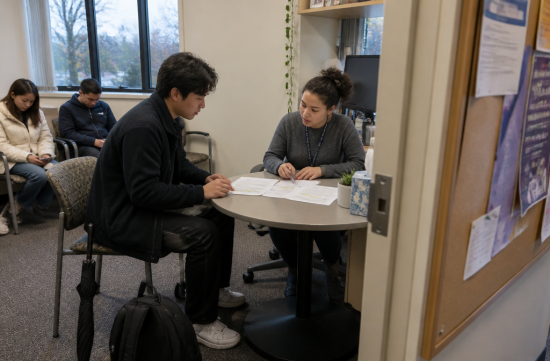
These days, the group chat with my international student friends is buzzing. Some friends have received internship offers for next summer, while others haven't even submitted their documents yet, and the notifications keep coming all day.
However, what surprised me was the first question from the friend who received an offer: "But is it okay for me to work?"
That's right, for F-1 students, receiving an offer is just the beginning. To actually work, you need to pass through another gateway called CPT.
So today, in line with the end-of-year application season, I've organized what to prepare for your first internship with CPT. I've seen a lot of confusion around this, so I've focused on verified information.
First, what is CPT? CPT stands for Curricular Practical Training, which refers to practical experience outside of school that is recognized as part of your major curriculum.
The regulatory basis is federal regulation 8 CFR 214.2(f)(10)(i). The key point is that the work itself must be an essential part of your major course of study.
One part that often confuses people is who approves it. CPT is approved not by the immigration office (USCIS) but by the school's DSO, or Designated School Official.
So, unlike OPT, you don't submit an application to the immigration office or pay a fee. An EAD card is also not issued separately.
Instead, the DSO records the approval in SEVIS, and you need to receive a new I-20 that reflects this. This I-20 will include the employer's name and the duration of employment.
Here's one really important thing: You cannot work even a single day before the start date listed on your I-20.
Even if the company asks to move onboarding up by a week, the approval date takes precedence. Working without permission can lead to issues with your status, so you need to be very careful about this.
Additionally, CPT must be approved separately for each employer and each duration. This means if you change companies or extend your duration, you need to apply again.
You also need to check the eligibility requirements. Most schools require that you have completed one full academic year, typically two consecutive semesters, before applying for CPT.
There are exceptions. If you are in a graduate program that requires practical experience from the start, this waiting period may be waived.
If you've taken a leave of absence or had status issues, this one-year calculation may restart. Each school interprets this slightly differently, so be sure to read your school's guidelines.
Next, let's talk about working hours. If you work 20 hours or less per week, it's considered part-time CPT; if you exceed 20 hours, it's full-time CPT.
During the semester, only part-time is allowed, and many schools only permit full-time during summer or winter breaks. This is why many summer internships are full-time.
Honestly, I was a bit surprised when I first learned this. If you accumulate more than 12 months of full-time CPT, you lose eligibility for OPT after graduation.
On the other hand, part-time CPT does not affect your OPT eligibility, even if it lasts a long time. If you plan to work in the U.S. after graduation, be sure to keep track of your full-time duration.
So, what documents do you need? Each school has different forms, but usually, the employer's offer letter is essential.
The offer letter often needs to include the company's address, job description, weekly working hours, start date, and end date. If anything is missing, it's quicker to ask the company for a revised version.
In addition, approval from your major department or advisor and registration for CPT credit courses are often required. Since the deadline for credit registration is tied to the semester schedule, it's good to check in advance.
Now, let's talk about the application season. Next year's summer internship recruitment has started much earlier than expected.
For example, Wells Fargo announced on its recruitment page that it opened applications for summer 2027 internships in January 2026. It's fair to say that much of the finance sector has already passed.
In tech, companies have opened applications at various times from summer to fall, with additional postings coming from the end of the year to January. So, it's not too late to apply now.
This is the order I recommend to my friends: Check the CPT eligibility requirements before submitting your application.
During the interview stage, honestly mention your student visa status, and once you receive an offer, schedule a consultation with your DSO right away. The time it takes for approval varies by school, so allow plenty of time.
One more thing to add: Many articles online about "CPT regulation changes in 2026" are often not from official sources. The safest way to verify regulations is through your school's international student office and the original federal regulations.
Just like how having an umbrella ready on a rainy day makes you feel at ease, knowing about CPT before an offer comes can help you feel less flustered when the time comes.
For those tired from writing applications, take a moment to enjoy a sweet fruit and recharge. I wish everyone the best of luck in securing their first internship!
 Focus 1


 Valley Hong |

 Casa Mia |

 CA Real Estate |
 Eldorado 88 |

 limestone |

 breaddough |

 Lime berry |




 clarion |
 almondo |
 monkey |
 umbrellafruit |
 Porynix |
 San Gabriel Mountains |
 creamcat |
 victoria jung |
 Peter Pan Pet |
 Archaic Kim |
 Washington Denzel DJ |
 Fong Mr |
 vanillastorm |
 espressotop |
 raviont |
 Illinois alpaca |
 Purple Moons, |
 Ted 600 |
 jaxter |
 garlic bread |