
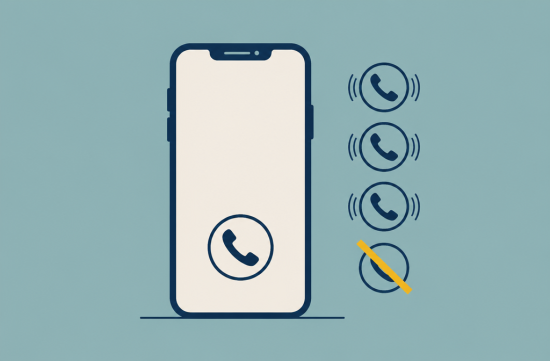
While preparing dinner with my hands smelling strongly of onions, I answered the phone, and it was another "car warranty extension" call. That was the third time that day. At this point, it seems like they care more about my car than I do.
However, starting this year, Oregon has implemented some solid brakes on these calls. Thanks to HB 3865, also known as the Telemarketing Modernization Act, which goes into effect on January 1, 2026.
To get to the point, sales calls can now only be made between 8 AM and 8 PM. Additionally, contacting the same person more than three times within a 24-hour period is illegal. The "three calls a day" mentioned in the title refers specifically to this 24-hour rule.
Automated dialers, which produce recorded messages known as robocalls, previously had a permitted time frame of 9 AM to 9 PM. This has now changed to 8 AM to 8 PM as well.
The most welcome change is regarding text messages. The previous law only addressed "calls," but now text messages are included in the definition of telephone solicitation. Therefore, both calls and texts are subject to the same time and frequency restrictions.
It is now explicitly prohibited to mislead about identity or purpose. You cannot falsely state who you are calling on behalf of or why you are calling. Manipulating the caller ID is also banned.
If someone tells you, "Do not call me again," and you contact them again from the same number, that is a violation. This was already a provision, but it now applies equally to texts.
Now, after hearing all this, you might want to cheer, but I immediately looked for exceptions like a habit. As expected, there's no such thing as a free lunch in this world.
First, established business relationships are exempt from the time and frequency restrictions. The law defines this as having had a transaction within the last 18 months. If you bought a mattress from a company a year ago, they may qualify.
There are also exceptions for debt collection. Debt collectors and debt buyers that fall under the Fair Debt Collection Practices Act (FDCPA) are not subject to the time and frequency restrictions for automated dialers. Collection calls must be viewed under federal regulations, not this law.
Nonprofit organizations contacting their members or donors, as well as calls for opinion polls or political surveys, are also excluded from the definition of sales solicitation. This means that calls during election season will be hard to stop with this law.
Let's touch on the pros and cons. The industry has expressed concerns that including texts and the enforcement methods are technically burdensome. On the other hand, the Oregon Department of Justice (DOJ) supported the law, stating that it needed to be modernized to address robocalls.
Here's my take. I understand the industry's concerns, but I believe the fatigue on the receiving end is much greater. Moreover, real scammers don't follow the law anyway, so this law seems to set boundaries for companies that "at least follow the law."
Now, let's move on to practical steps. The first thing to do is register with the federal Do Not Call list. Oregon uses this national list instead of a state-specific one.
You can register at donotcall.gov or by calling 1-888-382-1222. Registration itself is free. If someone asks for a registration fee, congratulations, that's a scam call.
However, keep in mind that this list only filters out "law-abiding sellers." Scam calls from overseas that manipulate caller IDs do not care about the list. So, it's a good idea to use your phone's built-in features as well.
iPhones have a feature in the phone settings to silence unknown callers. Android users can also enable spam call filtering in their phone app settings. Check your carrier's free blocking apps as well.
My principle is to not answer unknown numbers. If it's really important, they will leave a voicemail. If you answer and the recorded voice says, "Press 1," don't press anything and just hang up.
Pressing a button can signal that "this number is active." It's especially advisable to avoid responding "Yes" to questions like "Can you hear me?"
Even if the caller claims to be from a bank, the IRS, or Social Security, do not provide any information on the spot. Hang up and call back using the number on the back of your card or the official website.
There are also ongoing scam calls targeting Korean seniors. Common tactics include impersonating the consulate or prosecutors. Hearing Korean can make people let their guard down, so be sure to inform your parents about this.
If you suspect a violation of this law, start by keeping a record. Write down the date, time, number, and company name, and save screenshots of any texts. If you receive a fourth contact within 24 hours, that is your evidence.
You can report it to the Oregon Department of Justice Consumer Hotline at 1-877-877-9392. It operates on weekdays from 8:30 AM to 4:30 PM. If it's a violation of the federal list, you can also report it to the FTC at donotcall.gov.
Filing a report may not immediately stop the calls. However, accumulating reports will provide grounds for enforcement. I view this not as a tedious task but as a small vote.
To summarize, sales calls are only allowed from 8 AM to 8 PM. You cannot exceed three calls within 24 hours, and texts are included.
However, keep in mind that established businesses, debt collection, nonprofits, and opinion polls have exceptions, so temper your expectations. Register with Do Not Call, use phone features to block, and report to the Oregon Department of Justice. Just doing these three things can make your evenings much quieter.
If I were you, I would turn on my phone's spam filter tonight. It's time to stop answering calls while chopping onions.
 DreamWalker








 hoosierdaddy |
 sun walker |
 Let's Be Like a Salt-like City Person |
 Springs Korea |
 US Legal Consultation on Trials |
 Mint Star |
 Oregon Our Neighborhood Story |
 Squid Q |
 nuttypup |
 jammybear |
  moonshine 7 |
  Sunset Oregon |
  victoria 68 |
  golfmaster |
  Montgomery Mom |
  squidogame |
  Noodle Noodle |
  Rhode Island Good People |
  Big North |
  Famous Attractions in the United States |
  Jin Soo V |
  Starbucks Reserve Roastery Closure |
  peppermint |
  Stable Co. |
  Purple Moons, |
  International Court |
  roma |
  horse |
  moodansa 77 |
  zymit |