
By mid-October, the morning air in northern Ohio changes. The most common question at this time is where to spend money first to reduce winter gas bills.
To get straight to the point, sealing gaps in the attic and basement should come before replacing windows. This option costs the least and has the most certain effect in this order.
According to the EPA's Energy Star data, sealing air gaps and reinforcing insulation in the attic, crawl space, and rim joists can reduce heating and cooling costs by an average of 15%. In terms of total energy costs, this averages around 11%.
This is an estimate modeled on typical existing homes. It's important to note that results can vary significantly depending on the age and structure of the house.
So why focus on the attic and basement instead of doors and windows? Energy Star's DIY guide explains that most homes have the largest air leaks hidden in the attic and basement.
Warm air rises and escapes through the attic. At the same time, cold air is drawn in through gaps below.
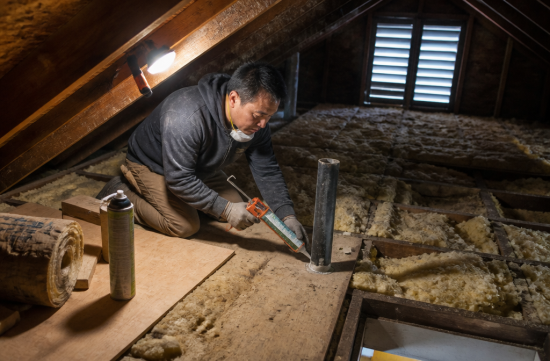
Therefore, my top priority is sealing air gaps. You can start with a caulking gun, weather stripping, and a few cans of spray foam. It's hard to beat the cost-effectiveness of this approach.
There are specific areas to check. Look at the holes where pipes and wires pass through in the attic, around the attic access panel, and where the basement walls meet the floor joists.
Materials can be used according to their purpose. Use caulk for stationary gaps and weather stripping for doors and windows. For larger gaps over half an inch, it's recommended to first insert backer rod and then cover it with foam or caulk.
The second priority is reinforcing attic insulation. This area falls under climate zone 5A, and the recommended insulation value for attics in this zone is between R-49 and R-60.
If you go up into an old house's attic, it's common to find insulation that doesn't even reach the height of the rafters. To achieve R-49 with cellulose blowing, you would need approximately 14 inches of thickness.
There is a specific order to follow here. Seal the gaps first, then add insulation. If air flows through the insulation, the R-value you paid for won't perform as expected.
The third priority is the basement rim joists and crawl space. Homes with cold floors often find answers in these areas.
The fourth priority is a professional energy audit. A blower door test can measure leaks throughout the house, identifying even the invisible gaps. If the house is old, starting with an audit can help reduce trial and error.
Replacing windows is placed at the end of this list. It is the most expensive option, and often, spending the same amount on sealing gaps and insulating the attic yields quicker returns.
There is also a nearly cost-free method. The Department of Energy advises that lowering the temperature setting by 7 to 10 degrees Fahrenheit for 8 hours a day can save up to 10% on heating costs annually.
However, if you have heat pump heating, the situation is different. The Maryland Energy Administration explains that significantly lowering and then raising the heat pump setting can reduce efficiency, negating any savings. In this case, it's better to maintain a consistent temperature.
Now, let's talk about subsidies. The federal 25C tax credit is no longer available starting this year. Under the One Big Beautiful Bill Act signed on July 4, 2025, installations after December 31, 2025, will not be eligible for the credit.
If the work is completed by the end of 2025, you could apply using Form 5695 during your 2025 tax filing. Insulation and air sealing could cover 30% of costs, with a limit of $1,200 per year. If this benefit is still advertised by companies, be sure to double-check.
So, this year, realistic options include gas company and state government programs. The gas service in the Cleveland area was previously Dominion Energy Ohio, and after the sale is completed in March 2024, it will operate as Enbridge Gas Ohio.
I have not been able to confirm the current conditions for Enbridge Gas Ohio's insulation rebates or energy audit programs. I recommend checking their website or contacting customer service to verify the conditions for designated contractors.
If you meet the income criteria, there is a state housing insulation support program in Ohio. Households below 200% of the federal poverty line are eligible and can receive free services for insulation and air sealing.
Households that have received SSI, TANF, or HEAP assistance within the last 12 months are automatically considered to meet the income requirements. Seniors over 60, people with disabilities, and households with children are given priority.
The application process varies depending on where you live. The Cuyahoga County program targets residents outside the city limits of Cleveland. If you live within the city, it's quicker to check with the local community action agency to find the responsible organization.
There is also the HEAR rebate funded by federal money. It targets households with incomes below 150% of the area median income, but whether applications are currently being accepted in Ohio varies by source. It's best to confirm directly with the Ohio Development Department.
Renters also don't need to sit idle. Simple measures like weather stripping or window film can be easily restored, so if you can discuss it with your landlord, you can implement them right away.
If you own rental properties, the calculations are a bit different. Even if tenants pay for heating, homes that are known to be cold in winter can have longer vacancy periods. Insulating the attic is also an investment in rental competitiveness.
Since each home has different structures and conditions, please confirm the exact scope of work and eligibility for support with the auditing company or responsible agency.
If I were budgeting for this winter, I would do it this way. This weekend, I would start by sealing the gaps in the attic and basement, then measure the thickness of the attic insulation and fill it to R-49 if it's lacking. Windows can wait until next year.
 sunsetvibemaker1953








 garlic bread |
 Sugar Cream Door Bulletproof Noodles |
 urbanmint |
 |
| 
 Premium Gas Camp |
 Mr Cleveland |
 radiant |
 Gleeee |
 Real Estate Investment Korean American |
 ultron78 |
  uplifted |
  Folding Instructions |
  same same life |
  USA Hyundai Kia |
  morvex37 |
  BOL SA RAM |
  TOUCHE NEWS |
  Small Business Information USA |
  draxen |
  gallery |
  milkyotter |
  Zoom Zoom Zoom |
  Minnesota Lakes and Clouds |
  noraro |
  tervox95 |
  vale vale |
  yentra |
  Golden life |
  andrew park |