


Everyone experiences headaches at some point in their lives.
However, there are severe headaches that can paralyze daily life, unlike the common headaches that come from mere fatigue.
This is called migraine. It is not just a headache; the throbbing pain can last for days, and only those who have experienced it can understand the pain.
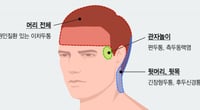
Migraine often starts on one side of the head. It is commonly expressed as "pain on one side of the head," but in reality, it is characterized by a pulsating pain that seems to throb with the heartbeat. Moreover, it is not just a headache; there are accompanying symptoms.
-
Becoming sensitive to light and wanting to enter a dark room
-
Being on edge even with small sounds
-
Nausea, and in severe cases, vomiting
-
Visual symptoms such as flashing lights or zigzag patterns (this is called 'aura')
Since these symptoms appear collectively, it is not just a matter of taking a painkiller. The exact cause is still not clearly understood. It is believed to be a combination of changes in blood vessels in the brain, imbalances in neurotransmitters, and genetic factors. The important thing is that there are 'triggers' that can provoke it.
-
Lack of sleep: Just a few nights of late sleep can trigger it.
-
Stress: It often occurs during exams, presentations, or work pressure.
-
Hormonal changes: Especially in women, it is often related to the menstrual cycle.
-
Certain foods: Foods containing cheese, chocolate, wine, caffeine, and MSG.
-
Environmental changes: Sudden changes in weather or atmospheric pressure can also worsen headaches.
It is important to identify your own triggers. Keeping a record of "when does my headache occur" can greatly help in prevention.
Migraine should be treated appropriately with medication. Just enduring it can prolong and worsen the headache. Of course, managing lifestyle habits is also important. Regular sleep, staying hydrated, reducing caffeine intake, and finding ways to relieve stress are key.
Migraine does not just stop at a headache; it significantly reduces the quality of life.
It can suddenly strike on important meeting or exam days, completely disrupting concentration, and if it occurs while traveling, one may have to spend the whole day in a hotel room with the curtains drawn. In severe cases, it can occur frequently enough to interfere with work or studies.
Understanding from those around is also important. Although one may appear fine on the outside, the person is often in a state of unbearable pain. If someone dismisses it lightly by saying, "Isn't it just a headache?" it can be quite upsetting for migraine sufferers. Migraine is not just a simple headache; it is a neurological disorder. If it is treated lightly as a common headache, it can actually become chronic.
Fortunately, there are now various treatment methods available, and new treatments such as preventive injections are continuously being developed.
If you feel that "headaches make daily life difficult," it is wise not to endure it alone but to consult a specialist.
Head pain is not just something that passes; it can be an important signal from the body.






 neroyo |
 nivex85 |
 Old English |
 nixxon |
 LIZ Legal Information Blog |
 Peter Pan Pet |
 Nuchuhan Exploration BLOG |
 Sugar Cream Door Bulletproof Noodles |
 Moscow Kim |
 Korean Mom |
  My NYC |
  moo moo |
  Mr Oh |
  forevergee |
  festival |
  manchester |
  constant |
  Leapfrog Move |
  vibranto |
  Tora Tora |
  yellowbutter |
  Dolly |
  US Embassy |
  NYC saladbar |
  Finding Superfoods |
  lightyear |
  song bang |
  vexomo |
  Indiana Jones |