

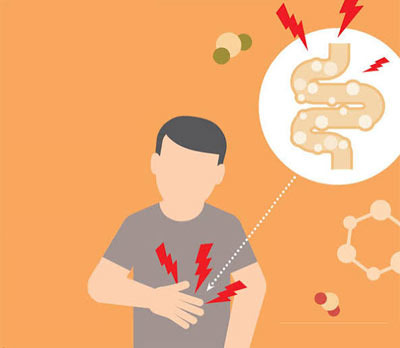
Irritable Bowel Syndrome, commonly known as IBS, is often thought of as a minor issue since it's not a life-threatening condition.
However, hearing from someone who actually experiences it reveals a different story. For men who spend all day driving and working outside, it can be uncomfortable enough to change their entire way of life.
Imagine getting into your car to head to work in the morning, and suddenly your stomach starts to hurt.
"I just went to the bathroom a little while ago, and now?"
But then the urge hits again. The problem is that the urgency associated with IBS doesn't always come at home or in the office.
You could be driving on the highway when suddenly your stomach cramps, and you feel the need to find a restroom. The next exit is five miles away, and all you can think about is finding a bathroom.
After experiencing this a few times, a person starts to feel anxious in advance.
They wonder if it's okay to drink coffee before driving or if they should eat breakfast. Even when searching for a meeting location, they think about the restroom before considering parking.
It's even more challenging for those in sales.
You might be meeting an important client and just as the conversation starts, the urge hits. It's awkward to say, "Excuse me, I need to use the restroom" every time.
Especially for men, these issues are often not discussed in detail with others.
"My stomach is a bit upset."
That's about all they say. But in reality, life is much more complicated.
They start to avoid long drives and become fearful of congested roads.
When flying, they look for aisle seats, and even when going to play golf, they check the location of the restroom first.
One reason IBS is so difficult is that stress and bowel symptoms can influence each other.
"What if my stomach hurts here?"
Once you start worrying like this, you become tense, and that tension can worsen bowel symptoms.
If you've ever had to urgently find a restroom on the highway, just entering that same road again can feel daunting.
Food choices also become a concern.
Some people need to find a restroom immediately after drinking coffee, while others experience symptoms after consuming milk, greasy foods, spicy foods, or alcohol. Certain carbohydrates that are prone to fermentation, like onions, garlic, specific fruits, or wheat products, can also be problematic for some.
However, cutting out everything isn't necessarily a good solution.
Different foods affect different people. Keeping a record of what you ate when symptoms appeared can help identify your patterns.
For those who eat out frequently while working in sales, managing this becomes even more challenging.
If a client says, "Let's have lunch together," but you have to drive for two hours in the afternoon, it's hard to eat comfortably. Ultimately, on days with important appointments, some people intentionally eat less or even skip meals altogether.
However, thinking of it as just IBS and enduring it alone for years can be risky.
If you experience blood in your stool, unexplained weight loss, anemia, fever, or recurring diarrhea that wakes you up at night, don't dismiss it as simple IBS; seek medical attention. Especially if symptoms have newly appeared or are worsening, it's important to check for other bowel diseases.
IBS may appear normal on the outside.
You're not in the hospital or have a broken arm. So, those around you may not understand how difficult it is.
But for a man who has to drive all day and meet clients, not knowing when his bowels will signal can be a significant source of stress.
Ultimately, the goal of treatment and management isn't just to avoid stomach pain. It's about being able to drive on the highway without worrying about restrooms, enjoying meals with clients, and driving for two or three hours without anxiety.
For someone with IBS, regaining that ordinary day is incredibly important.
 HaSalon
 vibecity93
 LeaveOnAvg






 neroyo |
 nivex85 |
 Old English |
 nixxon |
 LIZ Legal Information Blog |
 Virginia Butterfly Mom |
 yentra |
 Kondae Garusong Blog |
 Korean Mom |
  My NYC |
  moo moo |
  Mr Oh |
  forevergee |
  festival |
  manchester |
  constant |
  Leapfrog Move |
  vibranto |
  Tora Tora |
  yellowbutter |
  Dolly |
  US Embassy |
  NYC saladbar |
  Finding Superfoods |
  lightyear |
  song bang |
  vexomo |
  Indiana Jones |