
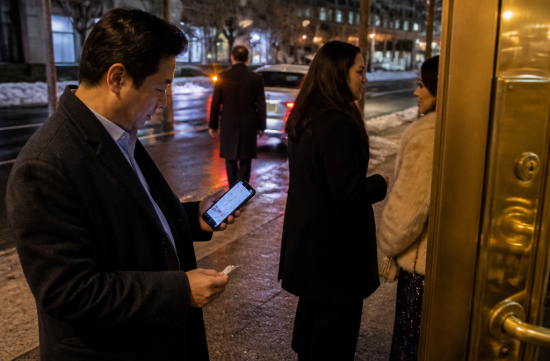
It's mid-October, and I've already received a save-the-date email for the holiday party from the company. The venue is a downtown hotel banquet hall, and it includes an open bar.
As soon as I saw the email, a colleague sitting next to me said, "Let's leave the car at home again this year, just like last year."
If the issue with Korean company dinners is the pressure to accept drinks poured by the boss, the problem with American parties is that while the atmosphere is relaxed, the responsibility is scrutinized if an accident occurs. It's the same drinking situation, but the concerns are completely different.
So, I got curious and did some research. If someone gets hurt or causes an accident after drinking at a company party, is it the company's responsibility or mine?
To cut to the chase, the answer varies depending on the situation. If I get hurt, if I hurt someone else, or if I drive under the influence, each scenario is judged by different laws.
First, let's consider the case where I get hurt. New York Workers' Compensation Law Section 10 states that employers must provide compensation for work-related injuries, regardless of fault.
However, there is an exception. The law specifies that if the injury occurred solely due to the employee's alcohol or drug addiction, the employer is not liable for compensation.
Interestingly, Section 21 of the same law states that unless there is substantial evidence to the contrary, it is presumed that the injury did not occur solely due to alcohol consumption.
This means that simply drinking does not automatically block compensation. The company must demonstrate that alcohol was the sole cause of the injury.
The next hurdle is whether the party is considered work-related. Section 10 excludes injuries that occur during voluntary off-duty recreational activities from compensation.
However, if the company required participation, provided compensation for participation, or sponsored the activity, it is considered an exception. The New York Court of Appeals also ruled in the 1999 Dorosz case based on these three criteria.
While the statute itself refers to recreational activities, the points considered when someone is injured at a company event are similar. Facts such as whether attendance was effectively mandatory, whether the event was funded by the company, and whether the company directly operated it are important.
For reference, the situation in Korea regarding disputes over accidents after company dinners is quite similar. The key question is whether the event was under the company's control, which is the same inquiry in both contexts.
The second scenario is when a drunken colleague injures someone else. Here, the dram shop law, specifically New York General Obligations Law Section 11-101, often comes into play.
This provision primarily targets establishments with liquor licenses. If they serve alcohol to visibly intoxicated individuals or minors, and that person injures someone else, the establishment can be held liable.
In the case of an open bar at a hotel banquet hall, the entity serving the alcohol is the licensed hotel, not the company. Therefore, this provision is more likely to implicate the establishment rather than the company.
Section 11-100 holds individuals responsible if they knowingly provide alcohol to someone under 21, causing them to become intoxicated. If the party includes summer interns or newly hired employees, the company should be mindful of this aspect.
Conversely, New York courts have generally not extended liability to general hosts who serve alcohol to adult guests. There have been rulings stating that such expansions should be the responsibility of the legislature, not the courts.
However, it is difficult to say that the company is completely off the hook. There is a principle of respondeat superior, which holds the company liable for the negligence of employees acting within the scope of their employment.
The issue is whether the party falls within the scope of employment, which is an area where court judgments can vary based on the facts. It looks at how much control the company had and what the employee was doing for the company.
The third scenario is when someone drives after the party. Honestly, there's no debate here.
In New York, a blood alcohol concentration of 0.08% or higher constitutes driving under the influence, and the company cannot take on criminal liability. While the company may be named in a civil lawsuit, the license and criminal record are entirely my responsibility.
What surprised me while researching is that despite the numerous provisions, there is no clear-cut answer for the situation of a company party. Ultimately, it comes down to factors like whether attendance was mandatory, who provided the alcohol, and where the accident occurred.
Therefore, from an HR perspective, measures like hiring licensed bartenders, providing drink tickets, and offering transportation home are common practices. Distributing Uber codes is not just a simple employee benefit; it's also a risk management strategy.
This is why companies in the U.S. are shifting from reducing company events to changing how they operate them. They want to allow drinking while minimizing the potential for accidents.
From an employee's standpoint, the steps are simpler. Leave the car at home, use the transportation support provided by the company without worrying about appearances, and report any injuries immediately to the company to document them.
The information summarized here explains general legal provisions, but actual outcomes can vary significantly based on the circumstances. If a specific incident occurs, be sure to consult a New York labor law or personal injury attorney.
There are days when I miss the Korean culture of continuing the party into the second round. Still, I've decided that when I go to the party this year, I'll stick to two glasses of wine and take an Uber home; that's the most reliable insurance for me.
 MagicSummit78
 OttogiZin

 coloradoman |
 Living Economy Information Blog |
 Tomato Health Club blog |
 Banana Style Life |
 crystalo |
 Darnignac |
 Delicious Food Finder |

 Belgray Miscellany |
 See It |
  Korean Mom |
  My NYC |
  moo moo |
  Mr Oh |
  forevergee |
  festival |
  manchester |
  constant |
  Leapfrog Move |
  vibranto |
  Tora Tora |
  yellowbutter |
  Dolly |
  US Embassy |
  NYC saladbar |
  Finding Superfoods |
  lightyear |
  song bang |
  vexomo |
  Indiana Jones |