
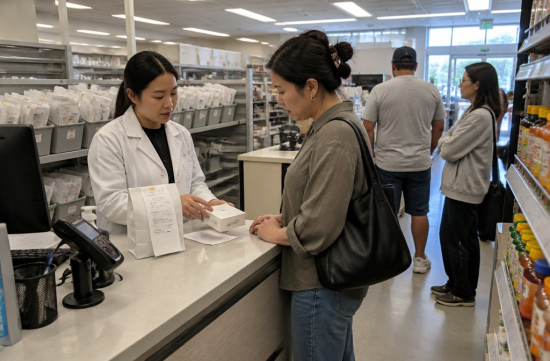
A little while ago, during lunch at work, a colleague suddenly asked me if it was true that the California state government is selling insulin for $11 per pen.
Honestly, I was skeptical at first. I've always heard about insulin prices in the context of frustrating news. So, I decided to look into it myself.
To cut to the chase, the $11 price is indeed accurate. However, it's not for a single pen; it's the average price calculated based on a pack of five pens.
The product is called CalRx Insulin Glargine. The state government is selling it under its own brand, and it's said to be the first time California has sold medication under a state brand.
It's produced by a nonprofit pharmaceutical company called Civica Rx, which has a contract with Biocon Biologics for production. The state government has invested $50 million into this initiative.
Sales began on January 1, 2026. The suggested retail price for a box containing five 3mL pens is up to $55.
Dividing 55 by 5 gives you 11, which is where the $11 per pen comes from. The price that pharmacies pay for a box is set at $45.
This means you can't just buy one pen. You have to purchase them in a box of five.
When you compare prices, the difference is quite noticeable. According to state data, commonly used brand-name insulins range from $89 to $411 before retail markups.
Additionally, this is a long-acting insulin, commonly referred to as basal insulin. It has been approved as a biosimilar interchangeable with Lantus.
Therefore, if you already have a prescription for glargine like Lantus, you may not need a new prescription, according to the state government. However, it's safest to check with your pharmacy to see if you can switch.
Currently, there are no CalRx products for rapid-acting insulin, but the state government has indicated that they are working on that next.
So, where can you buy it? According to reports, it will be available at Amazon, Costco, CVS, Walgreens, Walmart, and some grocery store pharmacies.
The issue is that it's not yet available at all pharmacies. An August KFF Health News report mentioned instances where even pharmacists were unaware of this product.
That same report stated that over 120,000 boxes have been distributed in the seven months since its launch. However, the state government doesn't know how many of those boxes actually reached patients.
It's disappointing that such a good program has had this level of promotion; if the people who need it don't know about it, it's of no use.
There's also something to note regarding insurance. So far, four insurance companies have agreed to include CalRx insulin in their formulary.
These are Anthem Blue Cross, Blue Shield of California, Valley Health Plan, and the federal employee insurance program, FEHB. Other insurers are still in negotiations, so you'll need to check with your own plan.
One confusing point is that California has a separate law called SB 40, which sets a cap on out-of-pocket costs for insulin.
This law caps the out-of-pocket cost for a 30-day supply of insulin at $35. However, it will apply to large group insurance starting in 2026, and to individual and small group insurance starting in 2027.
For reference, Medicare Part D enrollees are already protected by federal law, which ensures that their out-of-pocket costs for insulin do not exceed $35 per month. Therefore, the impact of CalRx will be more significant for those not on Medicare.
Self-funded plans operated directly by companies often do not fall under state law. So, it's quite important to know which category your insurance falls into.
So, who stands to benefit the most? In my opinion, it's those who are uninsured or have high deductibles and end up paying most of their insulin costs at the beginning of the year.
These individuals should compare their insurance copay with the cash price of CalRx. Which option is cheaper can vary significantly by plan.
If I were to explain this to my family, I would summarize it like this. First, check if the insulin you're currently using is in the glargine category.
Next, call your frequently visited pharmacy to ask if they have CalRx insulin in stock. If not, inquire whether it can be ordered or if it's available through mail order.
Finally, ask the pharmacist to help you calculate which is cheaper: the insurance price or the cash price. These three steps should be sufficient.
And I want to emphasize that changing the type of insulin is directly related to blood sugar management. Always consult with your doctor or pharmacist before making any changes.
The $11 per pen is not an exaggeration; it's real. If I were in your position, I would definitely compare prices, assuming the prescription is appropriate. The more this program is used, the more it will expand.
 BlueOcean








 neroyo |
 nivex85 |
 Old English |
 nixxon |
 LIZ Legal Information Blog |
 Famous Attractions in the United States |
 Rowland Mama |

 American History This and That |
 NYC saladbar |
  Finding Superfoods |
  lightyear |
  song bang |
  vexomo |
  Indiana Jones |
  meloncat |
  novapixel |
  mortrix |
  Esther 1983 |
  fortbliss |
  Moscow Kim |
  My Two Way |
  toastyfox |
  FLORIDA Acus |
  tracker |
  TONTON COFFEE |
  sunrise |
  ultron78 |
  uplifted |