
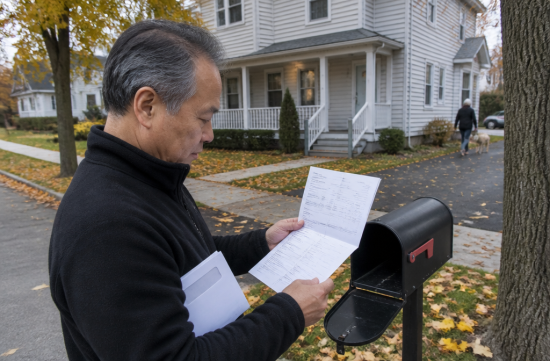
As fall arrives, a hefty envelope from your mortgage company lands in your mailbox. Inside, you'll find an escrow analysis along with a notice that your monthly payment will increase starting next month.
Every year, I receive questions about why this happens when the interest rate remains the same and there have been no late payments. To put it simply, it's not the principal or interest that has increased, but the escrow portion.
Escrow is an account where the mortgage company collects a little each month to cover property taxes and homeowners insurance. Therefore, your monthly payment consists of the principal, interest, and this escrow reserve.
According to federal regulations under RESPA, servicers must analyze this account once a year. After the analysis is complete, they must send an annual escrow statement within 30 days of the end of the calculation year.
The analysis estimates the taxes and insurance premiums for the upcoming year and sets the new monthly reserve based on one-twelfth of that total. Additionally, a cushion of one-sixth of the expected expenses can be added.
However, if the actual expenses from last year were higher than expected, the account balance will fall short. This is what is referred to as a shortage, or escrow deficiency, noted in the notice.
You might wonder why there is a shortage if an estimate was made. The analysis is based on last year's statements, but if the tax bill or insurance renewal amount comes in higher afterward, the difference accumulates as a shortage.
Thus, the increase in your monthly payment typically comes in two parts. One reflects the new base reserve based on the increased taxes and insurance premiums, and the other accounts for the previous year's deficiency.
For example, if the estimated annual expenses are $7,200, you would need to set aside $600 each month, with a maximum cushion of $1,200.
If a deficiency of $900 arises and is divided over 12 months, that adds $75 to your monthly payment. If taxes rise and the base reserve increases, the overall impact will be even more noticeable.
The method for repaying the deficiency is also regulated. If the deficiency is less than one month's reserve, the servicer can either leave it as is, require repayment within 30 days, or allow it to be paid over a minimum of 12 months.
If the deficiency exceeds one month's reserve, the servicer can either leave it as is or require a minimum of 12 months for repayment. This means they cannot force you to pay a large amount all at once.
Conversely, there are instances where you may have excess funds. If there is a surplus of more than $50 with no late payments, you are entitled to a refund within 30 days of the analysis date.
So, what has increased in the Albany area this year? First, homeowners insurance premiums have been rising across New York State for several years, so many of you may have felt this during renewals.
Property taxes vary by bill. The county tax rate will be $2.56 per $1,000 in 2026, down from $2.73 in 2025, marking a 12-year trend of reductions.
However, Albany City is facing a different situation. On October 1, Mayor Dorcey Applyrs proposed a 15% increase in property tax collections in the 2027 budget.
According to the city, a $250,000 home would incur an additional $280 per year. This proposal is still subject to city council review, so the numbers are not yet finalized.
However, if such an increase is confirmed, it will be reflected in next year's escrow analysis. If you received a notice this year, it's wise to keep next year's potential changes in mind.
When you receive a notice, the first question is often whether to just pay it or to challenge it. I strongly recommend that you at least take the time to review it.
Start by comparing the estimated expenses in the analysis with your actual property tax bill and insurance renewal documents side by side. You may find discrepancies or instances where the same insurance premium has been deducted twice.
If you find any errors, send a written notice of the discrepancies to the servicer and request a reanalysis. Having a record is much better than a phone call.
If you have extra funds, you can also choose to pay the deficiency in one lump sum. This will eliminate the need for the installment payment, but remember that the new base reserve will remain unchanged.
Before renewing your insurance, get quotes from other companies. Make sure to match the coverage details for an accurate comparison.
If you feel the assessed value is higher than the market value, consider filing a property tax appeal. The deadlines and procedures vary by location, so it's best to check directly with the local city or town assessment office.
After years of providing this advice, I've found that not knowing the reasons behind a payment increase can lead to greater losses than the increase itself. Just adjusting a few numbers can significantly reduce anxiety.
Some may want to handle payments directly because they find escrow bothersome, but depending on the type of loan and its terms, this may not be an option. You should inquire with your servicer first.
Decisions can vary based on personal circumstances and loan conditions, so it's important to confirm significant decisions with your servicer or a professional. Personally, I would start by comparing bills in the week I receive the notice.
While an increase in monthly payments is never welcome, there are usually clear reasons related to taxes and insurance. Homeowners who take the time to verify these reasons often end up paying less.
 SawAndJelly








 ultron78 |
 garlic bread |
 Sugar Cream Door Bulletproof Noodles |
 urbanmint |
 |
| 
 Gold Bar |
 Dolly |
 yellowbutter |
  US Embassy |
  NYC saladbar |
  Finding Superfoods |
  lightyear |
  song bang |
  vexomo |
  Indiana Jones |
  meloncat |
  novapixel |
  mortrix |
  Esther 1983 |
  fortbliss |
  Moscow Kim |
  My Two Way |
  toastyfox |
  FLORIDA Acus |
  tracker |
  TONTON COFFEE |