
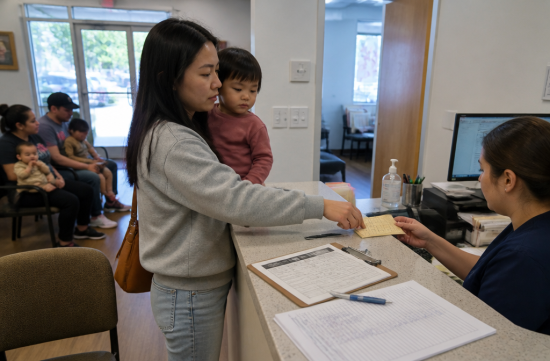
A few days ago, a young mother cautiously asked in the church fellowship hall whether she should get her child the second MMR dose now that they are almost four years old, or if she could wait until they start kindergarten.
Since it had been a while since I looked at my child's vaccination records, I went home that day and checked everything again. With all the recent news about measles, I thought many others might be wondering the same thing, so I decided to summarize the information.
First, let's look at the numbers. As of September 4, the CDC reported that there were 3,134 confirmed measles cases in the U.S. this year.
They say this is the highest number in over 35 years. The total number of cases last year had already surpassed that by the summer. At this point, it's hard to dismiss it as just someone else's problem.
California is no exception. The state health department (CDPH) issued a health alert in early February about the increase in cases.
According to an EdSource article citing the LA Times, by mid-year, there were 52 confirmed cases statewide, and 49 of those were among unvaccinated individuals. I was speechless when I saw that number.
San Bernardino County also reported its first confirmed case on February 6. It was the first case since 2023 and involved an unvaccinated minor who had come from another state.
When it was announced that this child visited a Walmart Supercenter in Ontario during the infectious period, I'm sure many shoppers in the area were quite surprised, as it's a typical weekend shopping spot.
So when should the MMR vaccine be administered? The CDC's recommended schedule is the first dose at 12-15 months and the second dose at 4-6 years.
Typically, parents are told that the second dose should be given before kindergarten. However, there is an important detail that many parents may not know.
There is no need to wait until the child is four years old for the second dose. According to the CDC, as long as at least 28 days have passed since the first dose, it can be administered earlier and still be considered valid.
Organizations like Immunize.org recommend utilizing this 28-day interval if there is an outbreak in the community or if you are planning to travel abroad. In a year like this, with increasing cases, it's worth asking your pediatrician about it.
Some people ask why two doses are necessary. According to CDC data, the effectiveness of measles prevention is 93% with one dose and 97% with two doses.
While 93% seems high, measles is highly contagious, and that small percentage difference can protect an entire classroom. I believe there's no reason to delay the second dose after seeing these numbers.
If you have plans to visit Korea, you should be even more diligent. The CDC recommends that infants aged 6-11 months receive the MMR vaccine before traveling abroad.
However, the vaccine given before the first birthday does not count as one of the official two doses. After the first birthday, the child must receive two doses according to the original schedule.
You also need to prepare school enrollment documents. In California, records of two MMR doses are required for kindergarten enrollment, and both doses must be given after the first birthday.
Records of the two doses are also checked again when entering seventh grade. Additionally, California no longer allows vaccination exemptions based on personal beliefs.
If you've lost your records, you can obtain a digital record at MyVaccineRecord.CDPH.CA.gov. I just learned about this, and it will save me from digging through drawers looking for that paper yellow card.
It's also good to be aware of the symptoms. Many cases start with fever, cough, runny nose, and red eyes between 7-21 days after exposure.
A rash typically appears afterward, and it can be contagious from four days before to four days after the rash develops. The county health department advises that if you suspect measles, you should call ahead before going to the hospital.
This is to protect other babies in the waiting room, pregnant women, and those with weakened immune systems. I think this point is very important.
Adults are not exempt from this issue either. The county health department encourages vaccinations for adolescents and adults who do not have vaccination records.
According to CDC guidelines, individuals born before 1957 are generally considered immune. If you belong to a later generation but have unclear records, it's advisable to consult about blood tests or additional vaccinations.
I believe that the issue of vaccines cannot be viewed solely as a personal choice. There are people around us, like newborns who cannot yet be vaccinated and neighbors undergoing cancer treatment, who cannot protect themselves.
If everyone takes a little responsibility, it will help keep those individuals safe as well. I see this as a matter of principle.
Since each child has different health conditions and vaccination histories, be sure to discuss the schedule with your pediatrician or pharmacist. My story can serve as a basis for creating a list of questions.
If it were me, I would first check the vaccination records, and if it has been more than 28 days since the first dose, I would ask at the next appointment if the second dose can be given earlier.
I told that young mother the same thing. When she mentioned she had an appointment with the pediatrician next week, I felt relieved.
 MinneSonata








 Magic Cabbage School of Martial Arts |
 Vacation on Hawaii |
 morvex37 |
 Ari Songhan American Immigration Life |
 Bearded Strawberry Smoothie |
 Forever Young |
 B.I.G. Victor |
  Mr Oh |
 moo moo |
  forevergee |
  festival |
  manchester |
  constant |
  Leapfrog Move |
  vibranto |
  Tora Tora |
  yellowbutter |
  Dolly |
  US Embassy |
  NYC saladbar |
  Finding Superfoods |
  lightyear |
  song bang |
  vexomo |
  Indiana Jones |
  meloncat |
  novapixel |