

When talking about Tucson's weather, people tend to have one of two reactions.
Those who love the heat call it paradise, while those who can't stand it say it's hell.
But if you actually live here, both assessments are true. Tucson is a city with a completely different character in each season.
Let's start with the basic climate. Tucson has a semi-arid climate, with an average annual rainfall of about 12 inches (approximately 305mm). Considering that Seoul, South Korea, has an average annual rainfall of nearly 1,400mm, you can get a sense of how dry Tucson is. Summers are long and hot.
June is particularly the peak of the dry season, with daytime temperatures often exceeding 100 degrees Fahrenheit (38 degrees Celsius). Shade and air conditioning are essential for survival. Winters are mild. Daytime temperatures stay in the 60s to 70s (Fahrenheit), and while nights can be chilly, it rarely snows.
The most notable feature of Tucson's weather is the monsoon. Typically occurring between late June and September, moist air rises from the Gulf of Mexico, bringing sudden heavy rains. The clear sky can turn black in just 30 minutes, and heavy rain can pour down with lightning, only to clear up again within 1 to 2 hours.
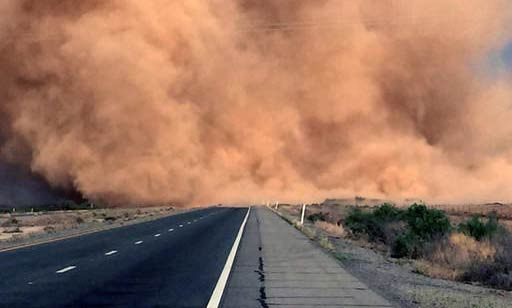
Nearly half of the annual rainfall occurs during this monsoon season. The combination of lower temperatures and humidity can make it feel quite uncomfortable. There is also a risk of flash floods, so you should never approach washes during rain. Another thing to be cautious about is the haboob. This dust storm creates a dramatic scene as a massive wall of dust engulfs the city just before the monsoon. If you're driving, you should pull over immediately and turn off your engine.
And here's a little-known secret about Tucson. If you head north for an hour from downtown to Mount Lemmon (elevation 9,185 feet), you can find snow in the winter. Tucson is a city where you can enjoy a desert drive with the air conditioning on and then, in just 1 to 2 hours, experience sledding in the snow.
There is also a small ski area called Ski Valley, where you can enjoy skiing during the season when enough snow accumulates. It's surprising to ski in a desert city, but that's Tucson.
If you're hesitating to move to Tucson because of the weather, keep in mind that while the summer heat is real, the other seasons and the leisure of Mount Lemmon are worth considering as well.
 LocustCurry3






 prixon74 |
 Balancework |
 Make My Day |
 viroma |
 eatontown blog |
  Arizona Cowboy |

 Project Tomorrow |
 Who's watching? |
  choi family |
  zoryan |
  cloud0 |
  SKy Face |
  wonder |
  Dragon Lee |
  productionblog |
  What can make money? |
  Oklahoma Hoya OK |
  Roman Pan |
  USALATU BLOG |
  Sunshine Blog |
  Minnesota Small Business |
  Strawberry Pancake Warrior |
  amolayo |
  korvon |
  Que Buena |
  virexo |
  silverpath |