

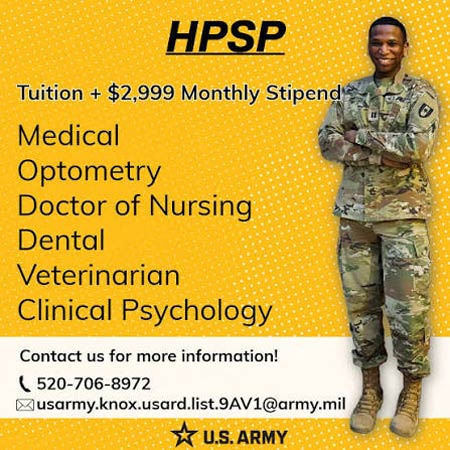
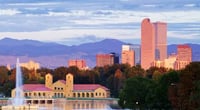
Living in Denver, you often encounter military personnel more than in other cities.
True to its status as a military city, Denver has the Buckley Space Force Base to the east in Aurora, which is home to many active-duty members, National Guard, Reserve, civilian employees, and defense-related workers. Inside the base, the 460th Medical Group also has military medical personnel.
This means you come across people working in medical professions like doctors and dentists in the military. Seeing these individuals naturally leads to a thought.
"Is there a way for our child to become a doctor through the military if they study hard?"
There actually is. However, there are a few things to keep in mind.
This does not mean that enlisting in the military guarantees admission to medical school.
Your child must be fundamentally smart and perform well academically.
They need to complete the necessary courses for medical school and prepare for the MCAT to be qualified for actual medical school in the U.S.
Additionally, they need to have the diligence and responsibility to endure military life.
The most representative program is the HPSP (Health Professions Scholarship Program).
This program allows students to attend regular U.S. medical schools while utilizing scholarship programs from the Army, Navy, Air Force, and others.
The military covers tuition and certain costs for medical school and provides a monthly stipend for living expenses. In return, they must serve as military doctors for a certain period after becoming a physician.
In simple terms, think of it as parents paying for medical school tuition, and in return, the child repays that debt with a few years of military service after graduation.
Another option is to attend the USU (Uniformed Services University), a military medical school.
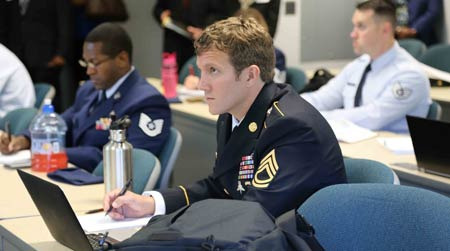
This is a federal medical school located in Maryland where students receive medical education as officers.
Not only do they not pay tuition, but they also receive a salary and allowances as military personnel. However, the active duty service obligation after graduation is longer than that of the HPSP.
From a Korean parent's perspective, the appeal of this system is primarily financial. The cost of becoming a doctor in the U.S. is truly staggering when calculated out of pocket.
According to AAMC, the median Cost of Attendance for a 4-year medical school graduate in 2026 is approximately $298,000 for public schools and about $408,000 for private schools.
The median debt for medical school graduates with loans in 2025 is also around $215,000.
However, this only accounts for medical school. Before that, they must also attend a four-year college. If parents send their child to an expensive private university and then to a private medical school, the total cost from undergraduate admission to medical school graduation can easily exceed $500,000.
Depending on the school, scholarships, and living expenses, it could be much higher.
This leads to many thoughts for Korean parents. If a child does not perform well academically, having money does not guarantee they will become a doctor.
However, if a child is doing well in school and wants to become a doctor, but the parents have to bear over $500,000, the situation changes.
For such children, it is definitely worth exploring military medical programs like HPSP or USU.
There is also an aspect that Korean parents would appreciate. It's not just about covering tuition; graduates gain experience as doctors within the military medical system.
From a parent's standpoint, this significantly reduces the burden of tuition, and the child can start a career as both a doctor and an officer.
Of course, nothing comes for free. The path of a military doctor is not necessarily easy.
You cannot simply choose to work only in the city you want, and there is a possibility of being relocated to other areas or overseas according to military orders.
The specialties and residency processes are also different from those of civilian medical students, and the obligation to serve follows the support received.
Therefore, it is not a path I would recommend to just anyone.
However, if you are confident in your studies, diligent, physically fit, responsible, and have the hungry spirit to "make it on your own," the situation changes completely.
Korean parents do not necessarily have to prepare hundreds of thousands of dollars to make their child a doctor in the U.S.
There is a path to becoming a doctor in America that relies on the child's abilities and efforts, choosing military service instead of parental financial power.
Encountering military personnel and those working in the military medical field in Denver makes this path feel more realistic than expected.
Ultimately, what parents can do is not just pay for medical school tuition entirely.
If a child is smart and has the tenacity to succeed, I believe that informing them early about such paths is an important role for parents.
 BrightSummit70
 Bridge79
 AutumnMonica




 Tonky |
 My NYC |
 coloradoman |
 Living Economy Information Blog |
 Tomato Health Club blog |
 LIZ Legal Information Blog |
 Your Curiosity Resolved |
 Self-Development Encyclopedia |
 productionblog |
  What can make money? |
  Oklahoma Hoya OK |
  prixon74 |
  Roman Pan |
  USALATU BLOG |
  Sunshine Blog |
  Minnesota Small Business |
  Strawberry Pancake Warrior |
  amolayo |
  korvon |
  Que Buena |
  virexo |
  silverpath |
  Komet Park |
  reliable |
  vexo90 |
  As Always Today |
  veltar87 |
  United States National Administrative Organization Stories |