
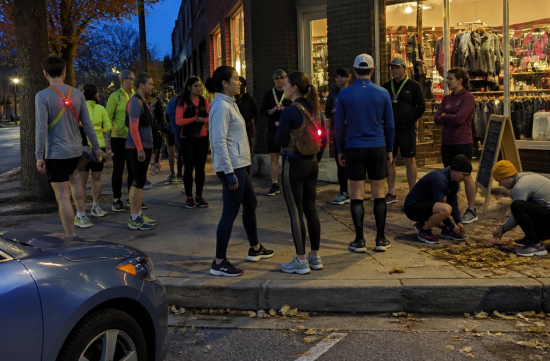
Last week, as I was passing by the park in my neighborhood, I noticed over twenty people in fluorescent vests gathering to stretch. At first, I thought it was some kind of competition.
It turned out to be a running club that meets at the same time every week. After running, they all flock to a nearby café to chat.
The idea that run clubs are becoming new meeting places in the U.S. is not just talk. So, I decided to look for some data.
According to the Year in Sport report released annually by the fitness app Strava, participation in running clubs worldwide increased by 59% in 2024 compared to the previous year. Running has also been labeled as the fastest-growing social sport on this platform.
In the same report, one in five Gen Z respondents said they had gone on a date with someone they met while exercising. Honestly, I was a bit surprised by this number.
There was also a point that four times as many people preferred meeting new people through exercise rather than at a bar. It seems I'm not the only one who finds it awkward to strike up a conversation with someone new while drinking.
The latest report, released in December 2025, surveyed over 30,000 people and found that the number of new running clubs has increased by 3.5 times. The overall theme of the report was that doomscrolling is out, and being active is in.
Responses indicated that Gen Z is more likely than older generations to exercise to meet people with similar interests. This shows a clear desire to connect with others outside of screens.
So why running, in particular? Here are my thoughts on the reasons.
First, it costs almost nothing. You just need a pair of running shoes, and many local clubs have no membership fees.
Second, there's little room for awkwardness. When you run side by side, you don't have to maintain eye contact all the time, making conversations flow more easily.
Third, it's a recurring event. Unlike a one-time blind date, seeing the same faces week after week helps you become friends naturally.
Fourth, there's a common topic from the start. Just asking about today's pace or whether someone is running the next 5K can keep the conversation going.
Underlying this trend is the issue of loneliness. In 2023, the U.S. Surgeon General issued a recommendation declaring loneliness and isolation as public health issues.
The recommendation compared the health risks of social disconnection to smoking 15 cigarettes a day. It also urged people to increase face-to-face interactions over online ones.
Fatigue from dating apps also plays a role. Many analyses suggest that people tired of swiping are shifting towards meeting face-to-face and sweating together.
Of course, not everything is positive. The latest report also noted that some Gen Z members feel that running clubs have high barriers to entry and can be intimidating.
And I want to make this clear: if you go to a club solely thinking of it as a place to find a date, you might disrupt the atmosphere.
If you approach others too obviously among people there to exercise, it can make them uncomfortable, and club organizers dislike that the most. It's best to have the mindset that if you make friends and connections, great, but if not, you still get to stay healthy.
By late October, the Midwest experiences quite chilly evening winds, and sunset comes much earlier. Next weekend, when daylight saving time ends, it will get dark quickly after work. If you join an evening group run, be sure to bring a reflective vest or light.
While there are student-focused groups in college towns, you can also find gatherings where working professionals or middle-aged individuals can run comfortably. Group runs hosted by running gear stores are the most straightforward entry point.
Some clubs are moving to indoor tracks or weekend morning meetings, so it's a good idea to ask about winter schedules in advance. Many people tend to quietly drop out when the seasons change.
Finding a club is simple. You can search for local running stores' websites or Instagram, and check the Clubs menu on the Strava app for regional options.
When you go for the first time, make sure to check if there are pace groups. Many clubs have a group that accommodates the slowest runners, ensuring that no one gets left behind.
From a Korean perspective, there's no better place to practice English conversation. Since you're out of breath while running, no one thinks it's strange if you speak briefly.
I initially thought, at my age, what's the point of joining a club, but when I actually went, I found quite a few people my age. Everyone was much friendlier than I expected.
In summary, I believe running clubs have become meeting places because they are low-cost, less intimidating, and cater to those looking for ongoing relationships. The data supports this direction.
If it were me, I would aim to make local friends rather than focusing on dating for a month. That's definitely a better investment than swiping on an app ten times.
 GodOfWealth







 Spaghetti Flying Religion |

 Giant Squid and Sweet Potato Soup |

 choi family |

 What can make money? |

 road98 |

 pet dog |

 Iowa School News |


 Iowa Egen Aunt |

 Tonky |
 Arizona Cowboy |
 merry merry |
 Hoorah Ooorah |
 Fragile Me |
 Rowland Mama |
 foxtree |
 bayaa |
 loveyom |
 Coastal city |
 My Town My Way Blog |
 holy cow |
 endone |
 starline |
 Where is a really nice neighborhood? |
 Real Estate |
 Forest Gump |
 Real Estate Investment Korean American |
 Dollydori, Lover of Movies |
 dmzline |